




Table of Contents
Portugalete, what to see and do in one of the most important fishing villages on the left bank.
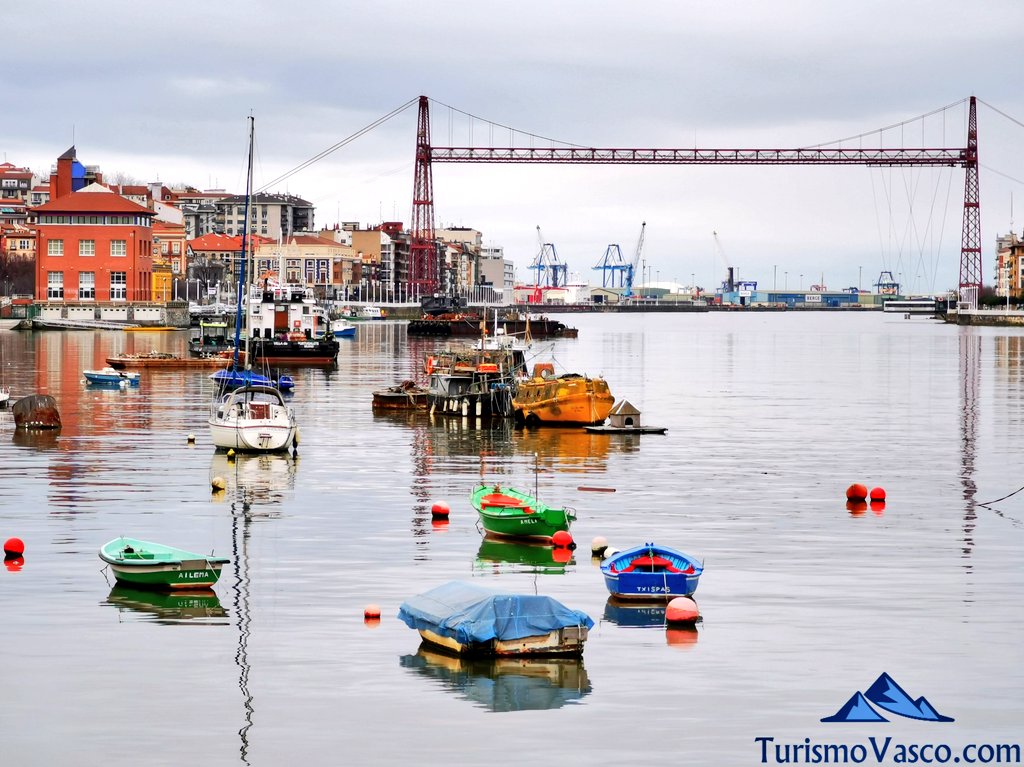
Portugalete, a seaside town located on the left bank of the Bilbao estuary, awaits us with open arms to show us some of its most emblematic spaces. And, although the vast majority of people who visit the town do so blinded by the beauty of the Bizkaia Bridge, Portugalete has many other tourist attractions to know and enjoy. Places, which we present to you throughout this article. Ready to know what to see in Portugalete? Portugalete, also known as “Portu” or the “Villa Jarrillera”, as you can see the first option is the diminutive of its own name, while the second refers to the wine tradition of this seaside town. And it is that in the past, this municipality had a great number of vineyards from which our beloved txakoli was obtained. One of the great wines of Euskadi. This wine was served in small earthenware jugs known as “jarrillas”, hence the nickname “villa jarrillera”. Curious, isn’t it?
Information about Portugalete.
- Online reservations: Here.
- Inhabitants: 45.800
- Attractions: Bizkaia Bridge, Bilbao estuary, history and culture.
- Location: Portugalete, Bizkaia, Euskadi.
The town of Portugalete is not very large but its historic center has many places worth visiting. Moreover, this town is one of the best destinations in Bizkaia, and being able to visit Portugalete, Santurtzi and Getxo without wasting a lot of time in displacements is a real pleasure. If you want to continue enjoying Euskadi with us, we remind you that you can follow us on Twitter, Facebook, Instagram or YouTube. A good way to know all the places and experiences that we recommend you to visit in Euskal Herria. 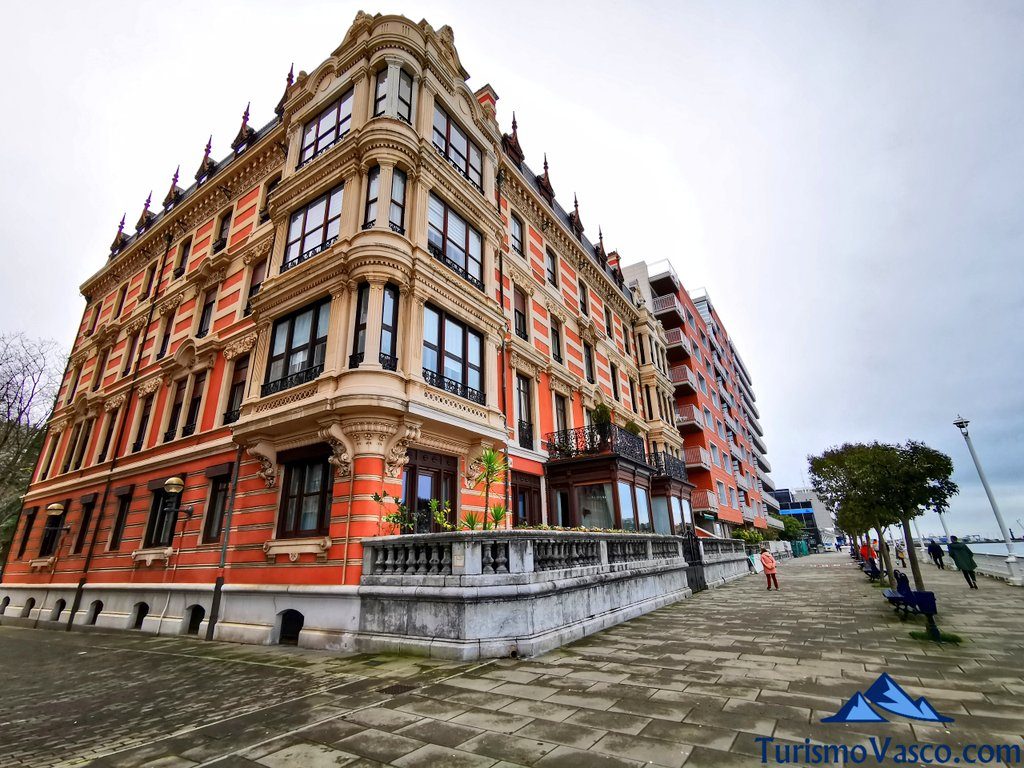
What to see in Portugalete.
The walk that connects the towns of Santurtzi and Portugalete, simple and with views, is one of the most popular routes on the left bank. A space that can help us to know the charms of both towns. In fact, we recommend that you enjoy this walk along the estuary to later walk through the narrow and charismatic streets of the old town of Portugalete. 
Bizkaia Bridge: The Bizkaia Bridge, also known as the Hanging Bridge, is one of the most international Basque transports. An industrial structure built in 1893 that was declared a World Heritage Site in 2006. We recommend that you use this bridge to cross the estuary and enjoy both banks. In case you want to visit the upper footbridge, we recommend you to read our article about the Bizkaia Bridge. 
Plaza del Solar: Undoubtedly one of the most emblematic squares of Portugalete. This space located in the lower part of the town, next to the estuary, the town hall, the tourist office and the monument to Victor Chávarri, represents one of the most iconic places in the municipality. It is here, where we find the kiosk, a building constructed in 1912 by Emiliano Pagazazaurtundua, the same architect who designed the Doctor Areilza Park. We must point out that every Tuesday, Thursday and Saturday of the year the market is held where you can buy some of the best products of the Biscayan orchard. 
La Canilla: The current tourist office of Portugalete, was once the railroad station “La Canilla”. A building that contributed to link the town with the capital of Bizkaia, Bilbao. This structure, designed by Pablo de Alzola, was built in 1888 on the old pier. Unfortunately, when in 1925 this railroad line was expanded to Santurtzi, the building fell into disuse. In 1960 the city council took over “La Canilla” to restore it and reconvert it into the tourist office of the municipality. 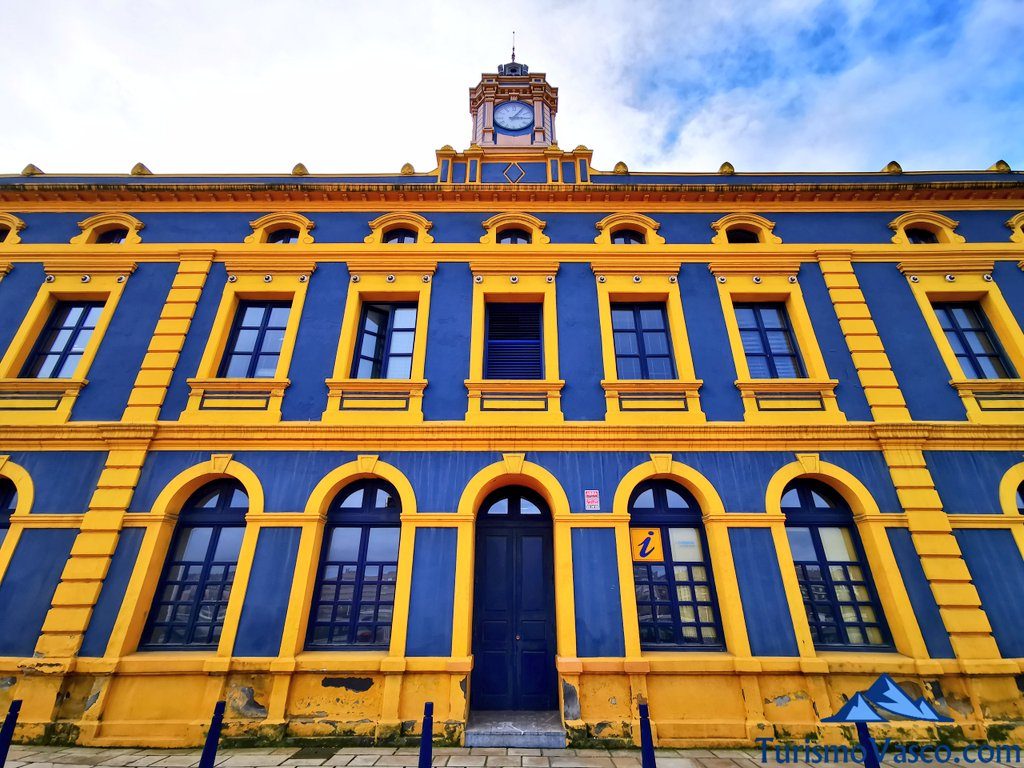
Promenade: The promenade covers the entire area that Portugalete shares with the Bilbao estuary. Approximately 2 kilometers. A very demanded and recommended route. This promenade is made up of the old pier, the Churruca pier and the Iron pier, spaces that, surrounded by stately homes and the Bizkaia Bridge itself, show us the importance that Portugalete had in the past. 
Iron Pier: This pier was one of the answers to the problem of the sand bar that formed at the mouth of the Nervión. This structure was designed by the engineer Evaristo Churruca in 1881. Its construction was completed in 1887. The iron pier has a total length of 800 meters of which 600 were built with iron structure and 200 in stone. This pier is located next to the tide gauge and the Doctor Areilza Park. 
Tide Gauge: This instrument located at the end of the pier, next to some noble buildings of the 19th century, was built in Paris and later fixed in Portugalete (1883). It is a nautical instrument that indicates the depth of the waterway in front of us. At that time it was essential for navigation in the Bilbao estuary. Today, unfortunately, many bizkainos and bizkainas walk next to it without knowing its usefulness and its history. 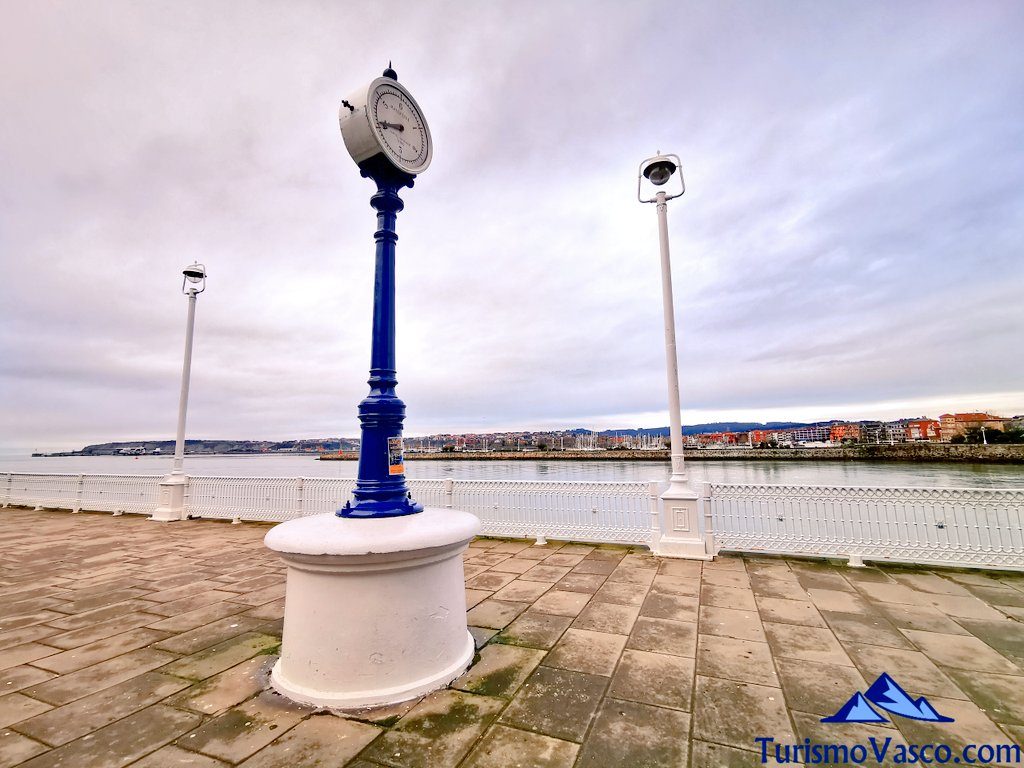
Doctor Areilza Park: This kind of botanical garden designed in 1913 by Emiliano Pagazaurtundua, has dozens of species from around the world. One more sample, of that Portugalete that at the beginning of the XX century symbolized one of the most important tourist urban centers of Bizkaia. Its hot springs, beach and stately homes attracted some of the wealthiest families of the time. Unfortunately, today the park is abandoned. It has nothing to do with the cheerful and well-kept park we remember. We do not recommend a visit. 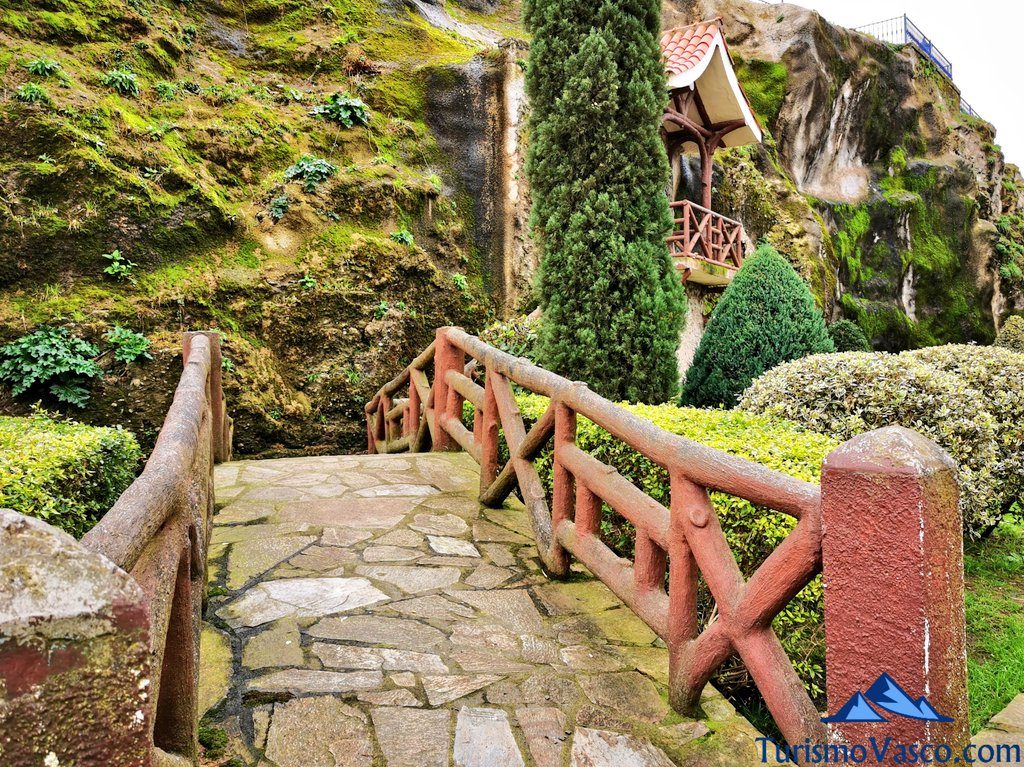
Santa Clara Convent: This former convent of the Poor Clares, now the Santa Clara Cultural Center, is one of the most important cultural spaces in the town. This cloistered convent was founded outside the walls of the town in 1614 by nuns from Orduña. In 1976 the Poor Clares abandoned the convent and the Portugalete City Council bought the building, which, after several renovations, was adapted for public use. 
Old Town: The old town of Portugalete is undoubtedly one of the most special areas of the town. Its streets and squares, declared Monumental Site in 1996, make us travel back in time to discover the medieval town of Portugalete. A space that was originally formed only by the streets Coscojales, Victor Chávarri and Santa Maria. These streets, paved and with great unevenness, are one of those spaces that you cannot overlook in any trip to Portugalete. 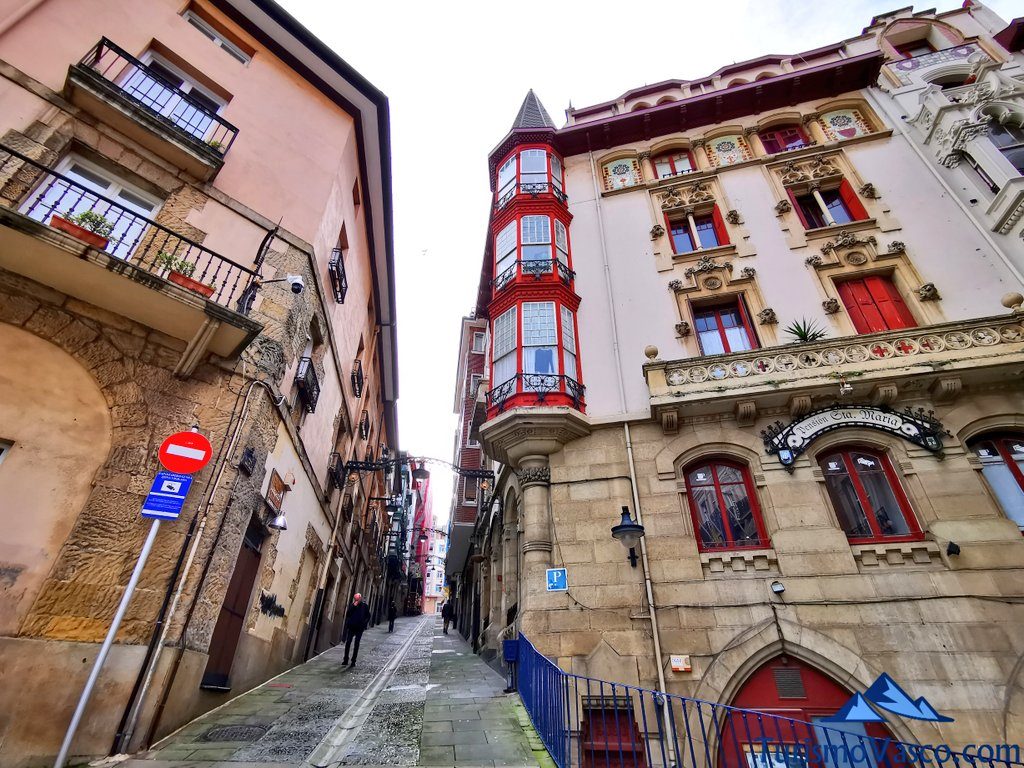
Basilica of Santa Maria: Along with the foundation of the town in 1322, Maria Diaz de Haro indicated her interest in building a basilica in honor of the Virgin Mary in the best area of Portugalete. Said and done. The highest spot in the town was sought and a small temple was built, of which only the carving of the Virgin Mary that presides over the altarpiece (14th century) is preserved. Later, in the 15th century, the present church was built, whose works lasted more than a century. Inside we find the chapels of some of the most important families of Portugalete such as Salazar, Ugarte or Coscojales. 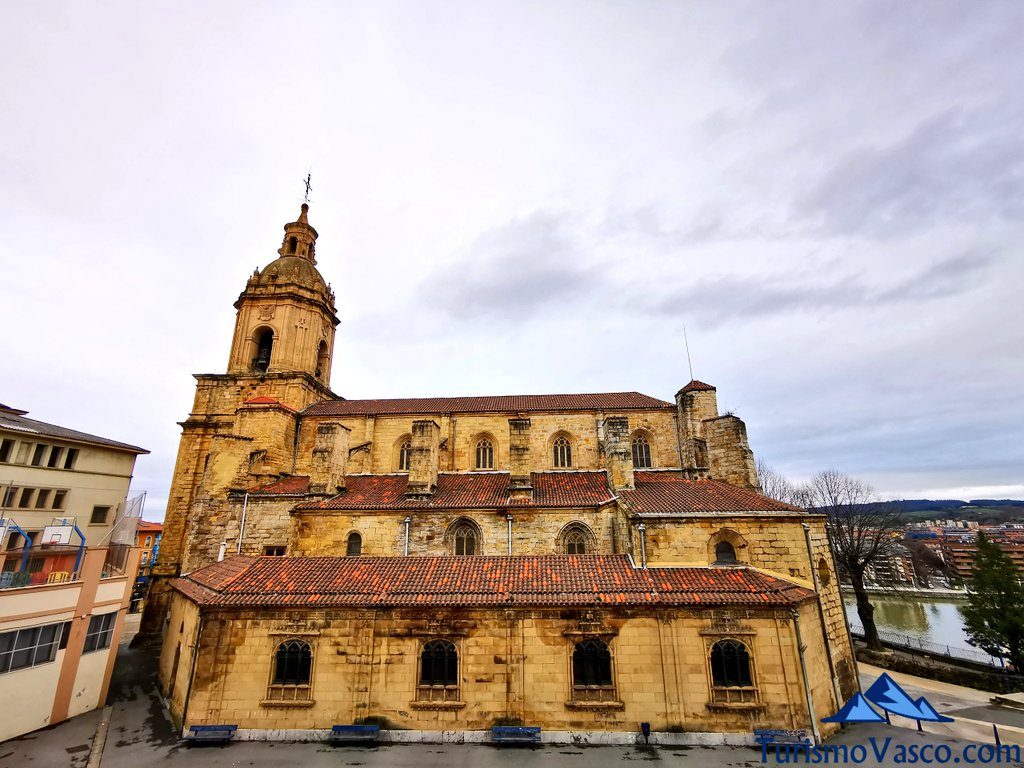
Viewpoint: Next to the Basilica of Santa Maria we find the viewpoint of the church field. It is one of the many viewpoints that we find in the vicinity of Sotera de la Mier street. From here, we have the opportunity to enjoy a beautiful view of the estuary and the Bizkaia Bridge from a privileged location. 
Torre de Salazar: This old tower house was built at the end of the 15th century next to the basilica of Santa María, in the center of the town. This 4-storey building with a hipped roof has all the typical characteristics of the tower houses built in the Basque Country in the Middle Ages. Unfortunately, the original tower burned down in 1934. The structure that we contemplate today is a reconstruction carried out in 1958 by the architect Joaquín Irizar. Since 2003, this tower has housed a museum and a restaurant. 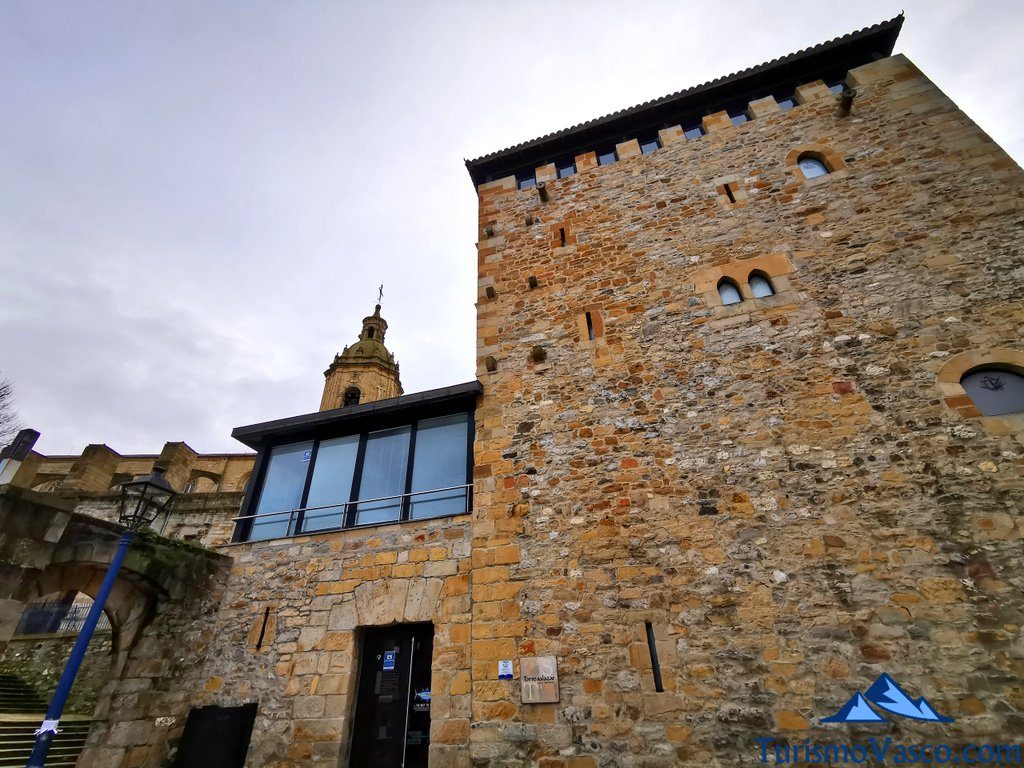
Ramon Real de Asúa: This historical building of Portugalete took the name of the dean of engineers of Bizkaia. A structure that, managed for many years by the Augustinian Fathers, played a leading role in helping the less fortunate. 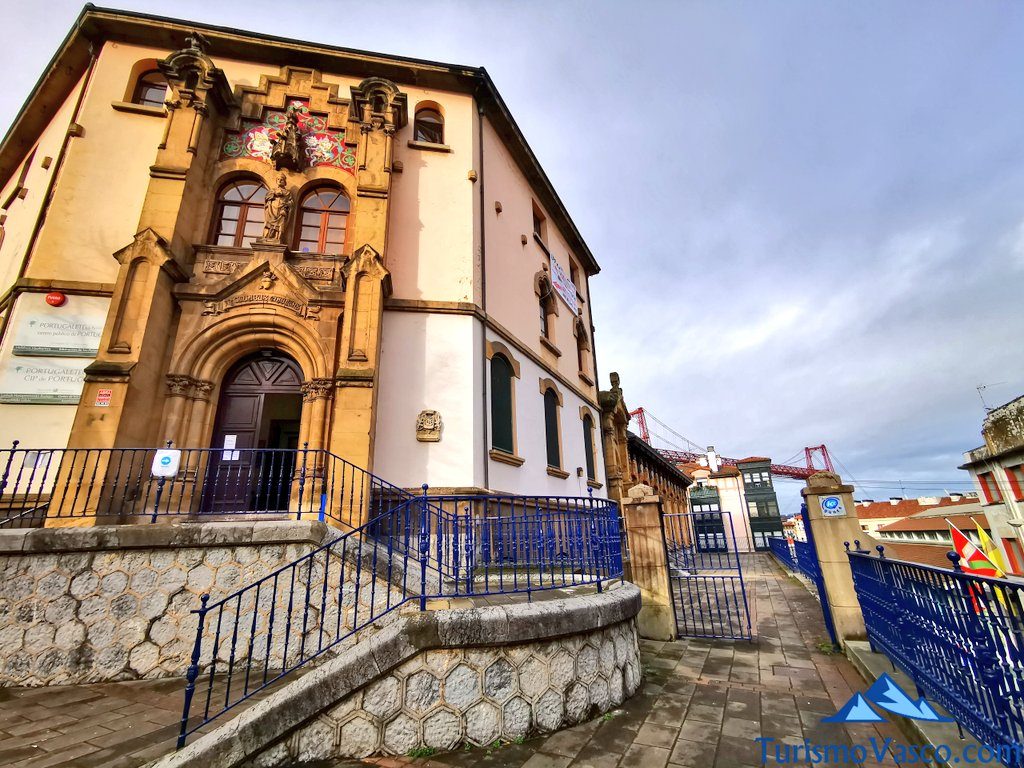
Rialia, museum of the industry: This museum located in the paseo de la canilla, next to the estuary, puts in value the importance that the mining industry had in all Bizkaia. A sector in which the estuary played an essential role. The permanent exhibition of the museum of the industry shows us the evolution of Bilbao and its province with the industry as protagonist. 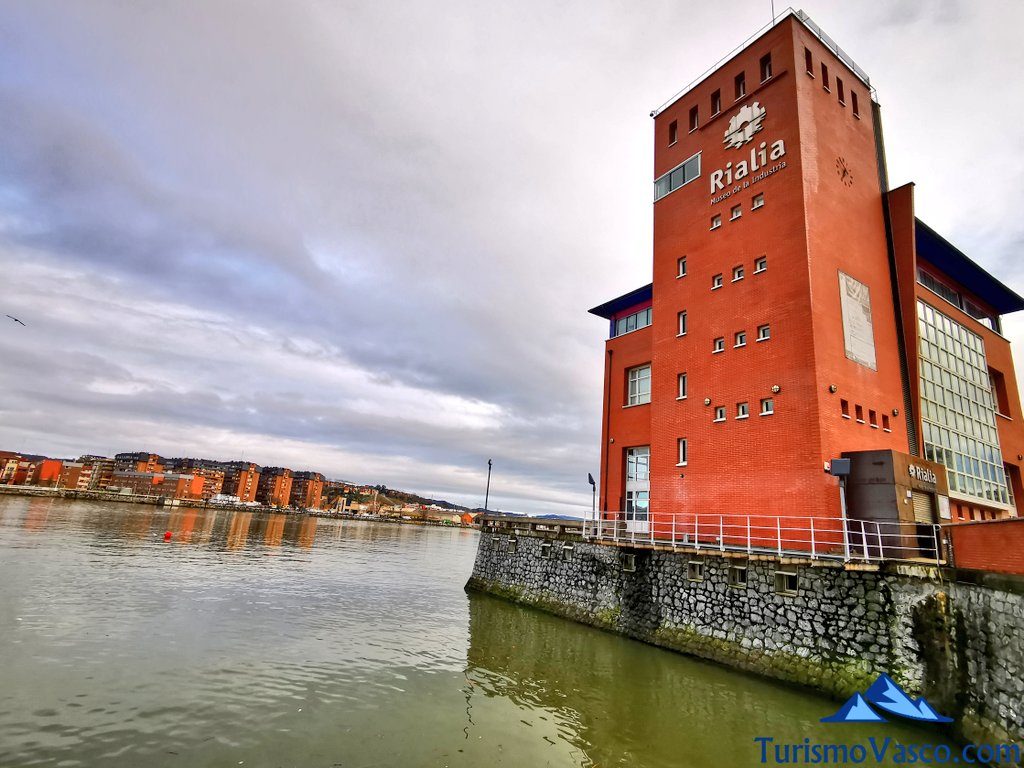
Azeta Park: This park is one of the most recently created spaces in Portugalete. A green area of more than 15,000 square meters, which has a pergola, a climbing wall and an elevator. A good area to link the lower and upper areas of this town in Bizkaia. 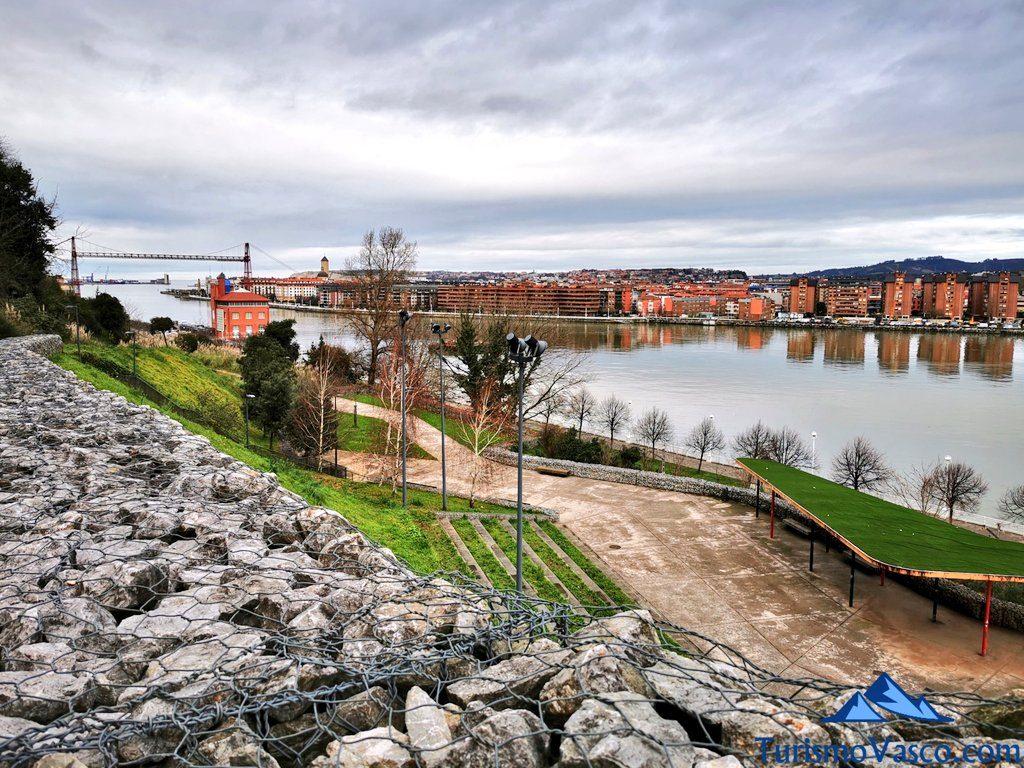
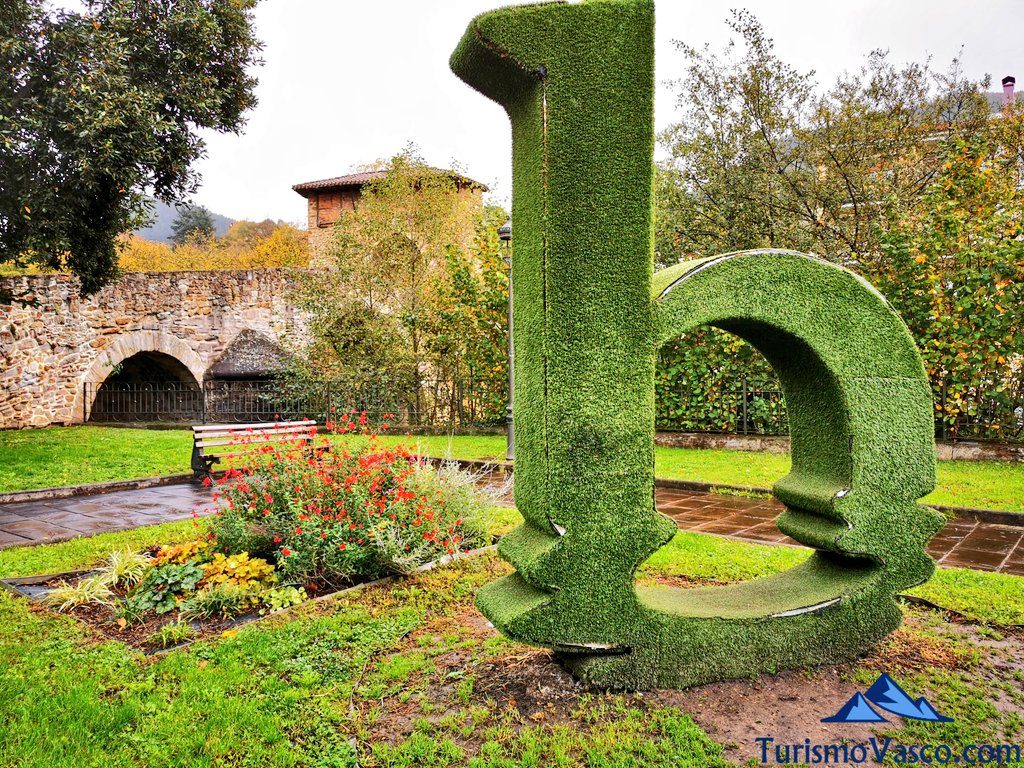
The spaces we have mentioned in this section(what to see in Portugalete), are some of the most emblematic of the town, but not the only ones. An example of this is the Plaza de la Ranchería or the different sculptures that we find scattered among its squares and streets. 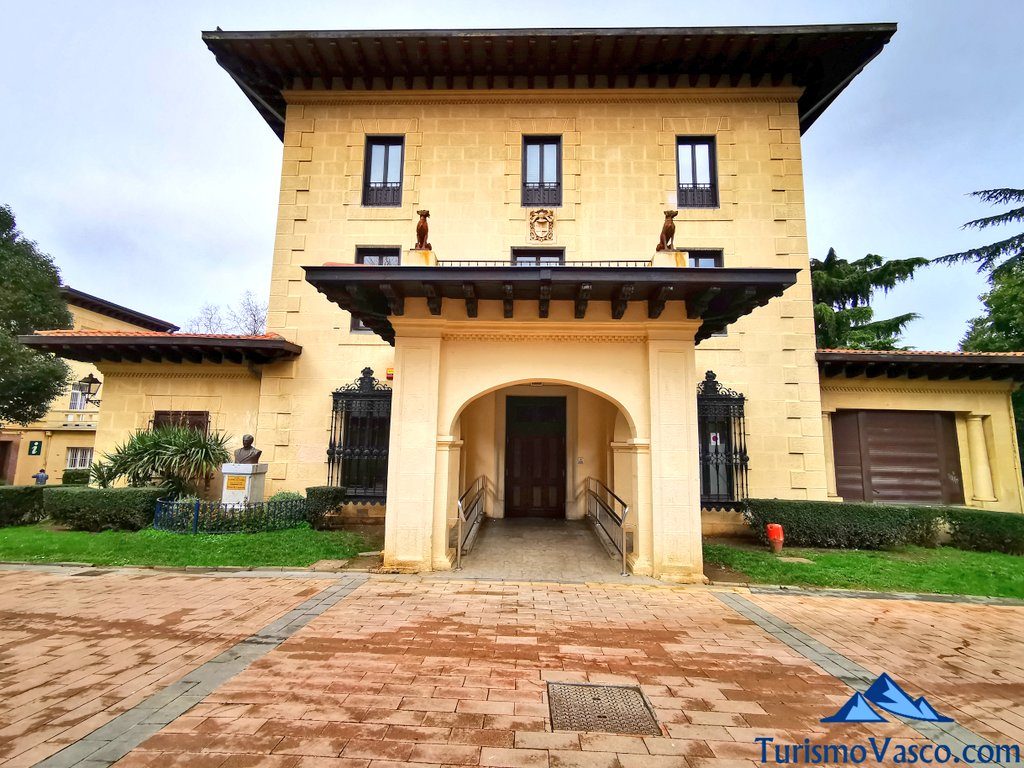
How to get to Portugalete.
To get to Portugalete we can use both private and public transport. In our case, we always like to cross the estuary from Getxo. And is that using the Bizkaia Bridge or the gasoline to get to Portugalete adds a very special charm to any getaway to this Basque town. Highly recommended, especially if you are traveling with children. In any case, here are the most used options to get to Portugalete.
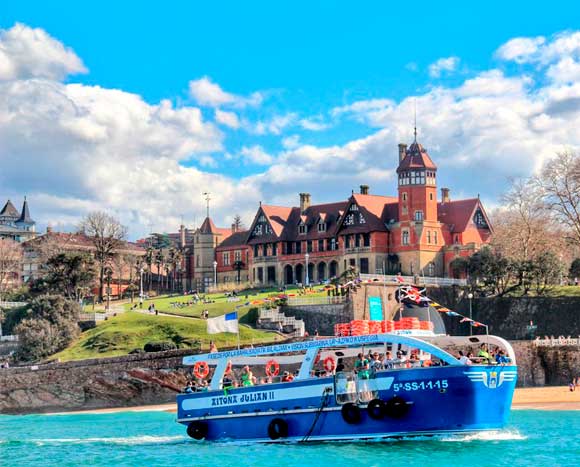
- Public transport: Public transport offers a number of options to get to Portugalete. Among them, the most important are the suburban train that we find in front of the museum of the industry, the metro line 2, the Bizkaia Bridge, the gasolino (the boat that joins the 2 banks of the estuary of Bilbao) and the different lines of Bizkaibus (the most demanded is the line 3152 Bilbao – Portugalete). Our recommendation is that you try to enjoy the 2 most emblematic transports, the Bizkaia Bridge and the gasolino, so we suggest that you travel by metro to Getxo and pass the estuary at the Suspension Bridge to make the return trip on the gasolino. This way you will be able to enjoy the authentic transportation.
- Private transport: In case you want to get to this Basque town by private transport, the best option is to use the A8 freeway and take the Portugalete exit. You can’t miss it. Although, following the recommendation we have made in the section on public transport, you can leave the car in Las Arenas (Getxo) and use the Bizkaia Bridge or the gasoline to get to Portugalete.

What to see near Portugalete.
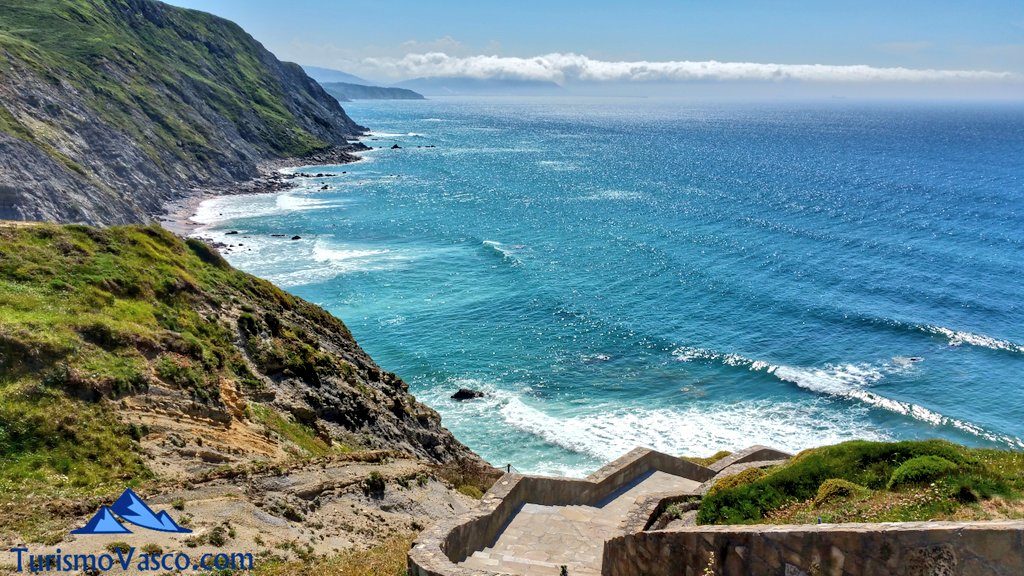
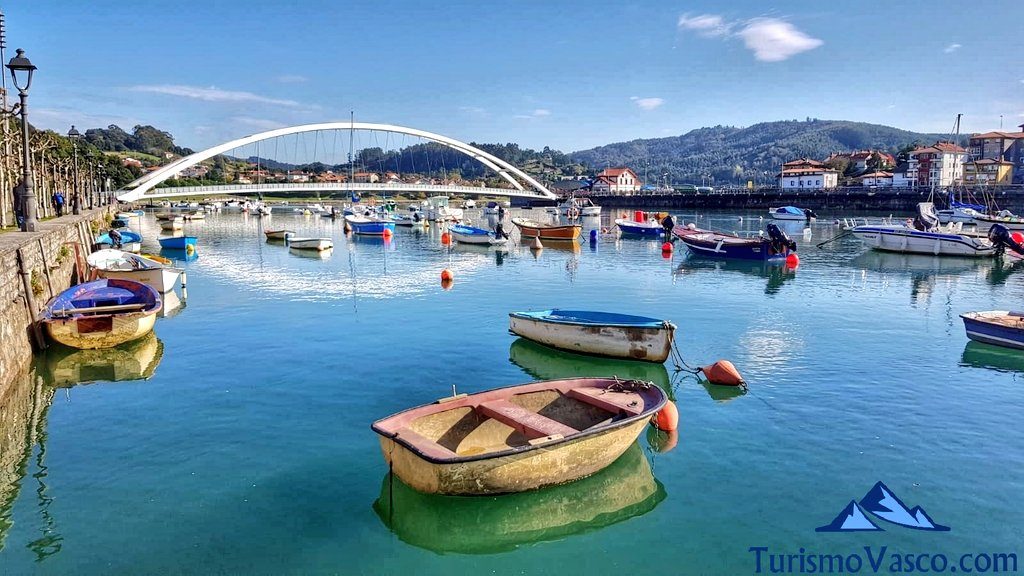
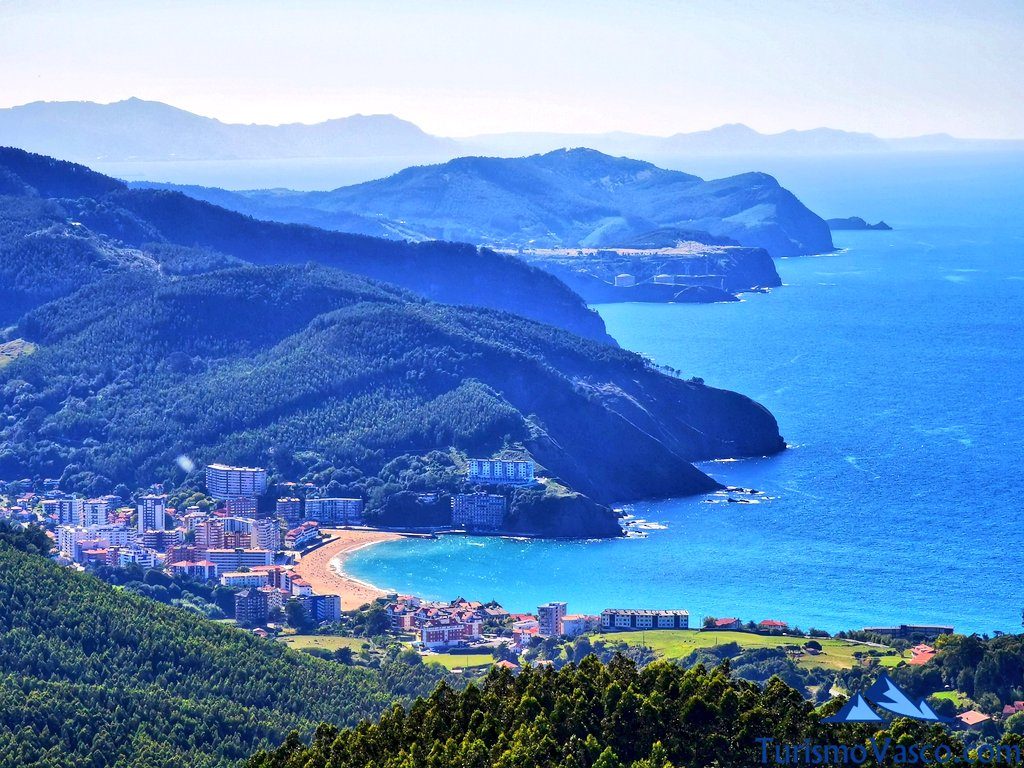
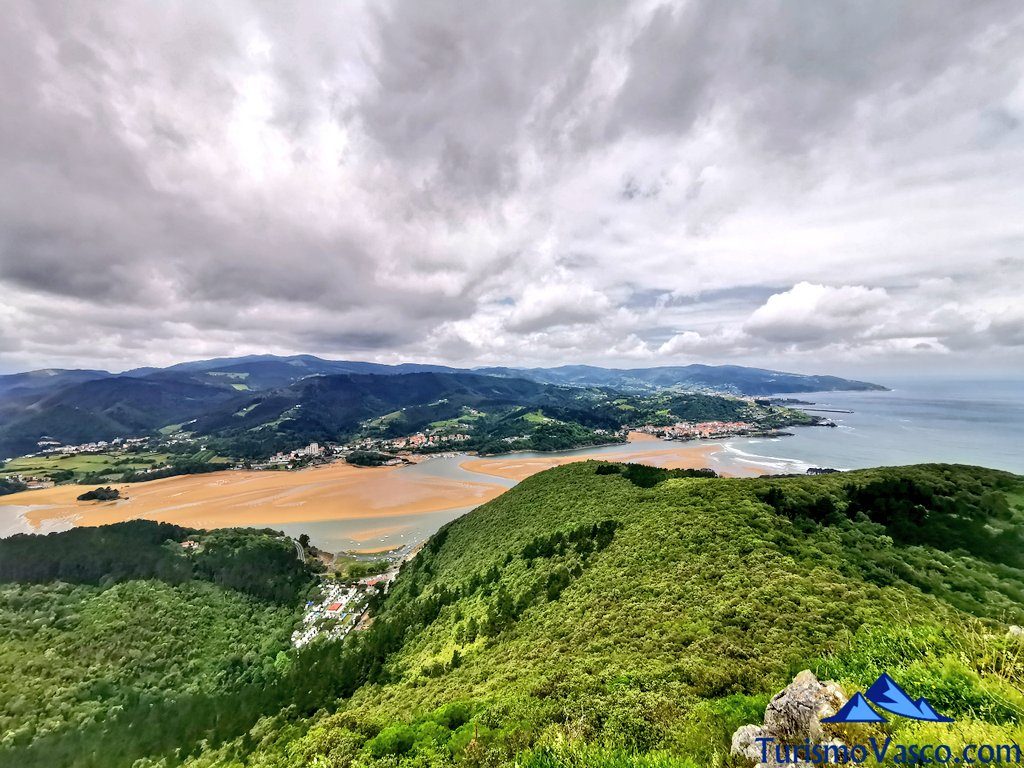
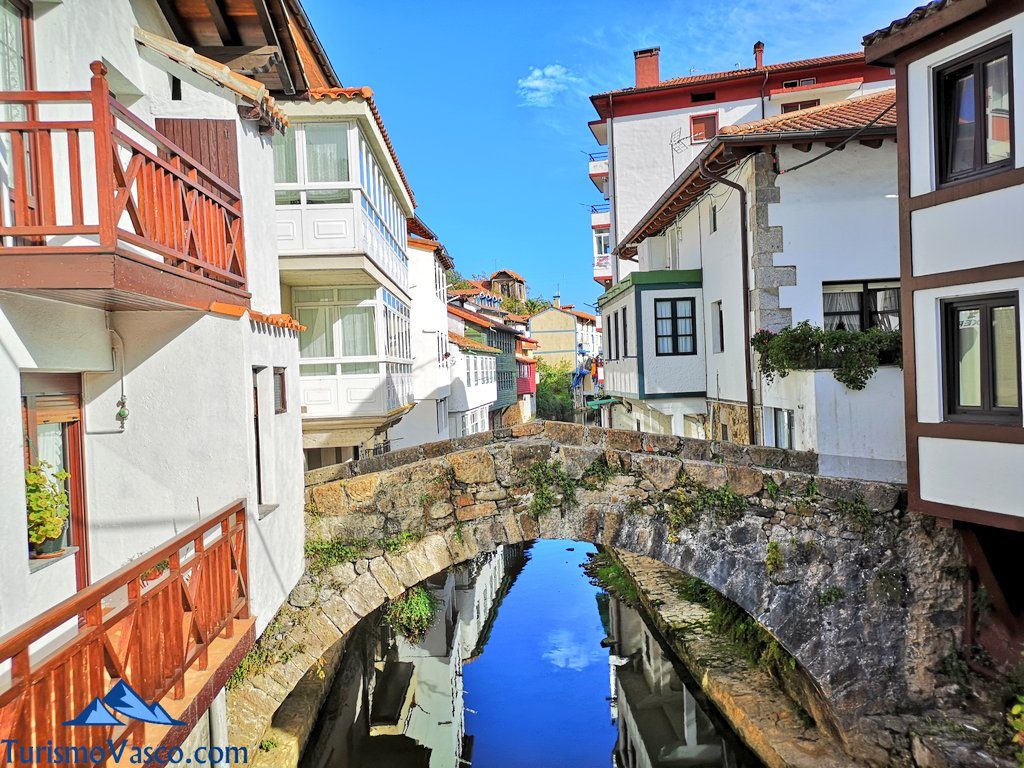
The villages surrounding Portugalete, perfectly complement the tourist charms of this town in Bizkaia. We leave you a list with the towns and places that we recommend you to visit in any trip to Portugalete and Bizkaia.










What to do near Portugalete.
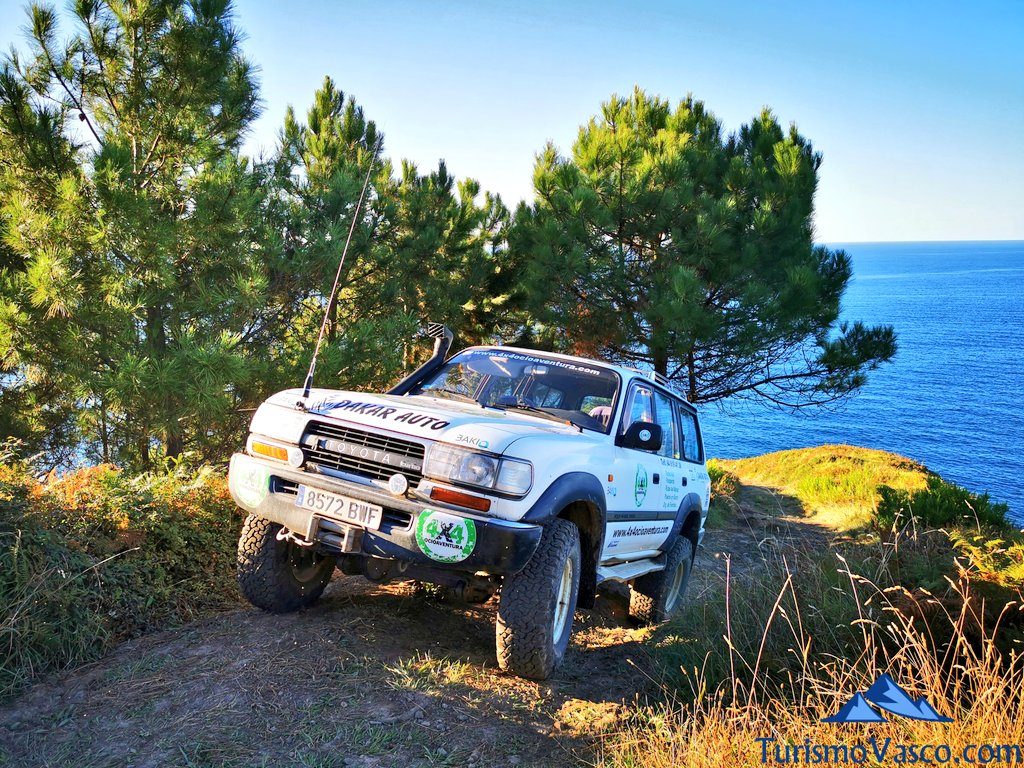
Portugalete and the province of Bizkaia offer us a good number of experiences to enjoy. We recommend you to book some of the activities that we show you in this section. They are well worth it. If you want to book in advance, remember that you can do it safely, quickly and at the best price from our reservation center. We hope you like them.





Video of Portugalete.
As usual in all our articles, we wanted to complement the words and photographs with a short video. We hope it will help you to get a more realistic idea of what awaits you in this beautiful Basque destination. In case you like this kind of videos, we encourage you to subscribe to our YouTube channel to know all the places and experiences that we recommend to see and enjoy in Euskal Herria. We are sure that one of our many videos will catch your attention. Maybe you will find your next destination.
History of Portugalete.
This town founded in 1322 by Maria Diaz de Haro, Lady of Bizkaia, had its golden age between the fourteenth and fifteenth centuries. Unfortunately, its decline began in the 16th century. These ups and downs were directly related to the commercial changes produced in the Bilbao estuary. Although Portugalete was initially one of the most important commercial ports in Bizkaia, when the Bilbao estuary began to become one of the most important commercial areas in the Basque Country, Portugalete saw its commercial activity reduced in favor of Bilbao. During the 19th century, Portu became one of the most sought-after tourist destinations for the Biscayan and English bourgeoisie thanks to its seaside resort and beach. Today, the port has been reduced to a pontoon for leisure boats, but tourism is still booming thanks to the Bizkaia Bridge, its historic center and its strategic location. 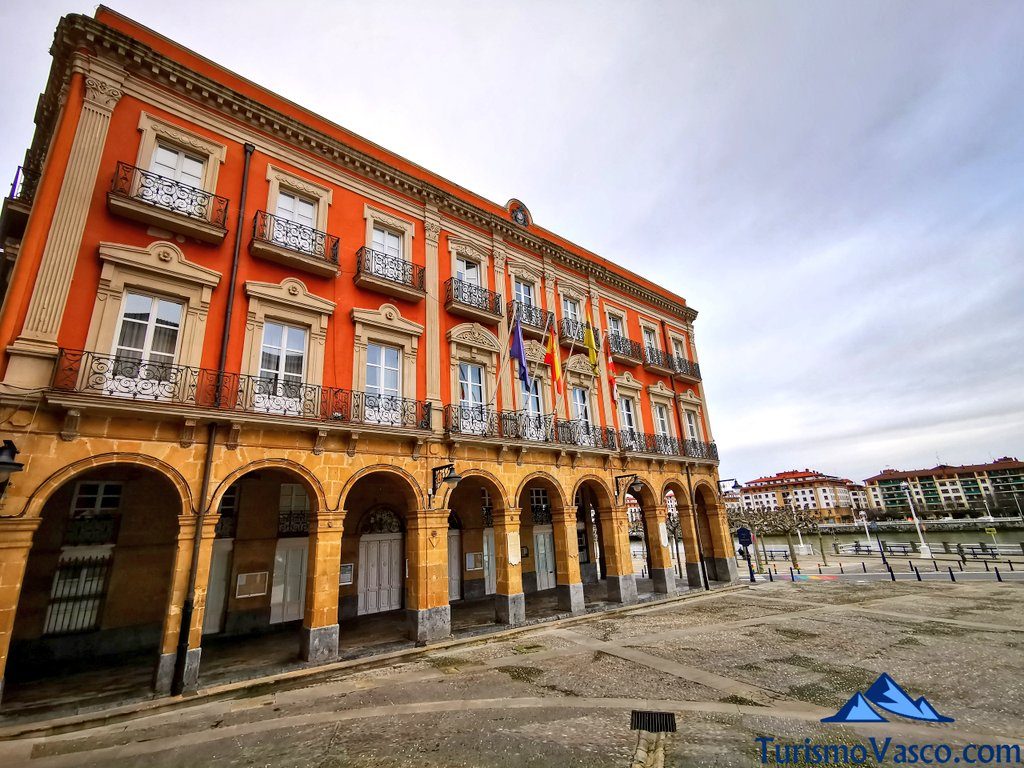
Curiosities of Portugalete.
In this section we are going to mention some of the curiosities of Portugalete that usually attract the attention of visitors. We hope you like them.
- Did you know that, during the inauguration of the Bizkaia Bridge (July 1893), the Infanta Isabel passed 7 times from one side of the river to the other? And it seems that she loved this peculiar transport.
- During the Civil War, one of the main elements of the Bizkaia Bridge, the central crossbeam, was destroyed during a bombing raid.
- Did you know that Alfonso XIII had a special affection for Portugalete? In fact, the monarch visited this town during several summers.
- Did you know that Portugalete was for years the port from which Castilian wool was exported?
- Did you know that the inhabitants of Portugalete are called jarrilleros due to the fact that in the 19th century it was a tradition to taste our beloved txakoli in jugs?
- Did you know that until the construction of the Churruca dock, the maneuvering of the entrance to the Bilbao estuary entailed a great risk? The large sand bar that was created at the entrance of the channel caused many ships to be shipwrecked. In fact, as a result of this problem, the figure of the “lemanes” was created, people who helped the ships to avoid the sand bars that were created at the bottom of the estuary.

Portugalete Festivities.
Portugalete has all kinds of events throughout the year. Among all of them, we must highlight the festivals and festivals held in this seaside town. Examples are the International Folklore Festival, its patron saint festivities in honor of San Roque (from August 14 to 17) and the festivity of the Virgen de la Guía (July 1). 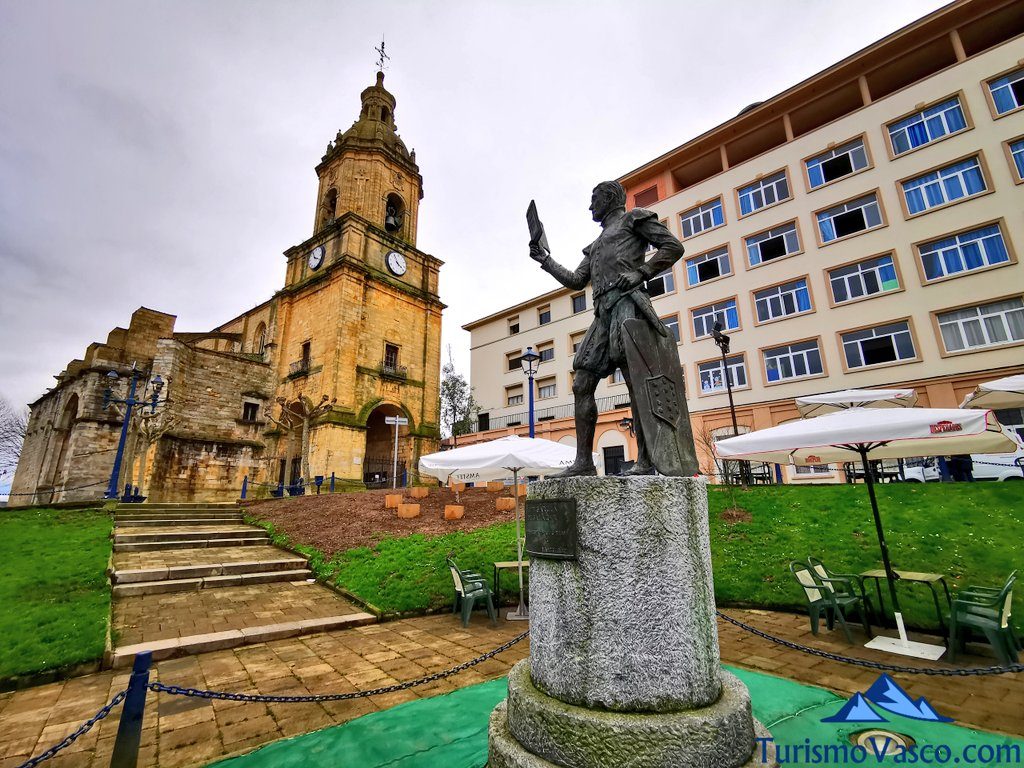
As you have been able to see, Portugalete is much more than the Bizkaia Bridge. We encourage you to go into its historic center to know in first person some of the most outstanding charms of this town in Bizkaia. In case you have any questions or suggestions about what to see in Portugalete, we recommend you to use the comment system that you will find below these lines to let us know. We will try to respond as soon as possible. Ondo pasa!


0 Comments