




Lekeitio, what to see and do in one of the most beautiful fishing villages in Bizkaia.
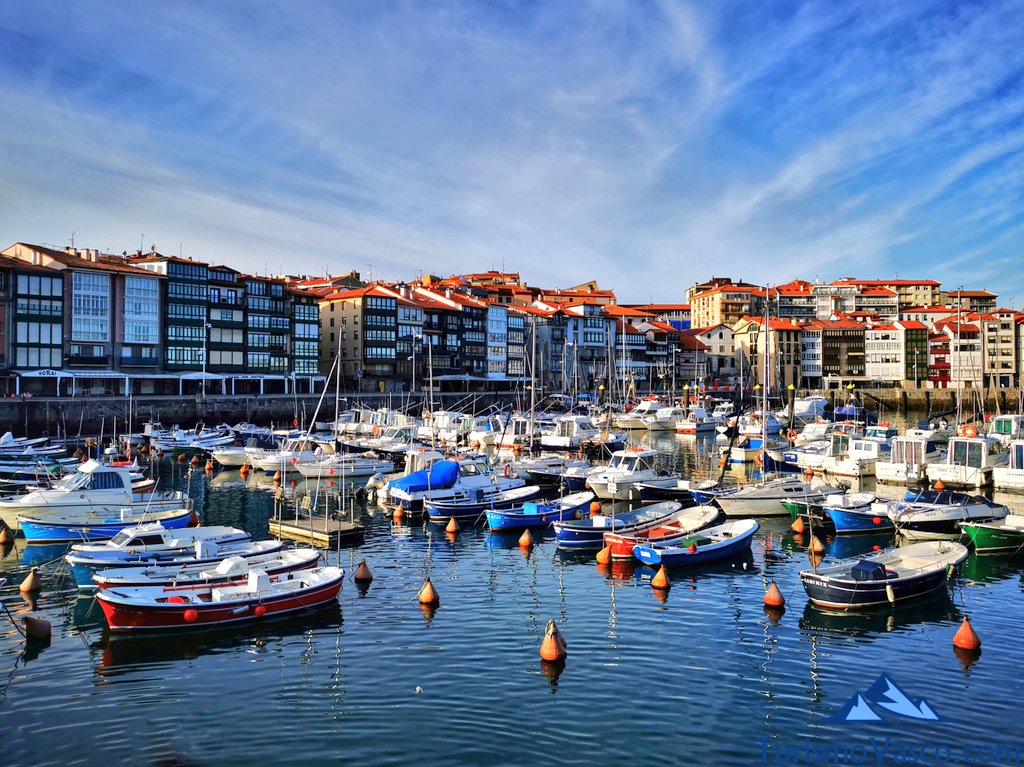
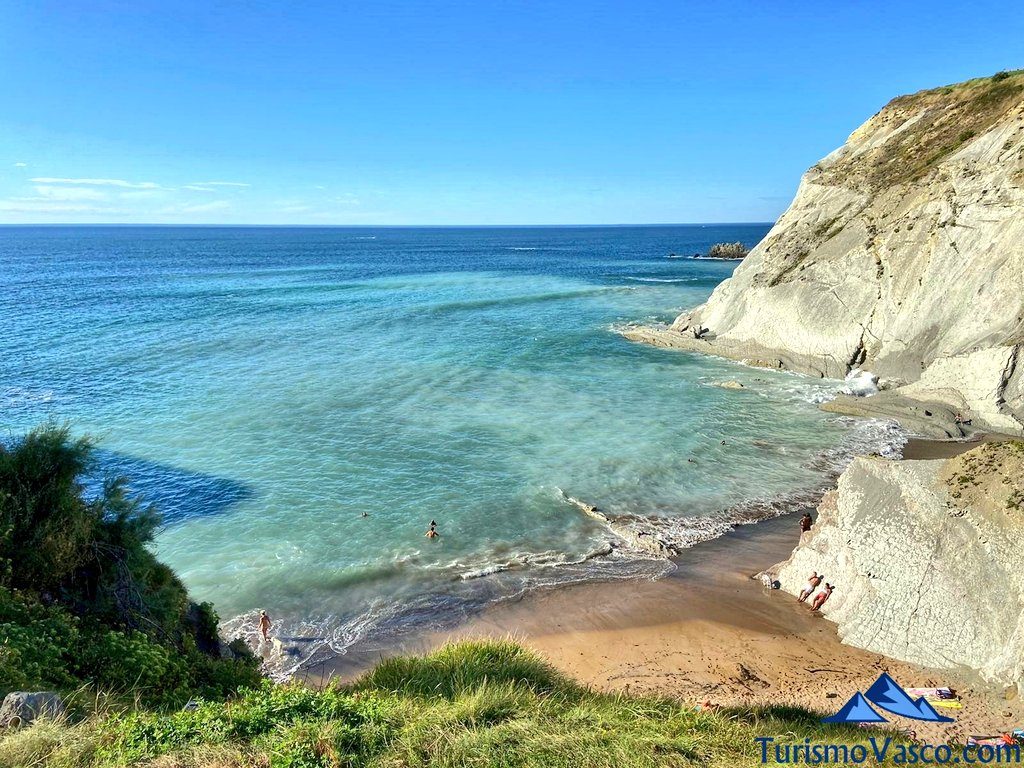
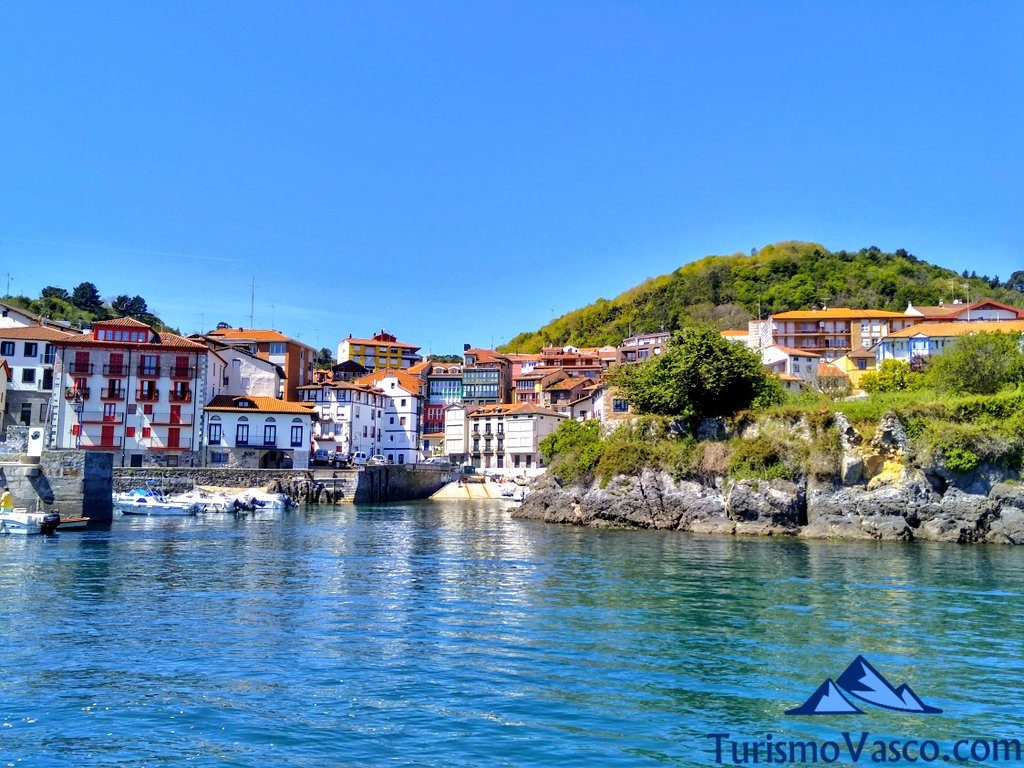
Lekeitio, a town located on the Basque coast, one hour from Bilbao, offers us a stroll around its lively fishing port while enjoying its incredible historical and cultural heritage. Nature is another of the great attractions of Lekeitio, and spaces such as the Otoio and Lumentza mountains merge with the island of San Nicolás and the cliffs of Santa Catalina to offer us a unique, luxurious setting. Lekeitio has a great fishing tradition. Like other towns along the Basque coast, Lekeitio was famous for centuries for whale fishing. Unfortunately, the whales were disappearing from our coasts, but Lekeitio continued to maintain a close relationship with the sea. So much so, that the lively and colorful port of Lekeitio is still today the nerve center of this wonderful Basque town. Would you like to know what to see in Lekeitio with us?
Information about Lekeitio.
- Online reservations: Here.
- Population: Just over 7,000
- Attractions: Beaches, cliffs, fishing port, gastronomy, architecture.
- Location: Lekeitio, Bizkaia, Euskadi.
Lekeitio is a quiet village in winter that is transformed with the arrival of tourists and vacationers. To such an extent that it doubles its number of inhabitants in summer. If you plan to visit Lekeitio in summer, you will find a town full of life. A great atmosphere to enjoy each and every one of the points of interest that we mention below. 
What to see in Lekeitio.
If you want to know what to see in Lekeitio, we recommend you to pay special attention to this section. In it we mention some of the most important places of this town in Bizkaia. We hope you like them. 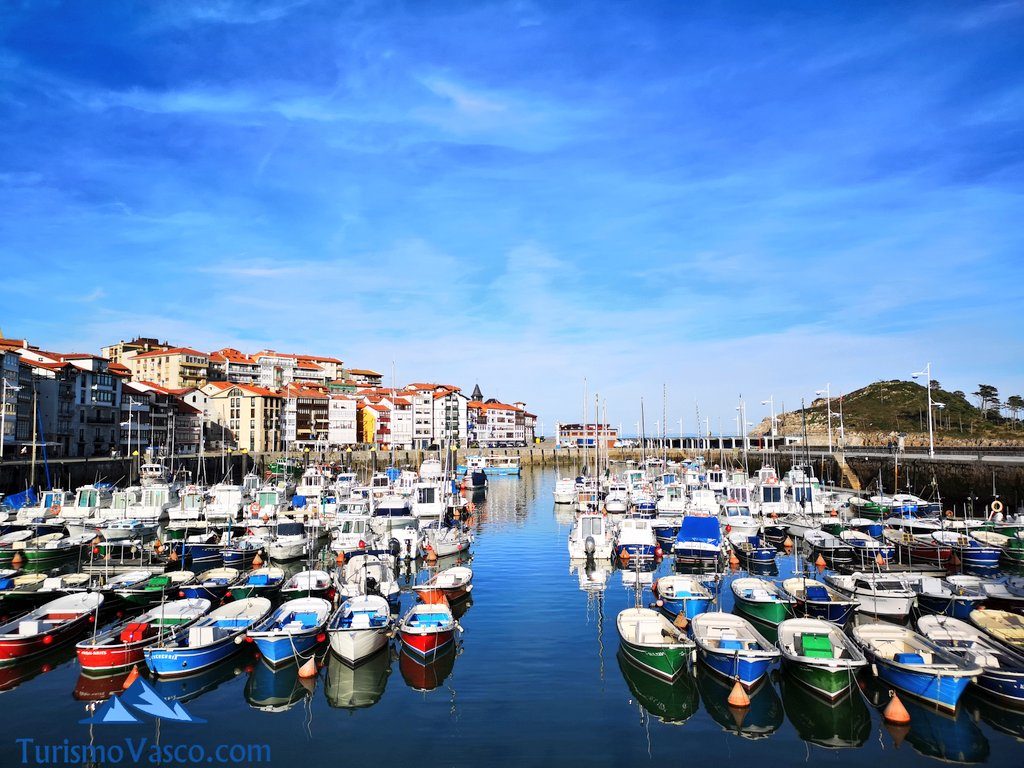
Old Town: The streets and squares of the old town of Lekeitio keep an impressive list of spaces to visit and enjoy. Authentic architectural jewels, which, represented by the Basilica of the Assumption of Santa Maria invite us to walk through the narrow streets of this urban center. We recommend you to take a short route through the historic center of Lekeitio to learn first hand the history of this town through its tower houses, palaces, convents and churches. 
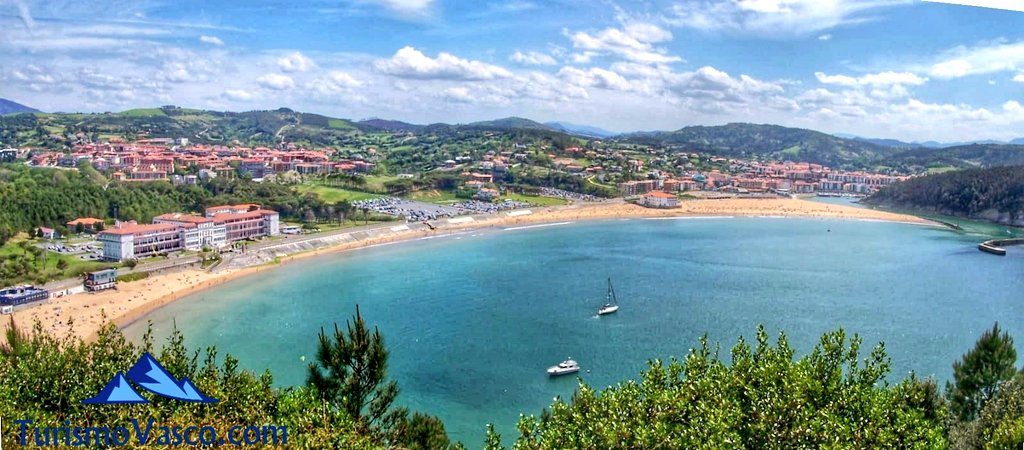
Isuntza Beach: Isuntza beach is one of the most popular beaches in the town due to its proximity to the town center and the port. This sandy beach has all the necessary services to enjoy the sea in total tranquility. From the right end of Isuntza there is a small jetty that allows us to reach the island of San Nicolas during the low tide. If you choose to reach the island, you should know that the promenade is full of green that makes that we can slip easily. Caution. 
Karraspio beach: Karraspio beach is located 15 minutes walk from the center of Lekeitio. A sandy beach a little more extensive than Isuntza, which invites visitors to enjoy countless water activities. If you like walking, we recommend the coastal promenade that separates Lekeitio and Karraspio, we are sure you will love the views that this walk offers. 
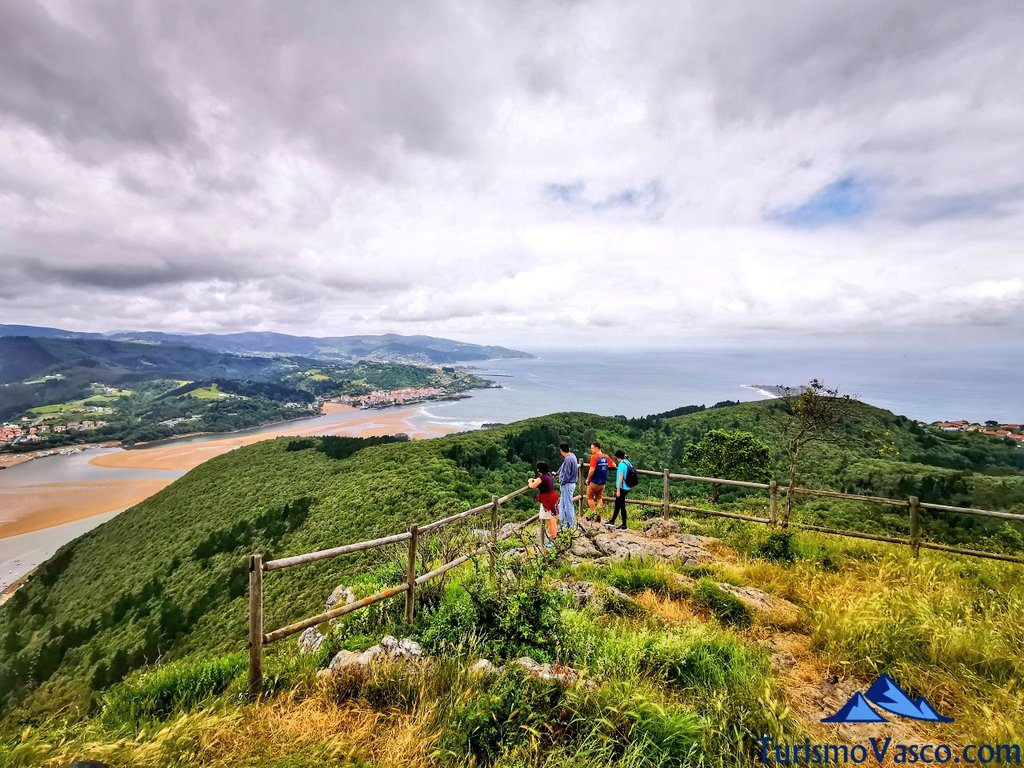
Lumentza viewpoint: The Lumentza viewpoint offers one of the best panoramic views of Lekeitio. This 115 meters high mountain is located between the historic center of Lekeitio and the mouth of the river Lea. A space that encourages us to make a short family route to reach its viewpoint. As curiosity we must mention that formerly this mount was used as watchtower from where to watch the passage of the whales. 
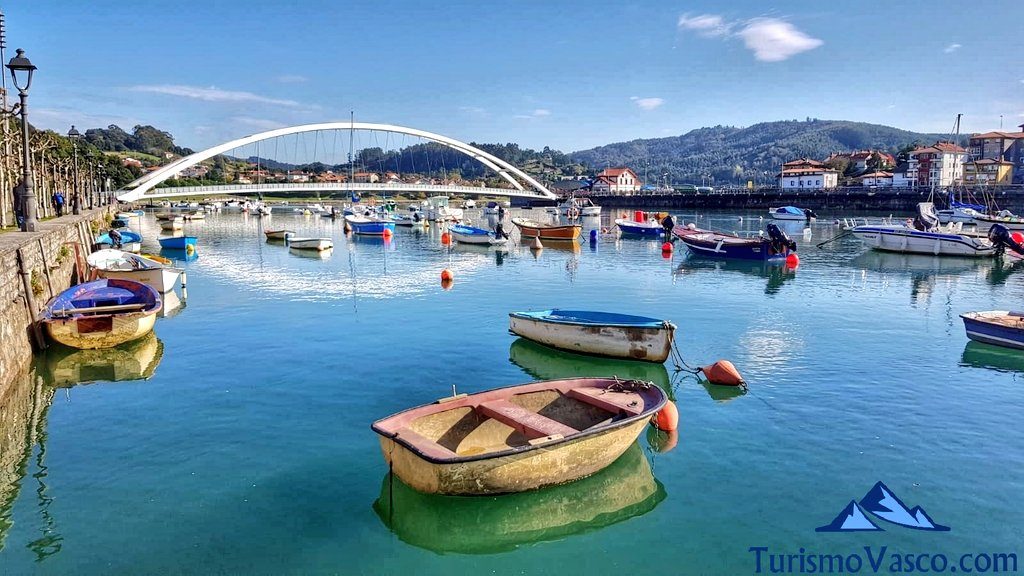
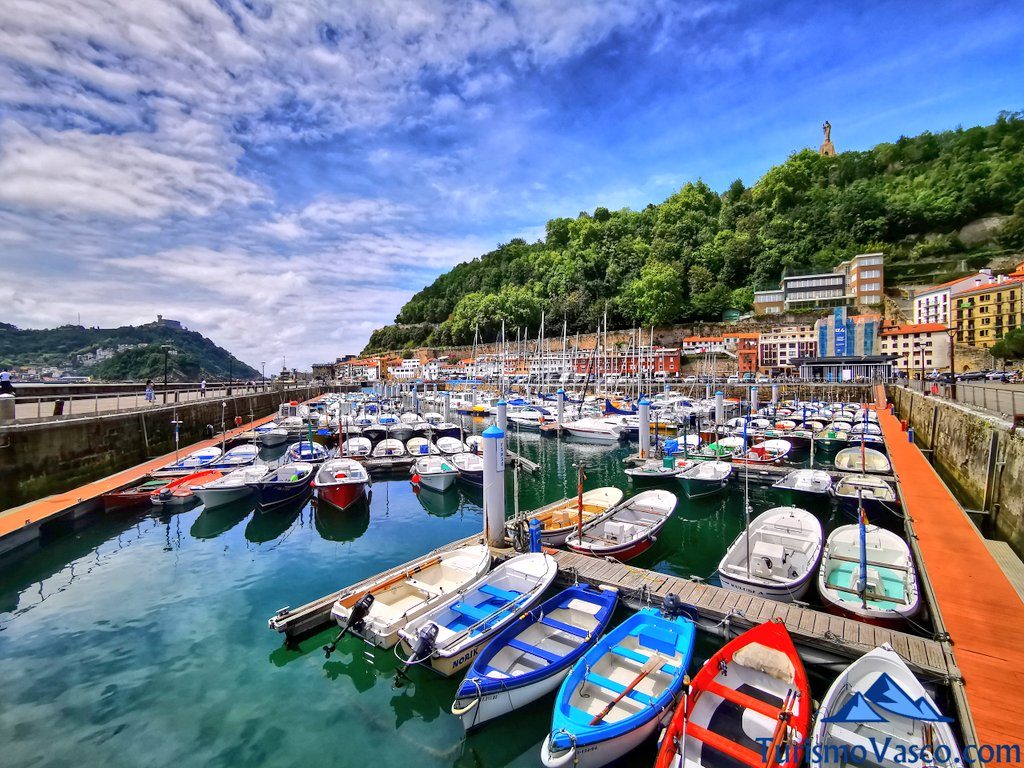
The port: The port of Lekeitio is protected by the island of San Nicolás and a breakwater that starts from the lower part of the logging. A port, which, although it has a large number of pleasure boats, still maintains the fishing spirit of yesteryear. Around it we find the fish market and numerous bars and restaurants. 
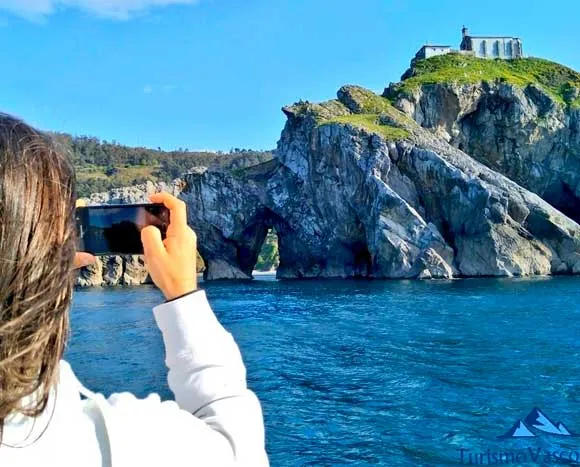
San Nicolás Island: San Nicolás Island, also known as Garraitz Island, is located in front of the mouth of the Lea River. In the 17th century, a Franciscan convent was built there, but due to the adverse weather conditions and the lack of fresh water, it ended up disappearing. This island was also used to confine the sick during the great epidemics that have hit the town. We must indicate that, although during the low tide it is possible to arrive until the island on foot, we must extreme the precautions. And it is that the verdigris that covers the boardwalk that leaves from the beach of Isuntza can cause more than one slip. 
Mouth of the Lea River: The Lea River flows between the beaches of Isuntza and Karraspio, on the right side of the island of San Nicolas. This river has been for centuries a strategic space in the economic evolution of Lekeitio. And it is in this corner of the town where the shipyards and forges of the town were located. 
Santa Catalina Lighthouse: The Santa Catalina lighthouse is one of the few lighthouses that can be visited in the entire Cantabrian coast. A space, in which the navigation techniques, the functioning of the lighthouses and the way of life of the families that lived in this type of structures are put in value. If you want to know more about the San Catalina lighthouse, we recommend you to read our article about the Santa Catalina lighthouse in Lekeitio. 
Old Wall: Although in 1334 King Alfonso XI ordered to build a wall to protect the town of Lekeitio, the remains of wall that we find today next to the cemetery correspond to the second wall that was built in the fifteenth century. As part of this wall, several watchtowers were built, of which only the tower known as Torrezar is still standing. 
Convent of Santo Domingo: This space, popularly known as the convent of the Dominican Mothers, was officially created in 1396. During the two great fires that devastated Lekeitio in 1442 and 1595 the convent was destroyed. The present convent is a reconstruction of that building. 
Basilica Santa Maria Asuncion: This religious temple is one of the most emblematic buildings of Lekeitio. The basilica that we contemplate today was built in the 15th century over a temple of the 13th century. If you like the exterior of the basilica of Santa Maria we recommend you to visit its interior, we are sure you will be surprised. 
Pascual Abaroa Monument: Next to the Santa Maria Basilica, in the Independence Square, we find the sculpture and monument to Pascual Abaroa. A work of art made in bronze on a stone pedestal by Moisés Huerta that presides over the square. 
Arranegi Square: Arranegi Square represents one of the most striking spaces in the historic center of Lekeitio. A very special square, which, located next to the port, represents one of the most traditional places of sale of fish in the town. In addition, in Arranegi square we can contemplate several of the most important tower houses and palaces of Lekeitio. 
Hermitage of San Juan: The hermitage of San Juan, popularly known as San Juan Talako (San Juan de la atalaya in Basque), is located on the coast, on the cliffs of Lekeitio. A small and simple religious temple that had to be rebuilt in 1772 due to a landslide. 
Felling: The watchtower of Lekeitio, popularly known as the tala of Lekeitio, is one of the most special spaces of the town. Located on the cliffs, facing the island of San Nicolas, the tala allows us to enjoy beautiful views of the entire coast of Biscay. It was here, in the square next to the chapel, where the cannons that defended the entrance to the port of Lekeitio were once located. 
Hermitage of Santo Cristo de la Piedad: The hermitage of Santo Cristo, also known as Aitta Piel, is a small temple that has as its origin one of the many crosses that we find in Euskadi. The first documents about this hermitage indicate that it already existed in 1675. 
Upa etxea: This medieval tower located in Arranegi square has a striking coat of arms on its façade. It is the coat of arms of the Abaroa Uribe family. According to experts, it would be dated 1604. 
Casa Salinas: This house located in front of the convent of Santo Domingo, could have been according to some experts the tower house of Nicolás Ibañez de Arteita, an important sailor from Lekeitiarra and father of Iñigo Martinez de Arteita, Captain of the Biscayan Navy.
Town Hall: The town hall of Lekeitio that we contemplate today is not the original one that was built in 1525, because it was burned by the flames in the fire of 1595. The building that today presides over the Independence Square was built in 1721. A structure that stands out for its arcade of 4 arches, its coats of arms and balconies. 
Oxangoiti Palace: At the back of the town hall we find the Oxangoiti Palace, a building built in 1674 that stands out for its impressive main door.
Arteita Tower: To know the origin of the Arteita Tower we must go back to the XVI century, when the original structure of this tower was built. The palace that we contemplate today is a reconstruction made in the 18th century on the previous one. 
Sosoaga Palace: Located in the upper part of the historic center of Lekeitio, this palace was built in 1643 on the Uribarria tower by Captain Bartolomé Lopez de Sosoaga.
Shipyards of Lekeitio: The naval sector was for years one of the most important activities of Lekeitio. Thanks to the shipyards in towns like Lekeitio, it has been possible to keep alive the tradition and technique of building wooden boats that used to fish our coasts. If you like this theme, we recommend you to visit Albaola, you will love it. In this sense, we must point out that the banks of the river Lea represented one of the corners with the highest number of shipyards per square meter of Bizkaia. And we must remember that there were more than 6 shipyards in this stretch of the Basque coast. 
San José Church: The church of San José was built in 1731 annexed to the palace of Captain Joseph Mendiola. Years later, Mendiola donated the palace to the Society of Jesus in order to create a school inside. 
Abaroa Palace: This palace built in 1891 is one of the most important in Lekeitio. A building built in 1891, which, for years was the residence of one of the most transcendental characters of Lekeitio, José María Abaroa. A Basque businessman who, although born and raised in Lekeitio, lived in Paris for many years. Hence the French architectural influence that we observe in this beautiful palace. 
Torre Maguregi: This tower house located in the historic center of Lekeitio attracts the attention of all visitors. The large coat of arms that we find on the side of its facade catches our attention as we walk through this special corner of the Basque coast. This building was originally a fortified space that in the 17th century was transformed into a residential building. 
All the spaces we have mentioned are just a small representation of what you can see in Lekeitio. In addition to all the mentioned spaces, we recommend you to visit the Uriarte Palace, the Zubieta Palace, the Arostegi Palace, the Uribarren Palace House, the Turpin Tower, the Cristo Portal Shrine, the Old Nautical School, the Santa Elena Chapel, the Leniz Tower or the Zahar Tower among others. 
History of Lekeitio.
Although Lekeitio has been inhabited for more than 30,000 years, the history of Lekeitio begins to have greater importance from the year 1325, along with the title of villa granted by the Lady of Bizkaia Maria Diaz de Haro. Years later, Alfonso XI ordered to build a wall to protect one of the strategic towns of our land. For centuries Lekeitio has evolved along with maritime activities. In fact, the economy of this town was linked to fishing, shipping, shipbuilding and even pirates. Lekeitio has a long fishing tradition. In fact, we are not exaggerating when we say that it is one of the most important fishing municipalities of our coast. As you can see, this town has always been linked to the sea, a true reflection of this is the coat of arms of the town. Until the whales began to disappear in the 17th century, whale fishing was one of the most important sources of income in Lekeitio. From the 18th century onwards, whale fishing disappeared, but fishing and the rest of the maritime activities continued to be an important part of Lekeitio. In the 19th century, the first tourists began to arrive in Lekeitio. Among them, important personalities such as Queen Isabel II and Empress Zita. Nowadays, Lekeitio merges its fishing activity with all kinds of business related to tourism.
Festivities of Lekeitio.
The most famous festivities of Lekeitio, San Antolines, are celebrated during the first week of September. These festivities have a very special day, the day of geese (September 5). During this day takes place an event that has generated much controversy in recent times. The crews row in their txalupas until they find a goose that waits hanging upside down from a rope over the port until one of the members of the crew grabs it by the neck and places it under his armpit. At this moment the txalupa is removed and the rope is loosened and stretched, causing the man or woman holding the goose to fall into the water from a distance of several meters. The objective of this test is to hold on to the goose for as many lifts as possible before the goose breaks its neck. The controversy of this test is that in the old days the geese were alive. Fortunately, we have advanced as a society. Now, each team has the option to choose the type of goose:
- Artificial goose: This is a goose created by a Basque company, in which engineering and technology are allied to create a goose capable of emulating a real one.
- Natural goose: The natural goose, the traditional one, but obviously lifeless.
The geese day has been celebrated in Lekeitio for many centuries, although the first documents proving its existence date back to the 5th century.
What to see near Lekeitio.
In the surroundings of Lekeitio we find villages of great charm. Unique spaces that we recommend you to visit after enjoying all the spaces of the urban nucleus that we have mentioned today. We hope you like them.












How to get to Lekeitio.
There are several ways to get to Lekeitio, but the fastest way is to take the A8 highway towards Donostia San Sebastian and then take exit 18. From this point we must take the BI-635 road to Gernika and then the BI-638 to Lekeitio. Another option is to take the Durango exit, exit 17 of the A8. Once in Durango we will use the BI-634 road towards Markina Xemein and then the BI-2405 road to Lekeitio. 
Where to park in Lekeitio.
Lekeitio has several parking lots on both sides of the traffic circle at the beginning of the village. Although they have plenty of parking spaces, in summer they are usually full so we recommend getting up early. If you travel by van or motorhome, you should know that there is a parking lot with all the necessary services (except electricity) near the Health Center and the Palace of Zubieta. You can buy the tokens for the water in the tourist office of Lekeitio, in the center. 
Video of Lekeitio.
As usual we wanted to complement the words and photographs in this article with a short video about Lekeitio. An audiovisual, with which we intend to show you in a more real way what you will find during your getaway to this corner of Euskadi. If you like this kind of videos we recommend you to subscribe to our YouTube channel to know more places like this one.
We strongly recommend you to visit and enjoy every corner of Lekeitio that we mention in this article. In case you have any questions about what to see in Lekeitio, we recommend you to use the comment system that you will find below these lines to let us know. We will try to respond as soon as possible. Ondo pasa!


0 Comments