




Table of Contents
What to see in Mungia, one of the most important urban centers of Uribe Kosta.
Mungia, one of the most important towns of Bizkaia, offers us to enjoy its important architectural and cultural heritage. A legacy that has lasted from the Middle Ages to the present day. Among its most striking attractions we find great examples of civil architecture such as mills, farmhouses, palaces or churches found throughout its territorial limits. Among all of them, we must highlight Torrebillela and Landetxo Goikoa. Although most of the attractions of Mungia are in its urban core, this town has 9 neighborhoods in which the agricultural and livestock tradition is still kept alive. In fact, in Mungia you can find products of the highest level. We encourage you to visit one of the many azokas (fairs in Basque) that are held throughout the year. A great opportunity to taste some of our most emblematic products. Would you like to discover what to see in Mungia with us?
Information about Mungia.
- Online reservations: Here.
- Population: 17,500
- Attractions: Rural area, local products and civil architecture.
- Location: Mungia, Bizkaia, Euskadi.
Mungia is one of those places that do not appear in the tourist guides, an inland area that loses strength compared to its coastal neighbors like Bakio and Bermeo. But for us Mungia has always been a historical center to be taken into account. We encourage you to read this article to check it out. Remember that you can follow us on Twitter, Facebook, Instagram or YouTube to keep up to date with all the experiences and places that we recommend throughout the Basque Country. 
What to see in Mungia.
Mungia, inland municipality strategically located less than 25 minutes from the coastal towns of Bakio and Bermeo, just 10 minutes from Bilbao airport, awaits us to show us the baserri (farmhouse in Basque) Landetxo Goikoa, the Agirre Palace or Torrebillela among others. Undoubtedly, the most important attractions of the town. But they are not the only ones. Throughout this section we will show you some of the places we recommend you to see during your visit to Mungia. Ready? 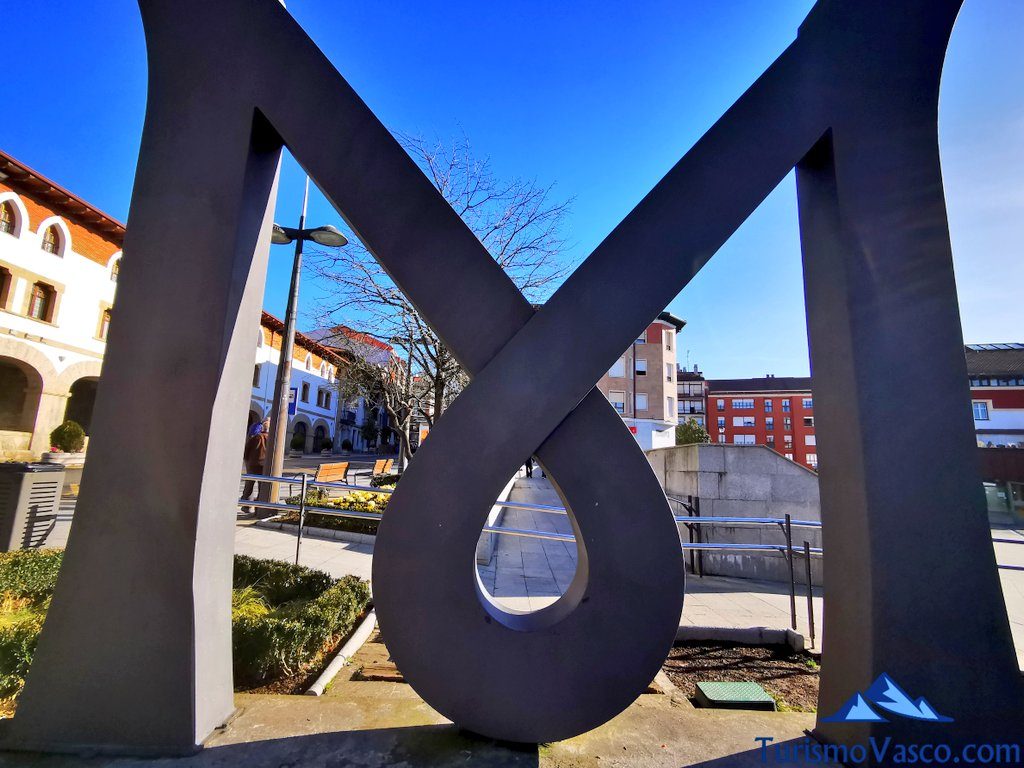
Landetxo Goikoa: Landetxo Goikoa, a baserri (farmhouse in Basque) of the XVI century declared Cultural Good, has been reconverted in a thematic park on the Basque mythology, Izenaduba Basoa. We must indicate that, just as Igartubeiti is one of the oldest baserris in the province of Gipuzkoa, Landetxo Goikoa is one of the oldest in Bizkaia. A baserri, which shows us in a very faithful way how they lived in these houses where they worked all the products that were produced. Undoubtedly one of the jewels of all Euskal Herria. Due to the great success of the Christmas guided tours in which you can visit Mari Domingi and Olentzero, the famous charcoal burner who delivers gifts to all the houses of Euskal Herria, this farmhouse is also known as “the Olentzero’s house”. 
Church of San Pedro: The church of San Pedro was during the Middle Ages the most important religious temple of the whole region. A structure, which in addition to standing out in the architectural and religious aspect, also does so in the historical facet. And we must emphasize that it is here, inside the church of San Pedro, where the lords of Butron are buried, a surname that we are sure you will be familiar with, and you may have inadvertently visited what was their home, the Castle of Butron. Another of the architectural jewels of this area of Bizkaia. 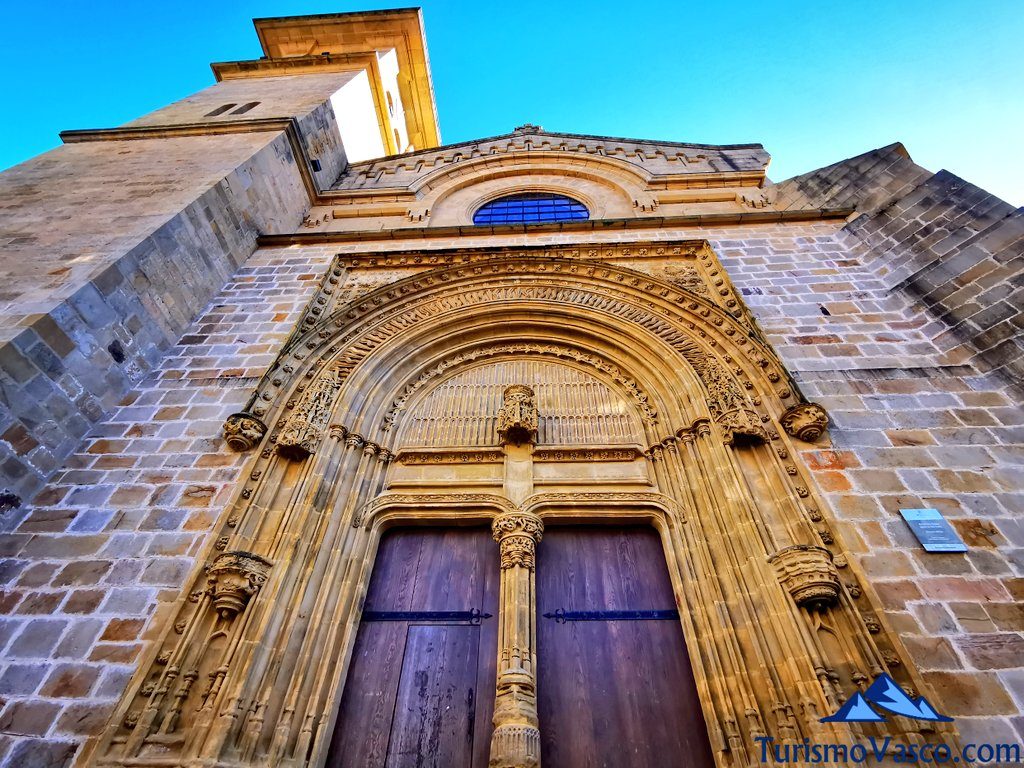
Andra Mari: The old church of Andra Mari occupies a very special space in the center of the town. A meeting place where on Fridays the azoka (fair in Basque) is held, where the baserritarras of the area sell some of their best products. Undoubtedly an emblematic space of Mungia. Although today only the perimeter wall, the façade and the apse remain standing, this church has been equipped with a metal and glass structure that has turned this temple into a very multipurpose space. 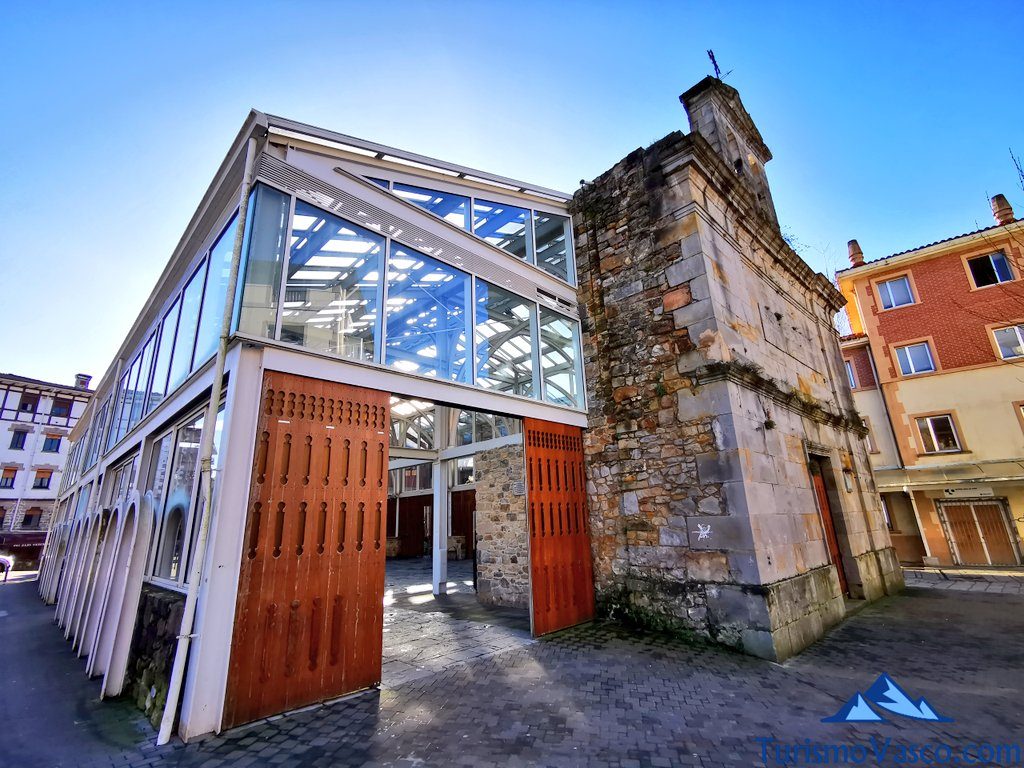
Arch of San Cristobal: Between the Church of San Pedro and Torrebillela, we find the arch of San Cristobal, a stone structure, located at the beginning of the street of the same name, which houses the image of the saint at the top of the arch.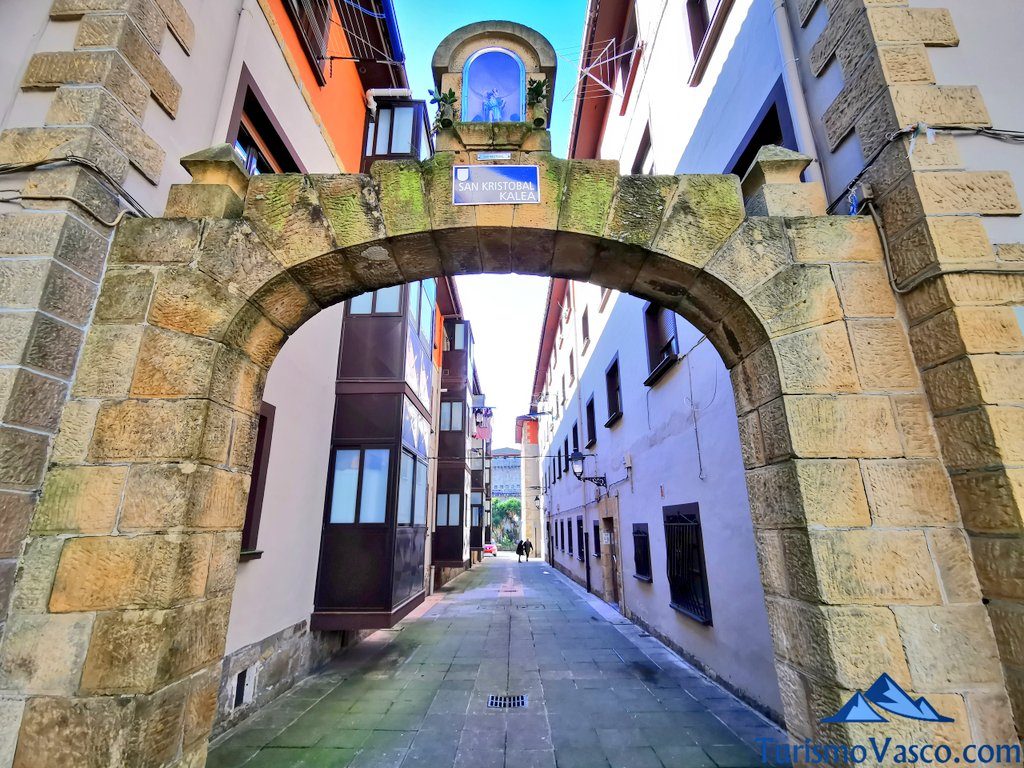
Torrebillela: This tower house represents the oldest civil building in all of Mungia. A structure of the late fourteenth century that was built with the aim of being one of the safest residences in the area. It is undoubtedly one of the most important and striking buildings in Mungia. A visit is a must. Next to Torrebillela we find the water mill and Katetxea, other 2 of the spaces of special interest of Mungia. Unfortunately the first of them, the mill, is not in good condition. As a curiosity we must indicate that in the garden of Torrebillela there is a sprout of the old tree of Gernika, symbol of the Basque liberties. 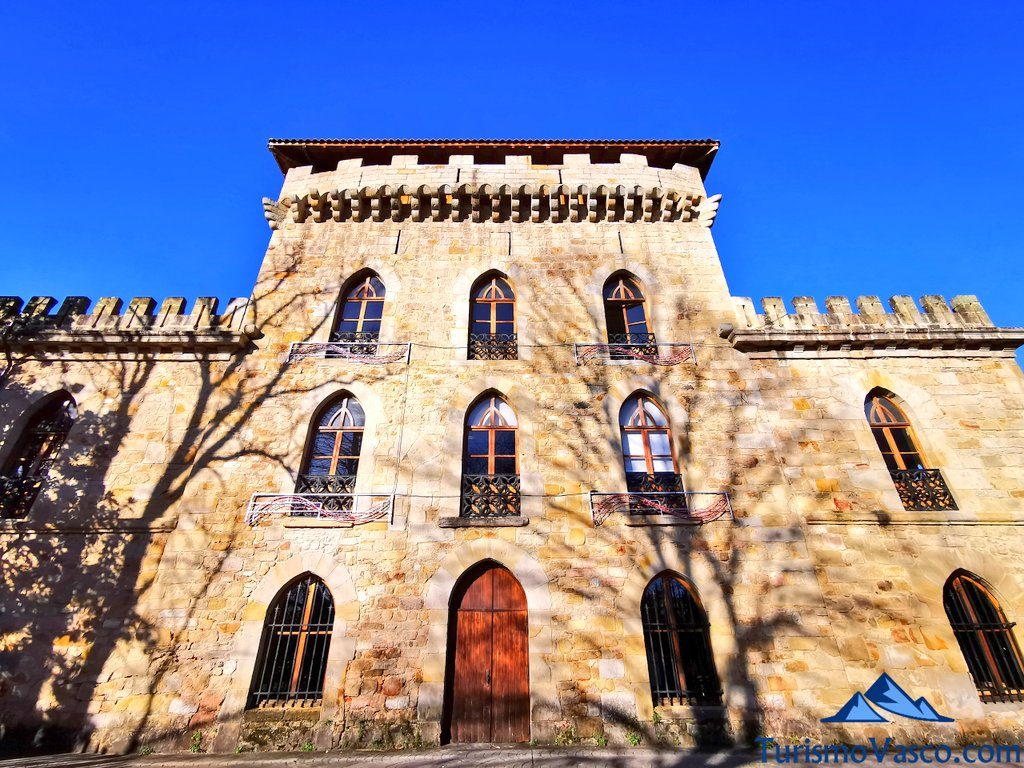
Katetxea: Like Torrebillela, the Katetxea building is strategically located next to the road that connected Mungia with Bilbao. And we want to emphasize the strategic location, since on the wall of this building was the chain that served as a border where to pay taxes on goods entering or leaving the town. Hence its name katetxea, kateen etxea, the house of chains. 
Palacio Aguirre: This 18th century palace is located next to the Andra Mari church. A building that mixes different styles in each of its floors. 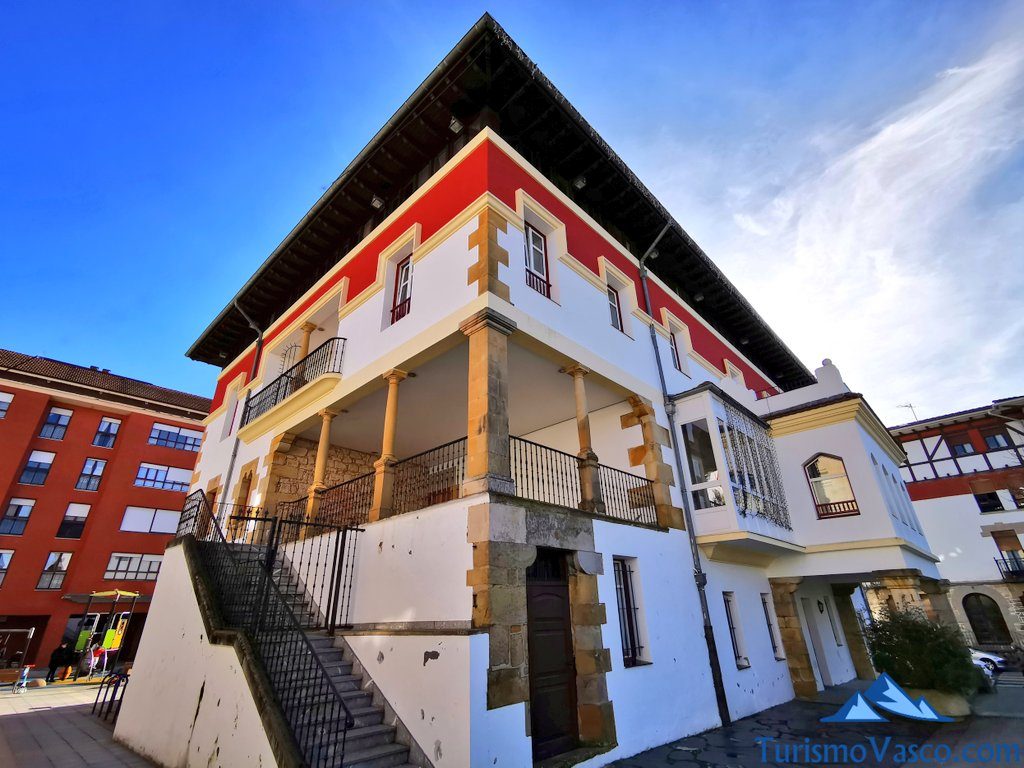
City Hall: This building was inaugurated in 1927 and is located in the center of the town and has Baroque elements that transport us to another era. On the first floor of this building we find the municipal fronton, a space, in which great matches of pala or pelota mano have been played among others. 
Alkartasuna Fountain: The Alkartasuna fountain or fountain of the Concord, was built in 1883 in honor of the first agreement between the 2 town councils that we found in Mungia at that time (the one of the anteiglesia and the one of the town). A fact that meant a turning point, since until then there were only disputes between the two bodies. This historical fact is reflected in this fountain in which we can appreciate two joined hands and the inscription “Biak bat eta biena” that in Basque means” (the two one and of the two). As its name indicates, a fountain that symbolizes Alkartasuna, the concord. 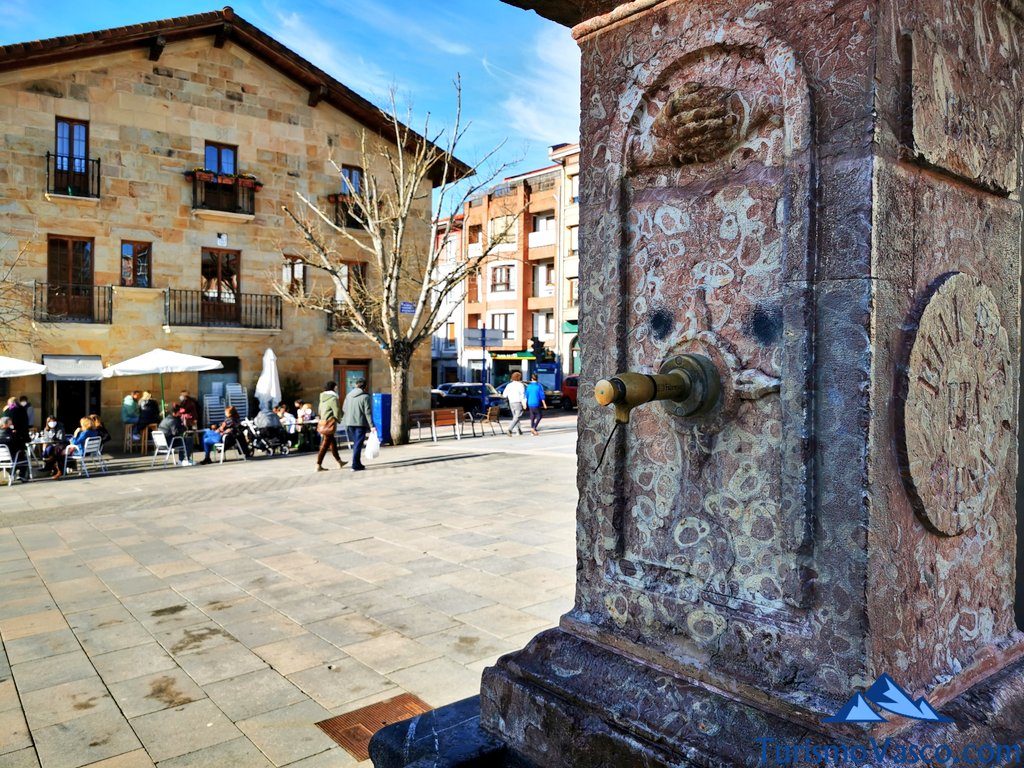
Plaza de los Fueros: This square is one of the largest open-air spaces in the municipality. A meeting point where most of the events that take place in Mungia take place. If we contemplate this square from its upper part, we will see that it is the fusion of several squares, which, located at different heights and joined by the street ‘Euskal Pizkunderaren etorbidea’, create one of the most emblematic spaces of Mungia. 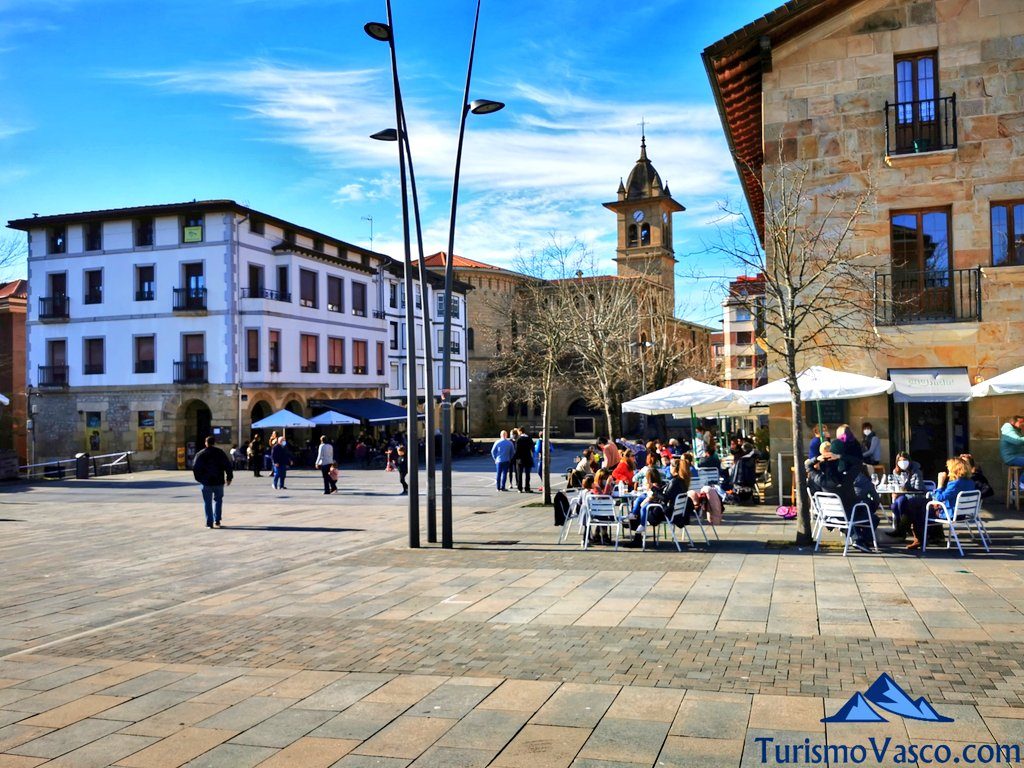
Weekly market: Every Friday of the year, Mungia is full of life with the azoka (market in Basque) of local producers. People who make their own products in the farmhouse and then offer them in Andra Mari. These weekly fairs are known as “barikuetako plaza” (Friday square in Basque). Local and quality products that we recommend you to buy. 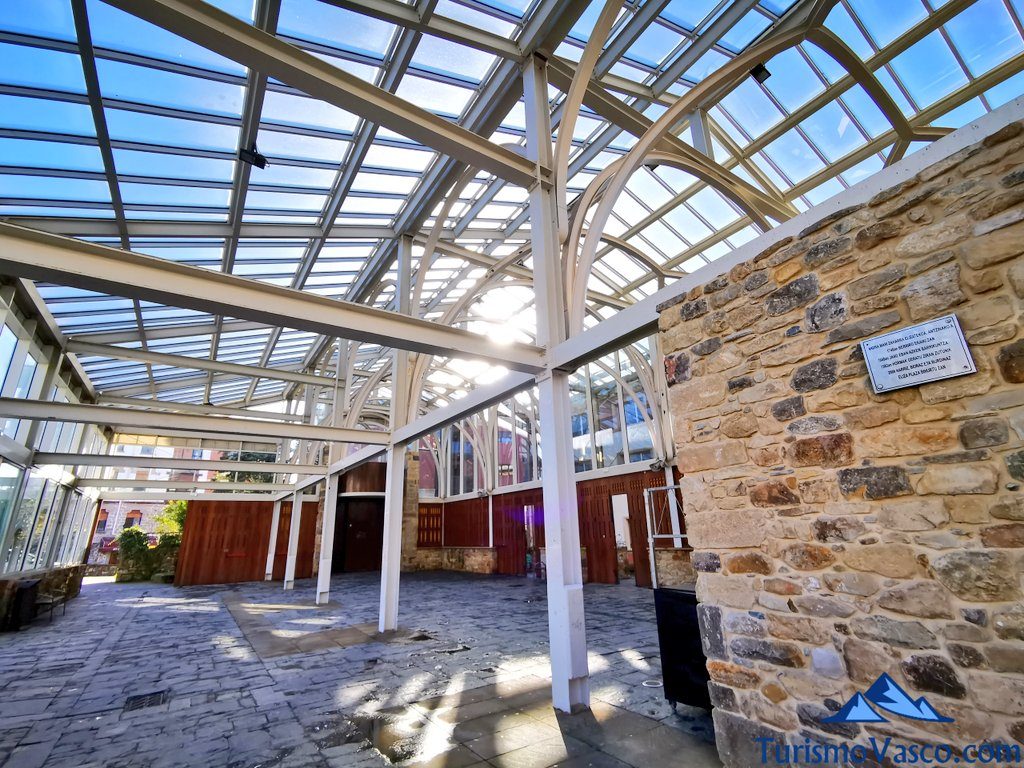
Gastronomic Societies: Gastronomic societies, also known as txokos, are those spaces where we Basques escape from our daily routine enjoying good food and company. We must say that, although nowadays women can enter most of the gastronomic societies, it was not like that in the past. In Mungia, the street with the most gastronomic societies is Andra Mari Street. 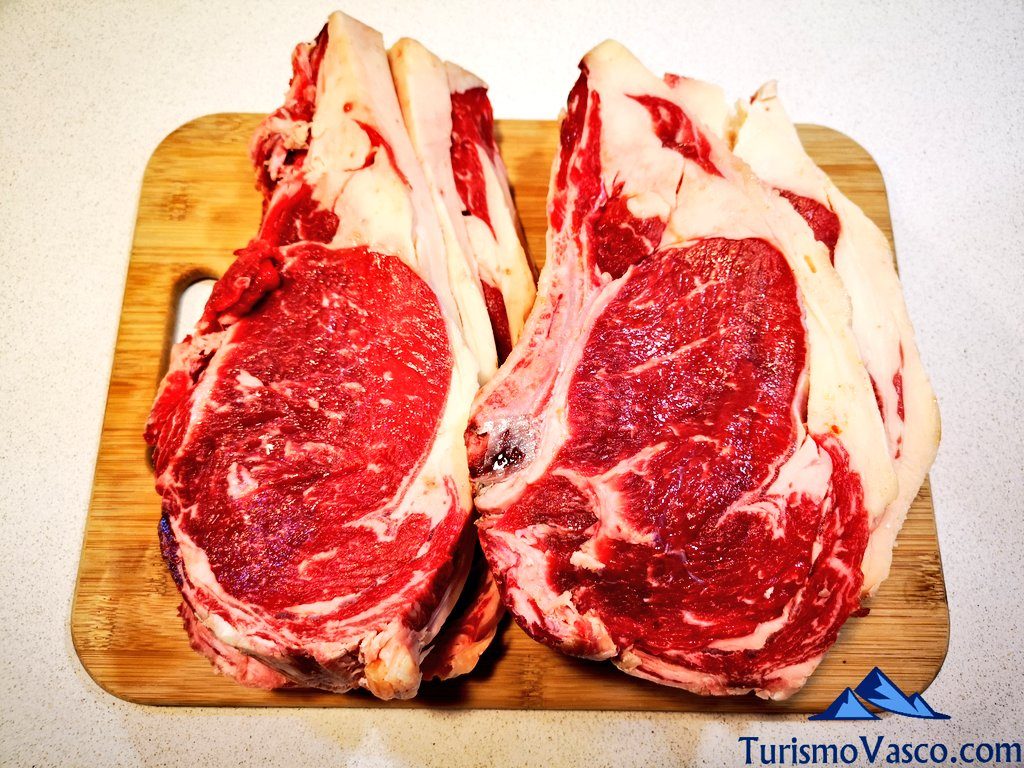
Lauaxeta: Esteban Urkiaga Basaraz, better known as Lauaxeta, was one of the most outstanding poets of Euskadi. Lauaxeta was born in Laukiz, but his family moved to Mungia when he was still a child. Later, during his youth, he joined the literary and political movements of Euskadi, being a leading figure in both. He was arrested while working as a guide and translator in Gernika to show journalists from other countries the horror of the bombing. He was shot in 1937 in Vitoria Gasteiz. 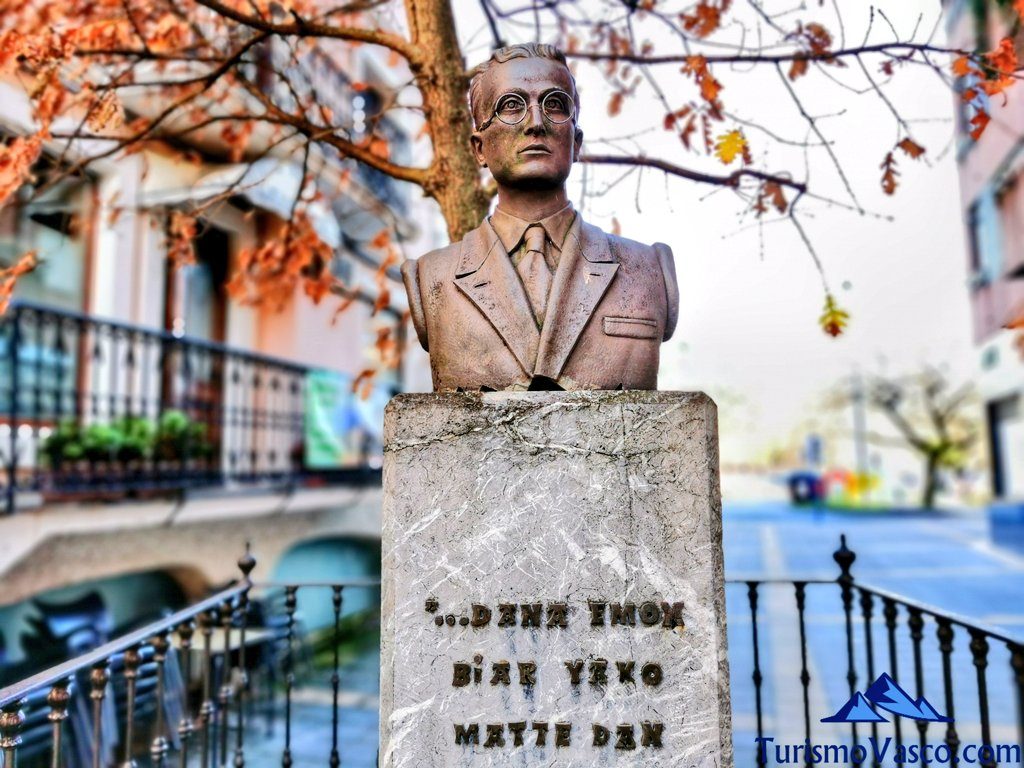
Goggomobil: The Goggomobil, the car that was manufactured in Mungia, has several recognitions. 2 of the most important are found in the traffic circle that connects Mungia with the road to Bermeo and in the swings that we find next to Andra Mari. Although designed in Germany by the company Glass (later absorbed by BMW), many were manufactured in the Munisa company in Mungia. Its manufacture on the assembly line began in 1962 and ended in 1967. The high manufacturing cost and the fierce competition of that time made this industrial adventure last only 5 years. However, this micro car is an important part of Mungia’s history. 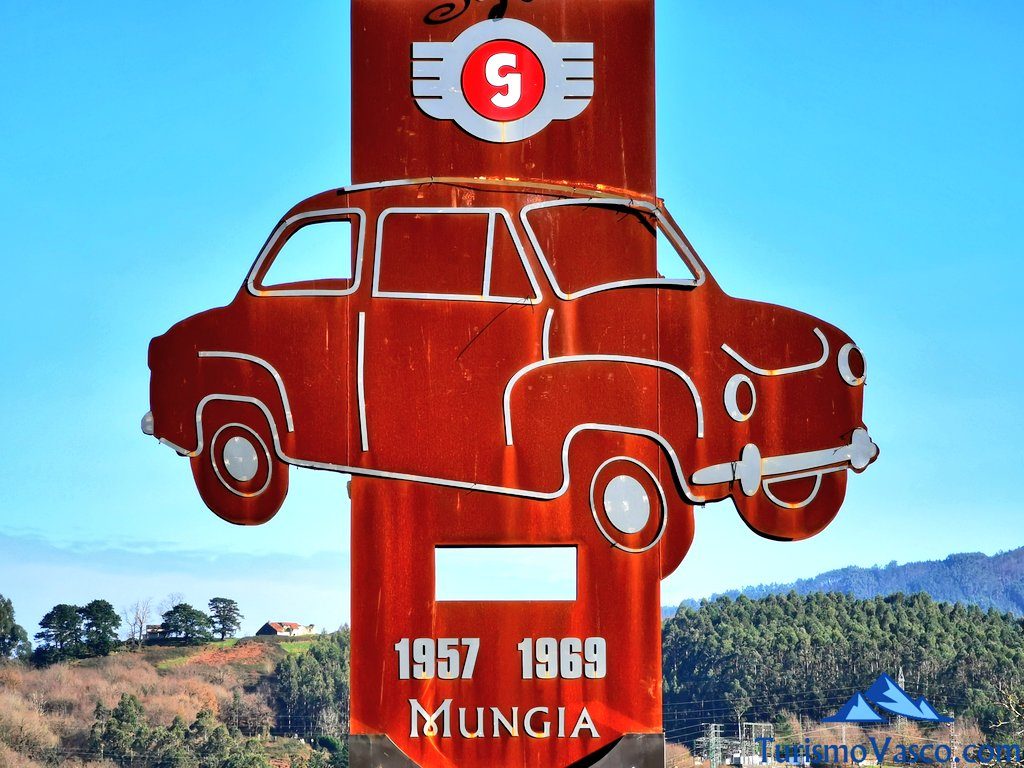
Atxuri Greenway: This greenway starts next to the Uriguen park and the baserri Landetxo Goikoa, a space where you will also find a parking lot where you can leave your vehicles. Although this greenway is not as striking as the family routes of Euskadi that we recommend on our website, it is a good alternative to stretch your legs in this area of Mungia. 
If these attractions are not enough for you, we recommend you to visit other places such as the Hermitage of San Miguel de Zumetzaga, the Hermitage of San Antón de Llona, the Aita Elorriaga Palace or the Church of Santiago de Laukariz.
How to get to Mungia.
As usual you can get to Mungia by public or private transport. Here is a brief summary of how to get to Mungia so you can plan your trip to this Basque town. We hope it will be of help to you.
- Public transportAlthough it is foreseen that Mungia will have a metro station in the future, nowadays the only public transport that connects this municipality with the rest of Bizkaia is the provincial bus service, Bizkaibus. Among its most popular lines are the Bilbao – Mungia direct route by freeway (line A3516), the Bilbao – Derio – Mungia route that runs through different towns (line A3517) or Gernika – Mungia (line A3519).
- Private transportIn case we use private transport to get to Mungia, the best option is to use the Bilbao Mungia Highway, a fast, efficient and free access road that allows us to get from the center of Bilbao to Mungia in approximately 15 minutes. Undoubtedly the most practical route.

Where to park in Mungia.
If you plan to arrive by private transport to Mungia, you should know that in several streets and parking lots in the center there is a rotation system that limits the duration that each vehicle can remain parked in that space. This is the case of Alkartasuna, Bentades, Trobika or Aita Elorriaga streets among others. Therefore, we recommend that you pay attention to the color of the parking lines where you leave your car. Especially, if they are blue or green, since in both cases they are rotation zones and you can only leave your vehicle for 1 hour (blue lines) or 2 hours (green lines). However, in both cases parking is free of charge. Remember that, once the maximum time has elapsed, you will have to wait 2 hours until you can park your vehicle in the same zone again. In short, parking in Mungia is free, but we must be careful if we park in rotating zones. 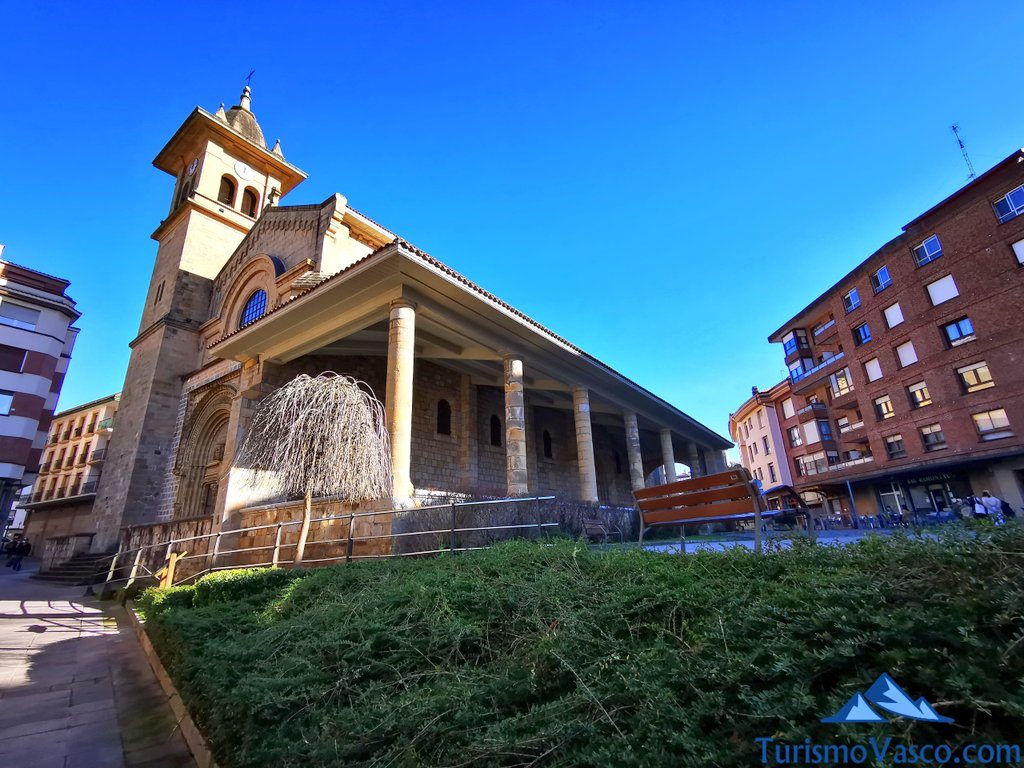
History of Mungia.
We can say that the history of Mungia began in prehistoric times, as evidenced by the various finds found in its territorial limits. However, the first written references date back to the year 1051. Specifically, it is a document in which an abbot of Mungia confirmed a donation from the Lords of Bizkaia to the monastery of La Cogolla. Mungia, a rural area that linked the capital of Bizkaia with strategic fishing ports such as Bermeo, was gaining importance as trade grew. A fact that attracted the attention of large families who decided to build their tower houses in this territory.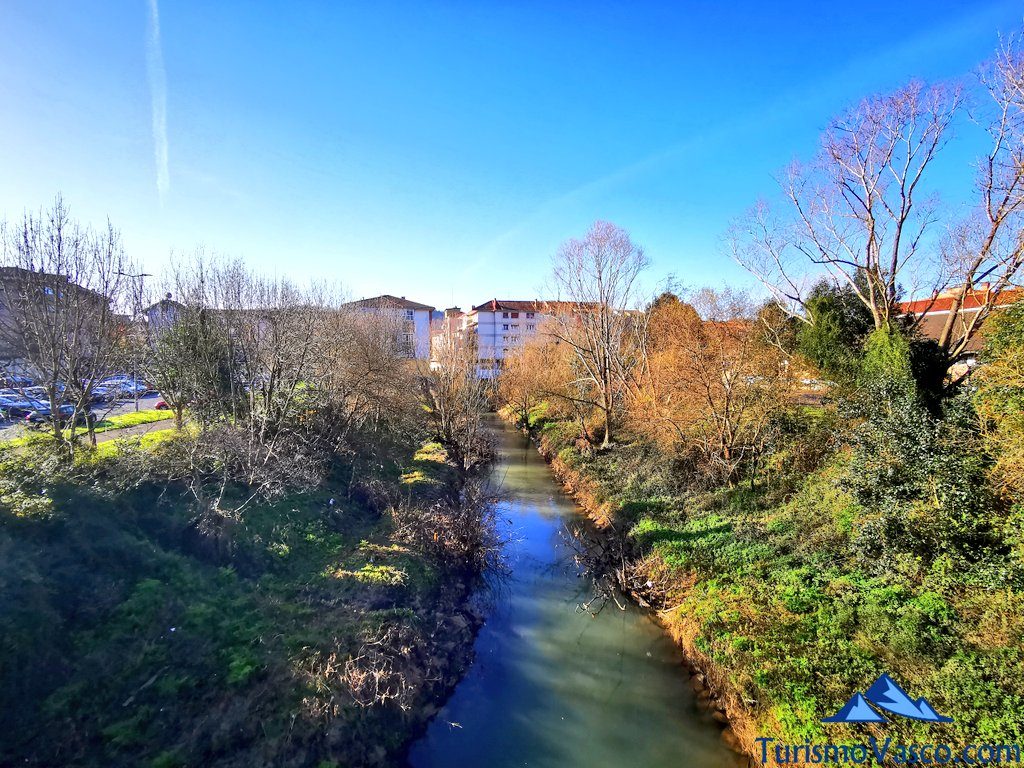 The crisis of the thirteenth century caused violence between the different sides (Gamboino and Oinaz) to surface. These conflicts aggravated the existing crisis. They did special damage to the most unprotected, the peasants. In order to protect the population from this violent situation, the Lord of Bizkaia granted Mungia the title of villa in 1376. Thus, from this moment on, the town of Mungia and the parish of Mungia existed. For years these two bodies had their own town hall and seat in the Gernika Councils, until 1900, when the town and the parish merged to become one. The fountain Alkartasuna or of the concord symbolizes faithfully this historical fact.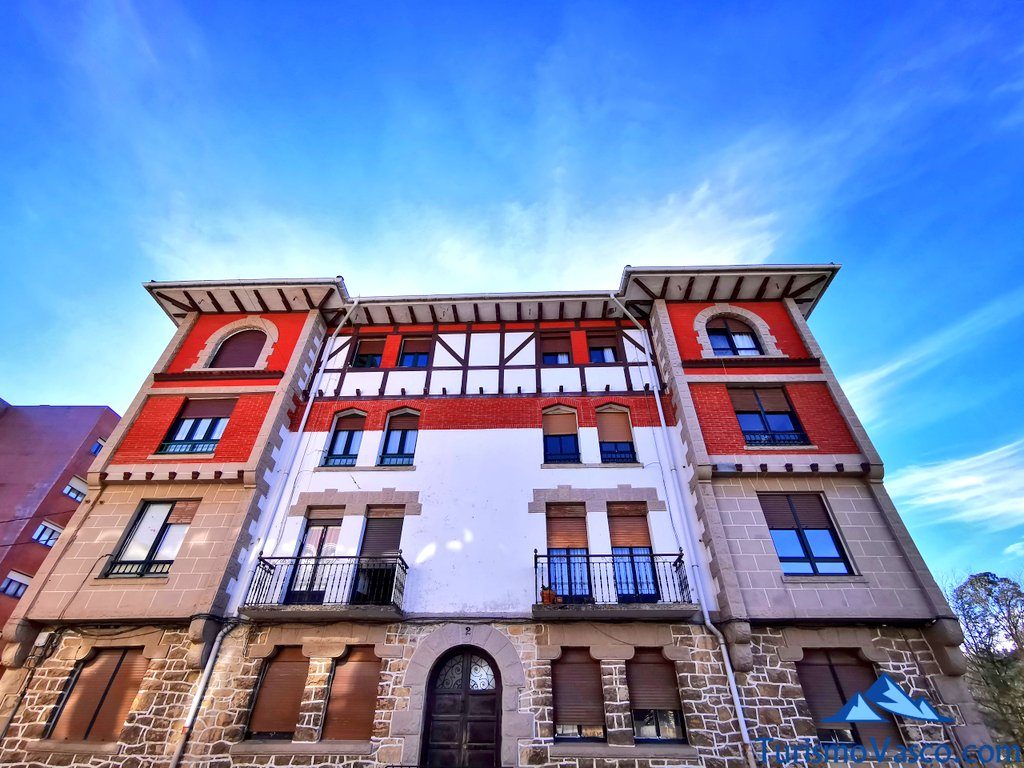
Guided tours in Mungia.
Although there is currently no regular service of guided tours in Mungia, there is the possibility of hiring a tour guide to show this beautiful town to groups who wish to visit it. In case you are interested in this kind of services we recommend you to contact us through our contact form so that we can help you to plan your visit to Mungia. 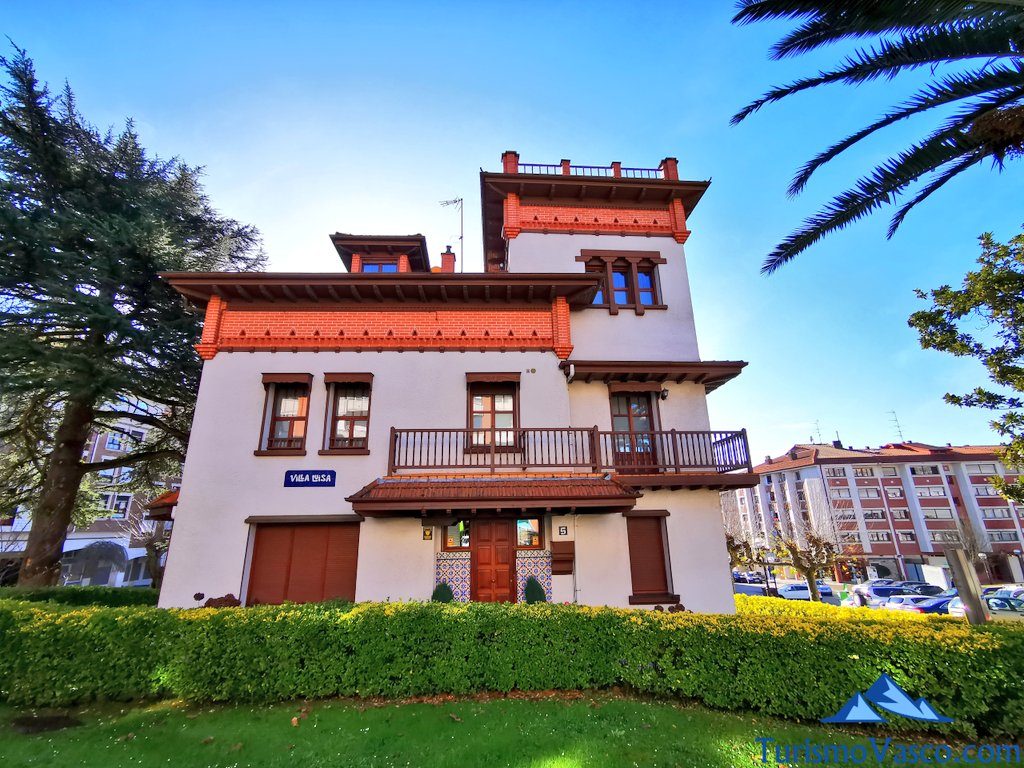
Festivals in Mungia.
Mungia has several days marked in red in the calendar, among them, January 18 and June 29, San Antontxu and San Pedro respectively. For San Antontxu a great fair is celebrated in which we can enjoy local products, livestock exhibition or gastronomic contests. Undoubtedly one of the most emblematic azokas (fair in Basque) at the beginning of the year in Bizkaia. On the other hand, San Pedro, the patron saint festivities of Mungia, begin with the chupinazo and the descent of Mari Jata and continue with a full program of festivities that includes activities such as tortilla contest, Sukalki eguna (stew contest) or the day of the baserritarra. In any case, both San Antontxu and San Pedro have a great festive atmosphere that we recommend you to enjoy. 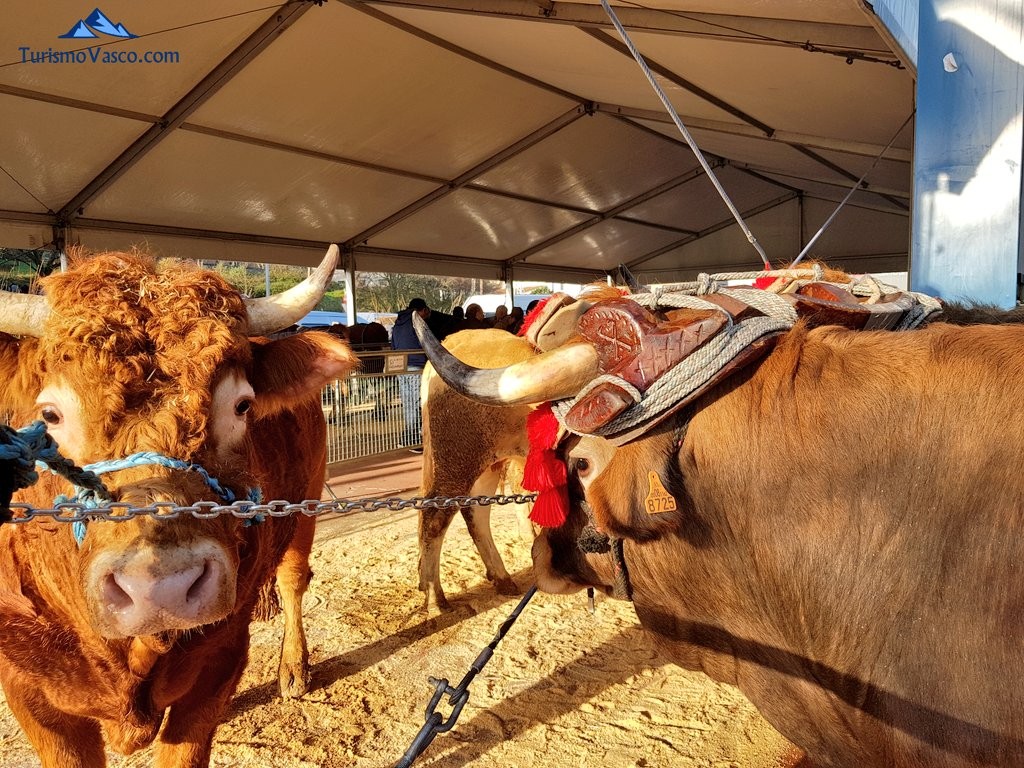
What to see near Mungia.
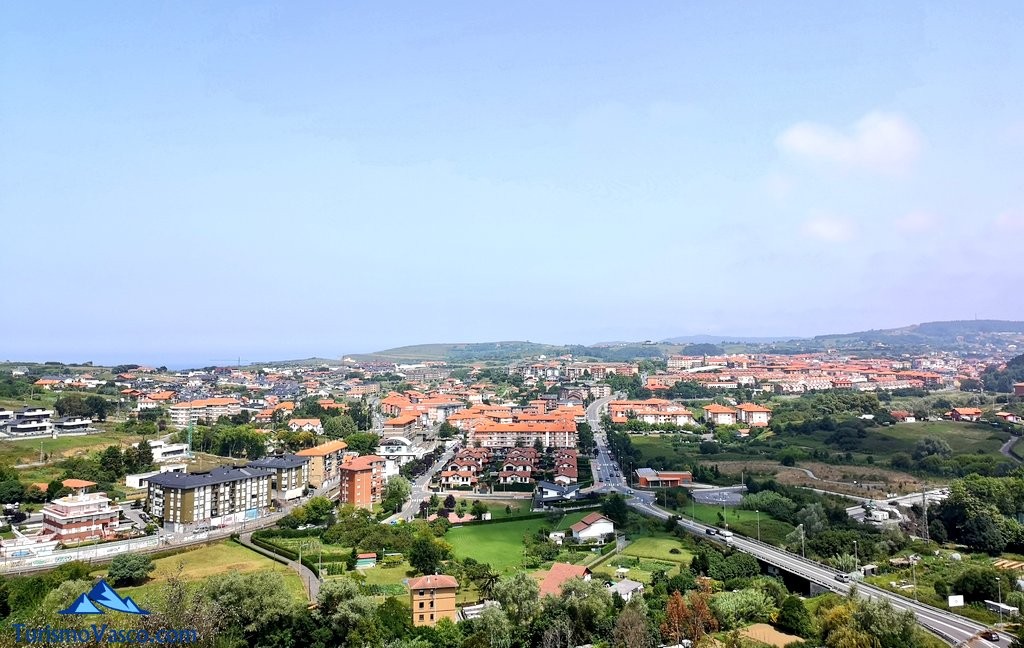
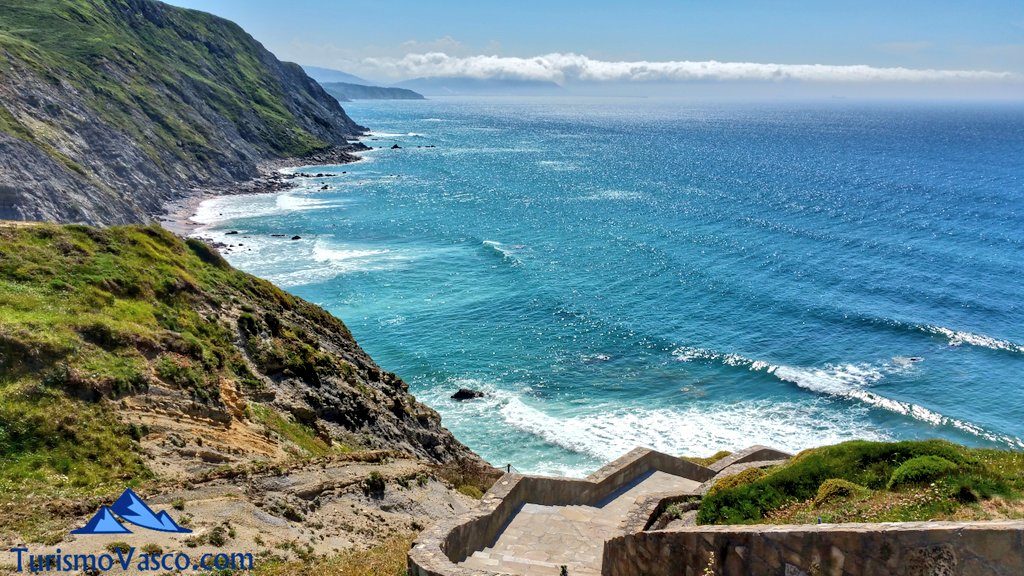
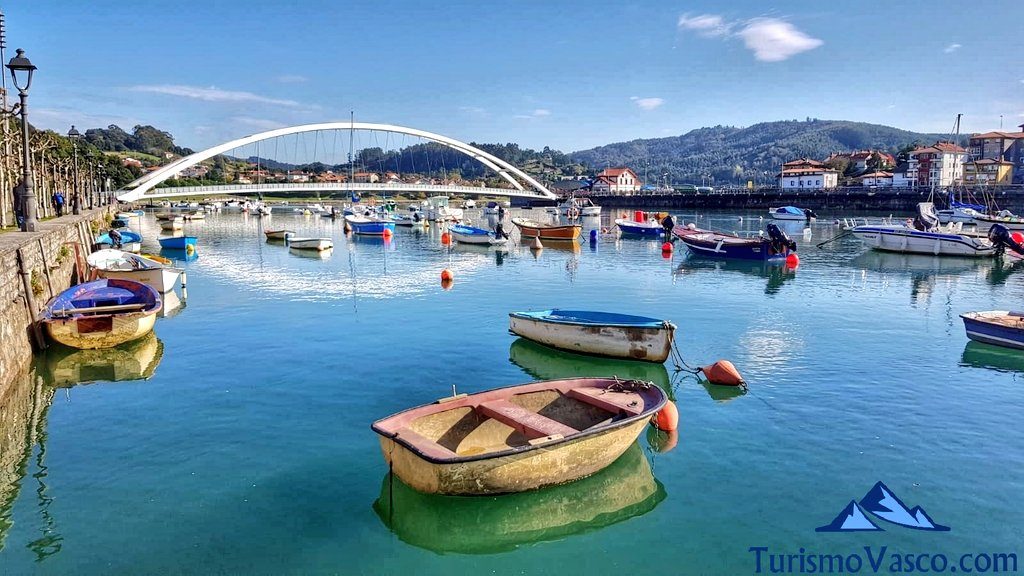
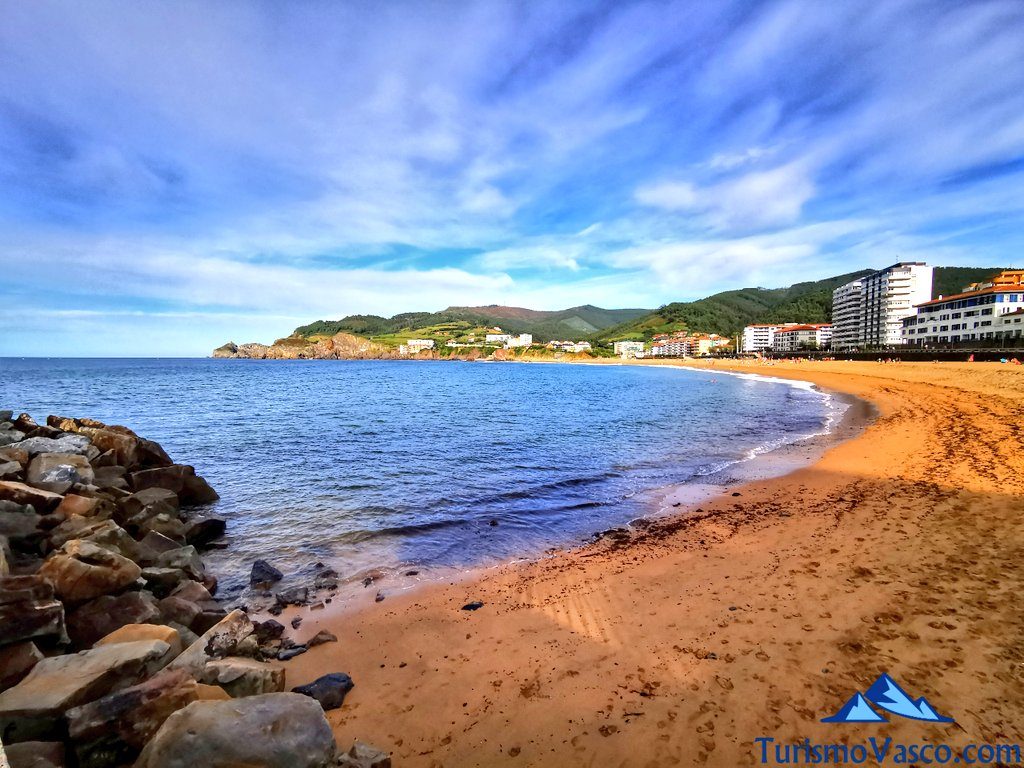
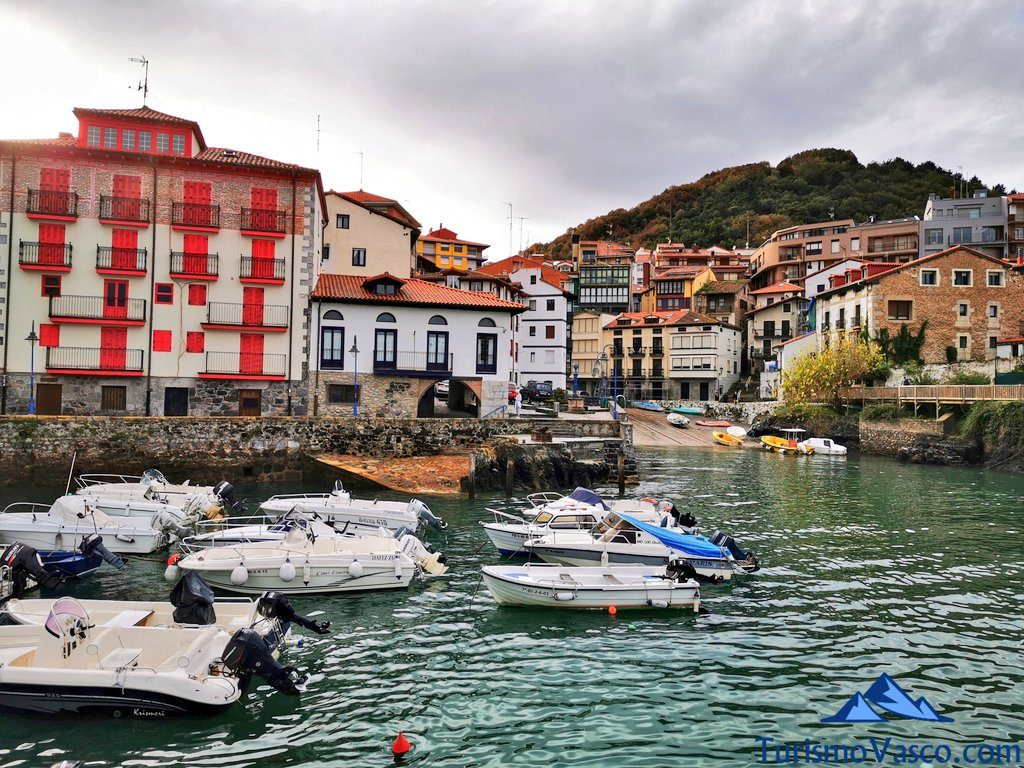
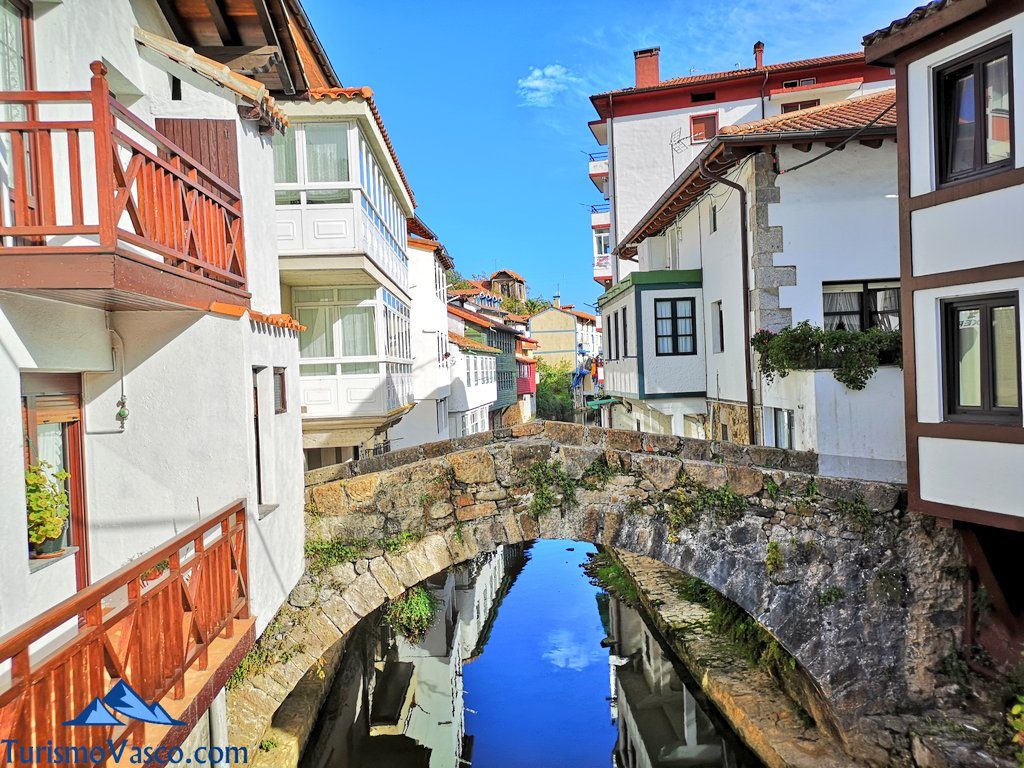
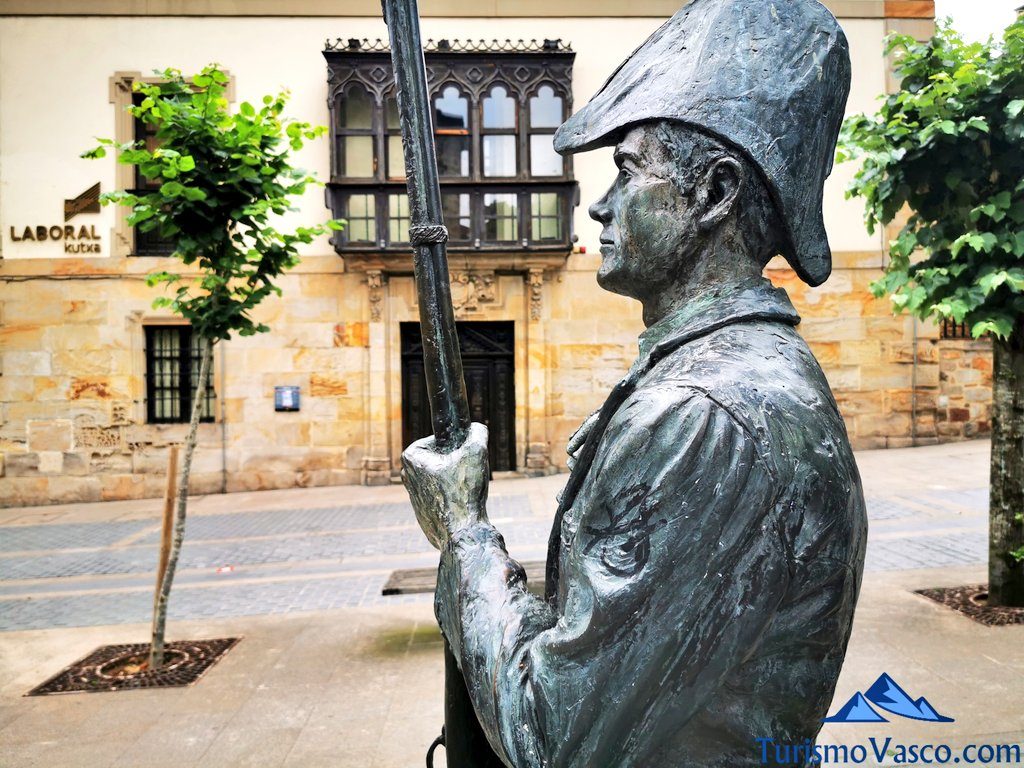
The villages that surround Mungia complete perfectly the tourist offer that this municipality has to offer. We recommend you to take a look at the great variety of places that we recommend you to visit in the surroundings of Mungia.












What to do near Mungia.
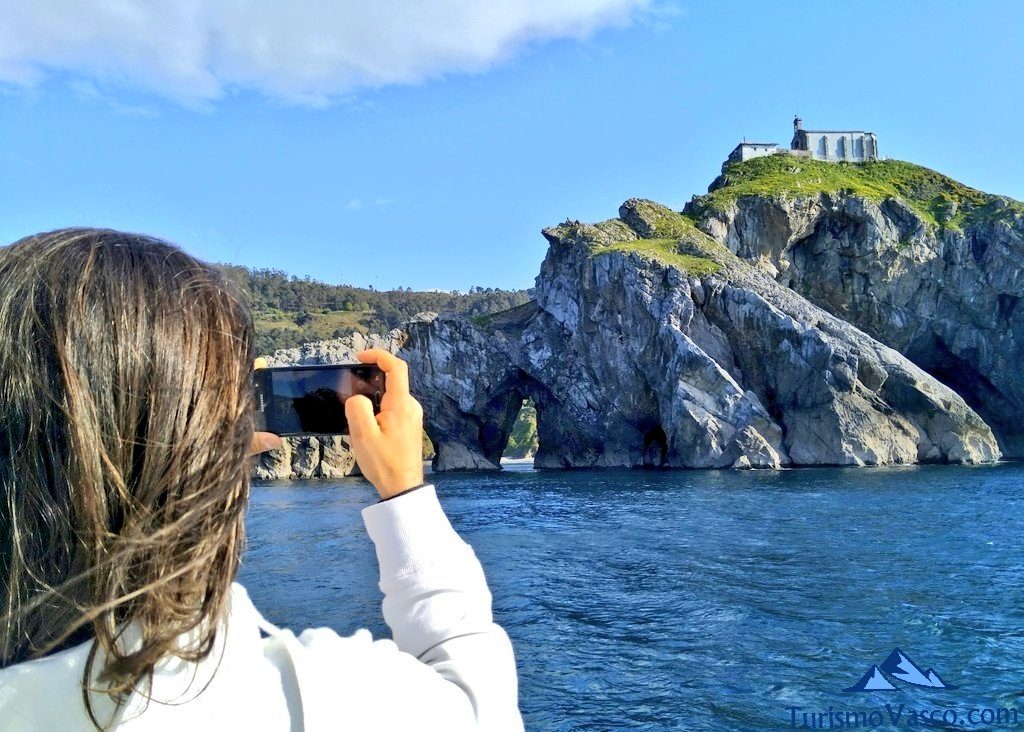
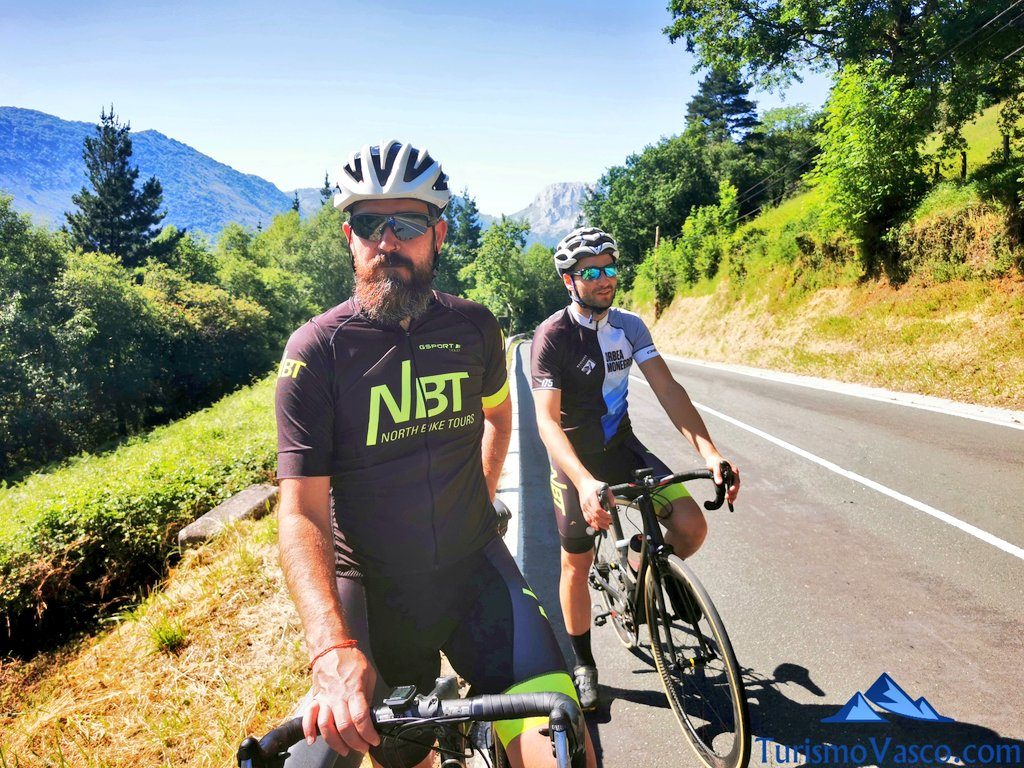
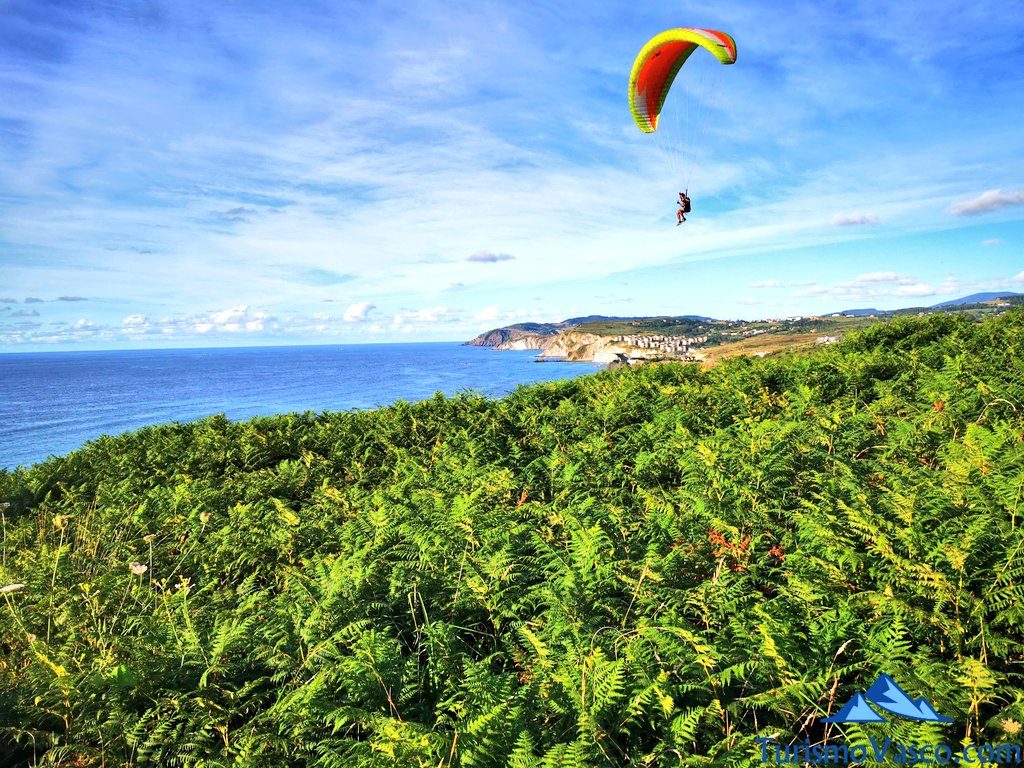
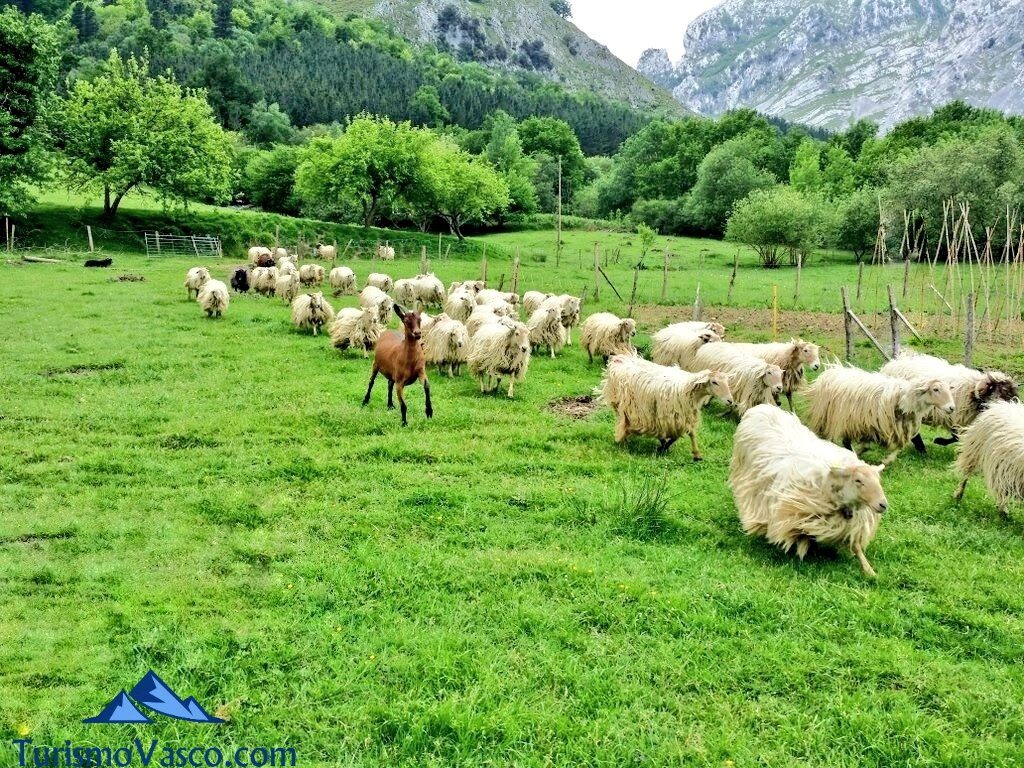
Near Mungia we have the opportunity to enjoy an infinity of experiences. In fact, we have many of these activities in our reservation center. We recommend you to take advantage of your visit to Mungia to enjoy some of these activities. We hope you enjoy them.






Video of Mungia.
As usual in all our articles, we wanted to accompany the words and images with a short video about what to see in Mungia. We hope it will help you to get a more realistic idea of what awaits you in this Basque town. In case you like this kind of videos, we recommend you to subscribe to our YouTube channel to know each and every one of the corners and experiences that we recommend you to enjoy in Euskal Herria. We are sure you will like them, come and join us!
As you have been able to verify, Mungia is one of the most important urban centers of the region of Uribe Kosta. A town that, located near the coast, the airport and Bilbao, is waiting to show us some of its most emblematic attractions. We remind you that if you have any questions about what to see in Mungia you can use the comment system that you will find below these lines to let us know. We will try to respond as soon as possible. Ondo pasa!


0 Comments