





Table of Contents
Meet the Igartubeiti Museum, a museum that shows in detail the evolution of Basque farmhouses over time.
Basque farmhouses (in Basque and from now on, baserriak) are the origin of our way of being, our way of living, our culture and history. The baserri Igartubeiti, represents thousands of baserris scattered throughout our geography, a space, where to know in detail everything related to these impressive monuments of our land.

Hours Igartubeiti Farmhouse Museum.
- Monday and Tuesday: Closed.
- Wednesday to Friday: 10:00 – 14:00 / 16:00-19:00
- Saturdays, Sundays and holidays: 10:00 – 14:00 / 16:00-19:00
- Guided tours: 11:00 a.m., 12:30 p.m. and 5:00 p.m.
- Closed annually: January 1 and 6, May 1 and 8, July 25, December 25.
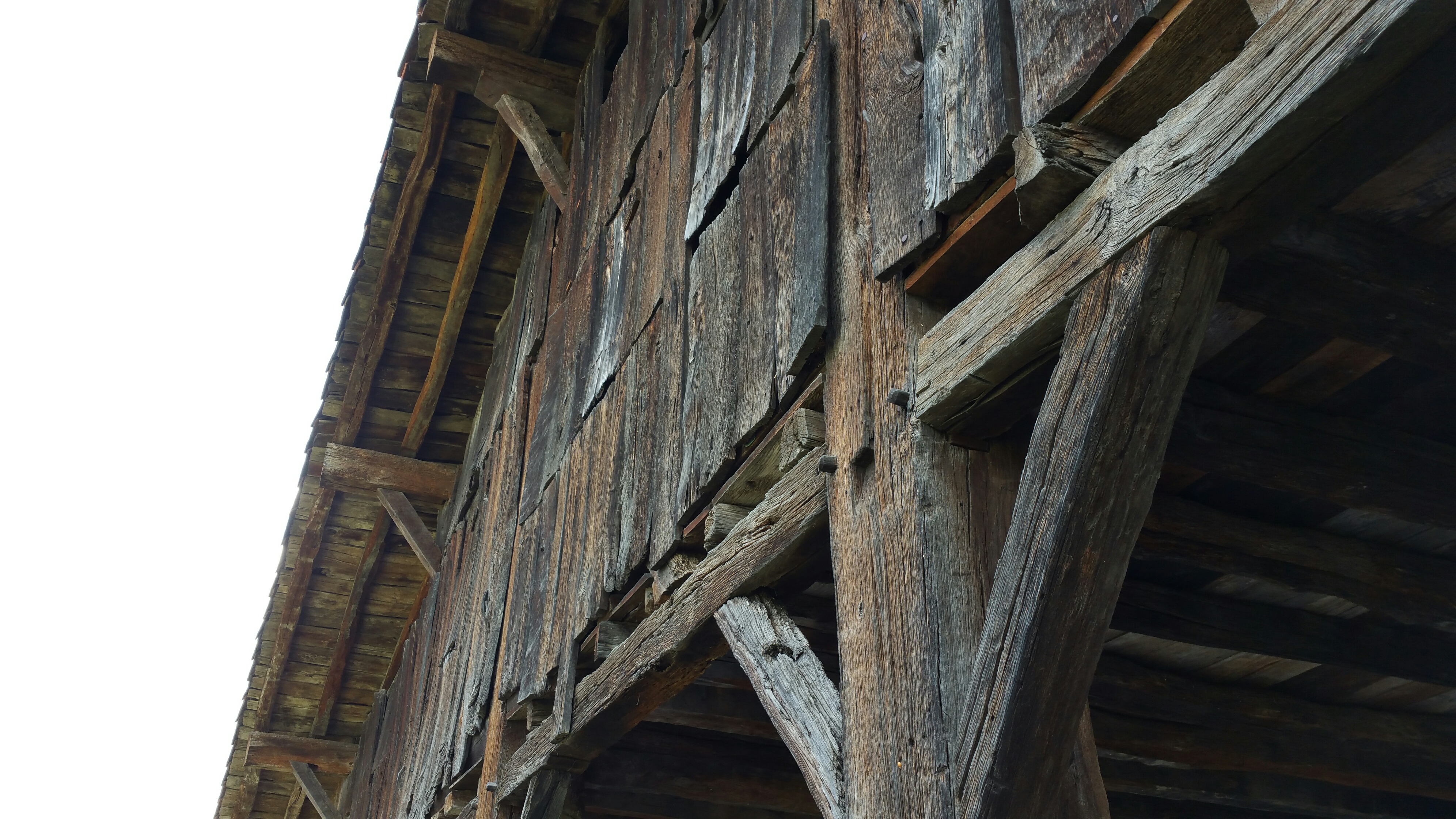
The antiquity, the good state of conservation and the fact that it is one of the few baserris of its kind (caserío lagar, a farmhouse with a press as its core), brought it to the attention of the Provincial Council of Gipuzkoa, an entity that has been working on the conservation of the Basque heritage for more than 30 years. Thanks to these characteristics and after a great restoration project, future generations will have the possibility of contemplating in person an authentic baserri of the XVII century. Do you like to know the culture and history of the land you walk on? Pay attention to what we find in the Igartubeiti Farmhouse Museum.

Igartubeiti Farmhouse Museum, a must-see place on your trip to the Basque Country.
Located between forests, pastures and farmland, surrounded by others of the same species, we find the baserri Igartubeiti. A great little representative of our culture located in the region of Urola Garaia, in the south of Gipuzkoa, a region where the culture of shepherding and agriculture preceded industrial activity, two activities that today coexist in harmony.
Municipalities of Urola Garaia:
- Legazpi
- Urretxu
- Zumarraga
- Ezkio-Itsaso
Location: Located in Ezkio-Itsaso, Urola Garaia, Gipuzkoa, Igartubeiti allows us to continue enjoying a landscape like that of yesteryear, a space in which nature predominates over the elements created by mankind.

History of the baserri Igartubeiti: Igartubeiti was built in the sixteenth century, in the middle of the Golden Age of the Basque farmhouse, reaching its peak in the early seventeenth century, along with the transformation of its structure to adapt to the new needs of the time. From the XVII century to the XX century it suffered several reforms, all of them merely aesthetic and of little depth, reforms that disappeared with the complex restoration that the deputation carried out to recover the image, illumination, furniture and tools that it had at the beginning of the XVII century.

Relevant dates of the Igartubeiti Farmhouse Museum.
- XVI Century: Construction.
- 17th century: Transformation.
- Year 1992: Acquisition by the Provincial Council of Gipuzkoa.
- Year 2001: Opening to the public of the restored Igartubeiti farmhouse.
- Year 2007: Opening of the Igartubeiti interpretation center to the public.
Igartubeiti was built in the same century as our beloved whaler San Juan, a construction that we can remember thanks to the Albaola project in Pasaia. Both projects help us to understand the way of life of the Basque people at that time, Are you up for a double visit? Be careful, you’ll be hooked.

Structure of the Basque farmhouses of the 17th century: rooms, kitchen and stable in the lower part of the building opposite the wine press, workshop and storage in the upper part.

- Why are the rooms close to the kitchen and the stable?
- Why does the floor of one of the rooms have a large hole under its floor?
- Why do we find empty logs inside the farmhouse?
- What was the ash used for?
You will find the answers to these questions and many more during your visit to this great Basque space, what are you waiting for to book?

Prices Igartubeiti Farmhouse Museum.
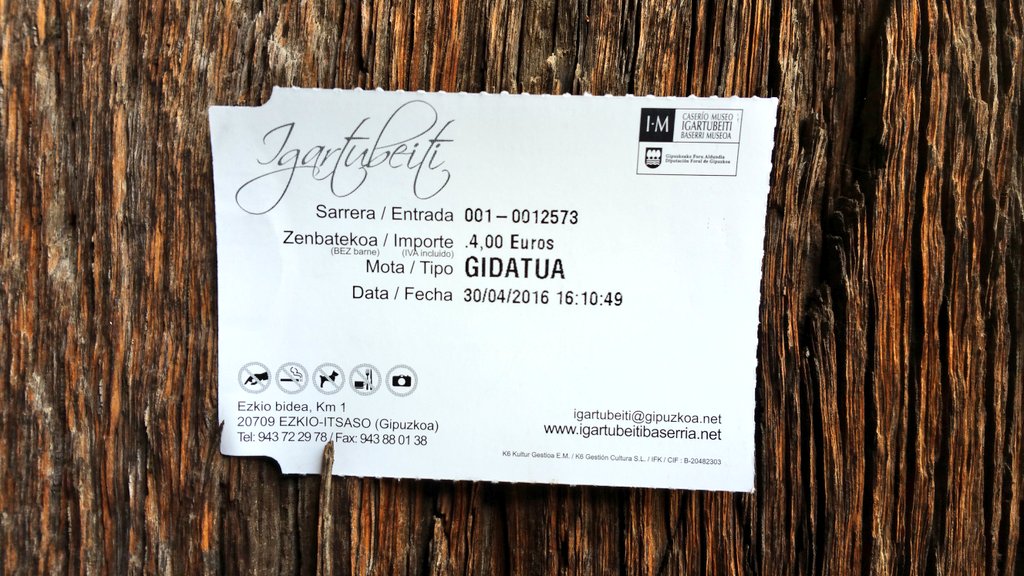
- General admission: 3€.
- Groups (more than 5 people): 2€.
- Reduced admission: 1,5€ ** Reduced admission: 1,5€ ** Reduced admission: 1,5€ ** Reduced admission: 1,5
- Free admission: Thursdays, May 18 and November 16 (if not on public holidays). Children under 14 years old and unemployed.
- Guided tour: 1€ (independent fee from the rest)
- Languages: Basque, Spanish, French and English.
**The following will be eligible for the reduced rate: large families, students, over 65s, Nekatur clients, EuskoIkaskuntza members and BasteroKulturgunea members.
Interpretation center and museum: The Igartubeiti farmhouse is accompanied in its work to spread the importance of the Basque farmhouses by the interpretation center of the same name, a center that helps to understand through videos, audios, images and elements of the time, the way of life of its inhabitants. The underground interpretation center and the farmhouse above it, Kattalin de Kortabarria underground and one of the wonderful guides above it will take us back to the 17th century. Two spaces that complement each other perfectly in their effort to make known part of our culture.
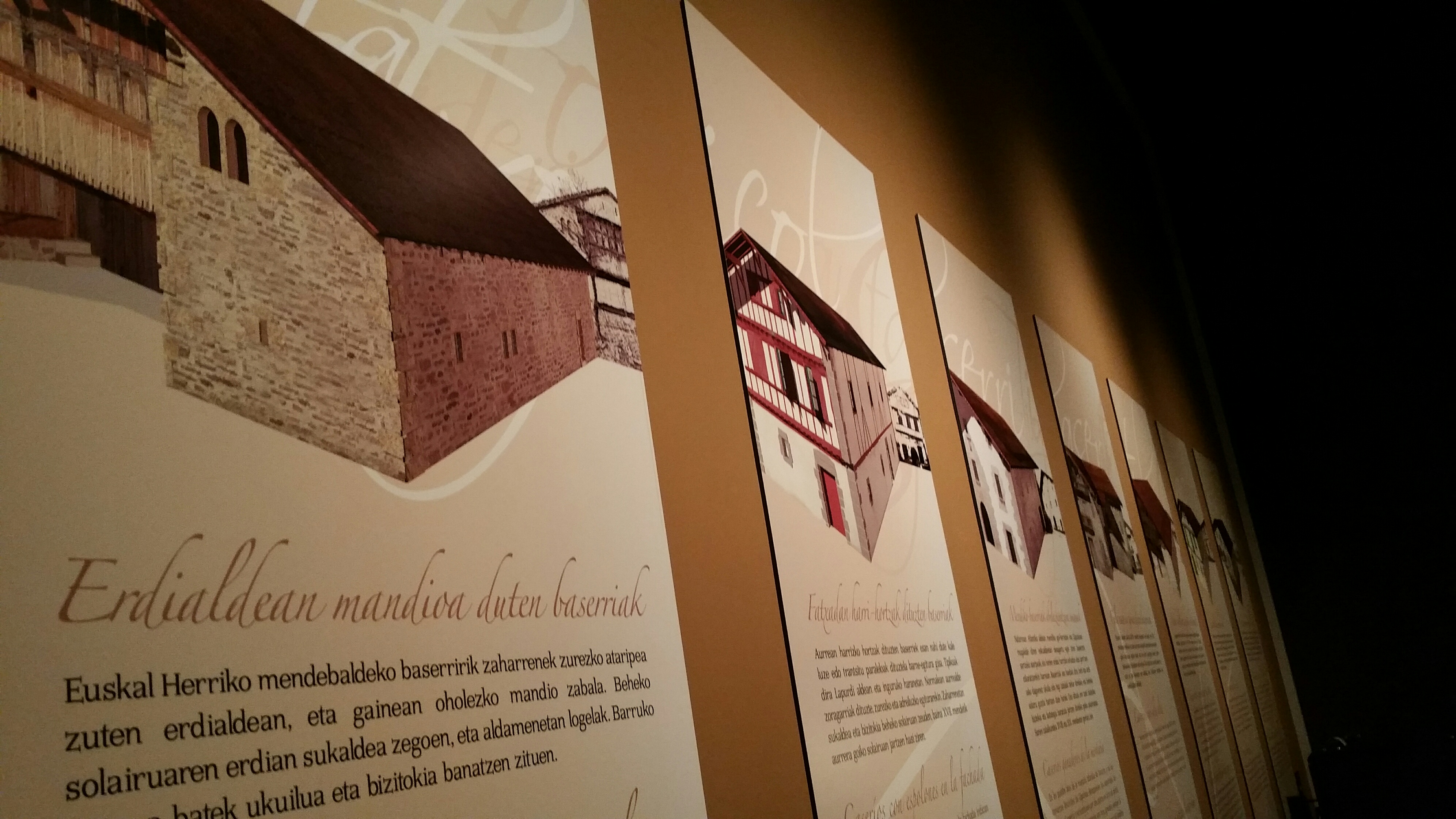
Spaces of the interpretation center.
- Permanent exhibition
- Multi-purpose area (temporary exhibits and workshops)
- Reception and store.
Workshops/experiences: Igartubeiti is full of life with each of the workshops and experiences that take place inside and outside its structure, and practically every month we find several workshops that catch our attention.
 This museum does not only carry out activities in Gipuzkoa. During our stay in Ardoaraba, we had the opportunity to be part of a workshop in which, with a simple corn plant we created a nice and practical doll, all courtesy of Igartubeiti.

What is the value of baserris? Basque farmhouses bring together culture, history, architecture and Basque symbolism, elements that make it necessary to preserve them as authentic jewels of Basque heritage.
Contact Igartubeiti:
- Phone: +34 943 722 978
- E-mail: igartubeiti@gipuzkoa.eus
- Web: http://www.igartubeitibaserria.eus/es
Baserri way of life: The work of the baserri has always been hard, working days of more than 15 hours a day were necessary to carry out the daily work. All this depending at all times on the weather, one eye on the sky and the other on the ground.

The 7 types of Basque farmhouses (Baserri):
- With stone portal.
- From the coast.
- With a beam winepress, like the Igartubeiti farmhouse.
- With high room.
- Mountain ranchers.
- With spurs on the facade.
- With central barn.
 Throughout Euskal Herria, people are often known by the baserri in which they live, leaving aside the surnames of each one. A fact, which touches me closely, is that I introduce myself to you as Gontzal of the baserri Errementarienabarri, a custom, which unfortunately is being lost in many parts of the Basque Country, a custom that should not be forgotten.
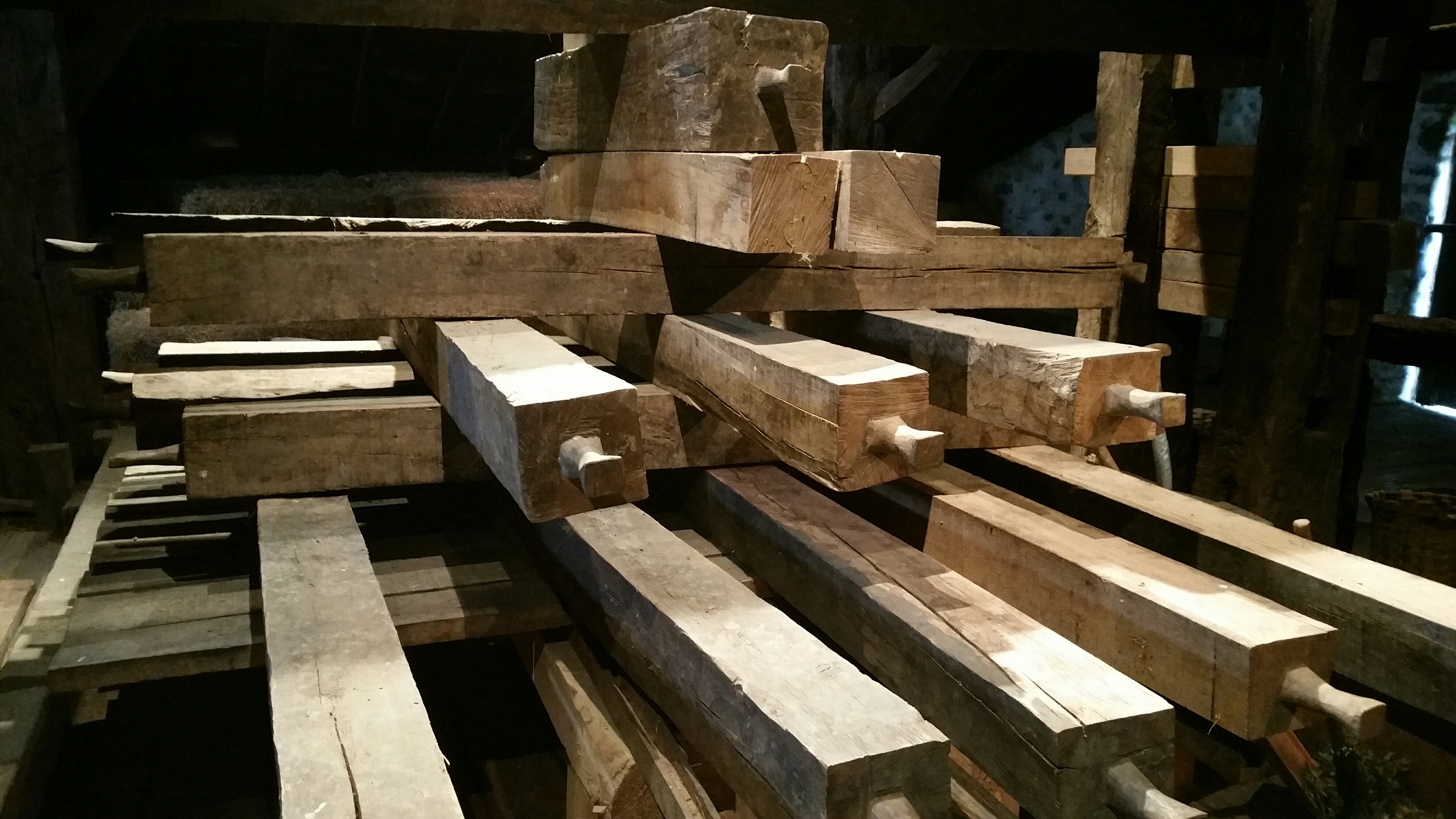
kirikoketa besta: Once a year, the Basque cultural association Jo ala Jo, takes the reins of Igartubeiti to show the new generations the old customs, the old traditions. During the whole day, this group of young Basques gives a lesson of history and culture around the Basque apple. Crushing the apple, singing, and playing instruments such as the kirikoeta or the txalaparta, they show us the precious ritual to obtain the precious “sagar zukua” (apple juice in Basque), a broth, which eventually becomes our beloved Basque cider. An annual event to mark in the calendar. Take note, kirikoketa besta in Igartubeiti.

Its wooden structure and winepress (apple press) make this building a representative of wooden architecture, a unique and very special space that demolishes the idea of museum that you all have in your head. Are you coming to visit it?


0 Comments