





Table of Contents
Caves of Valdegovía, the caves of Pinedo, Corro, Tobillas and San Martín de Valparaíso.
The caves of Valdegovía, also known as artificial caves of Valdegovía or hermit caves of Valdegovía, represent one of the greatest historical treasures of the province of Araba. Spaces of great wealth, that put in value the importance that the hermits or hermits had in this part of Euskadi. Although we only mention the caves of San Martín del Valparaíso, Pinedo, Corro and Tobillas, the most important and best preserved, you should know that in the Valdegovía Valley there are more than 16 artificial caves.  According to experts, these caves were created by humans. That is why this route has been baptized as “the route of the artificial caves of Valdegovía“. A route of just over 9 kilometers, which shows us how in the early centuries of the Middle Ages there was a group that retreated to the mountains to find the Christian faith from the solitude, prayer and sacrifice. This spiritual retreat was the consequence of the great opposition that these people made to the ostentation exercised by the church at that time. They were the ones who, taking advantage of the characteristics of the limestone rocks, excavated our mountains to create these cavities that we present to you today. Impressive.
Information about the caves of Valdegovía.
- Type of visit: Free (information panels).
- Price: 0€, free.
- Attractions: History and nature.
- Location: Valdegovía Gaubea, Araba, Euskadi.
Although we have presented these caves through the so-called “route of the artificial caves of Valdegovía”, we must emphasize that there is no path or road specially enabled to trace this route on foot. So we must say that having a private vehicle is essential.  The ease with which limestone decomposes made this type of rock suitable for creating the cavities that we propose to visit. A characteristic that today has turned against them. The fact is that the ease with which limestone decomposes makes these caves very sensitive. That is why we must ask you to respect the caves as much as possible. Please, mesedez.
Route artificial caves of Valdegovia.
As we have already mentioned, the caves of Valdegovía are located next to the A-2622 road. A road that changes its name (BU-555) as soon as we enter the province of Burgos. Remember that, although all the caves mentioned today are on Basque soil, we will pass through towns in Castilla y León before reaching some of them. In any case, our recommendation is clear: follow the route from end to end, that is, in order: Tobillas, Corro, Pinedo and San Martín de Valparaíso, or the other way around.  Depending on the size and number of rooms, it is possible to know the function for which these cavities were created. Thus, experts have catalogued these artificial caves in 3 different groups: room, temple and necropolis. The first type, the room, is usually a cavity with a single chamber and reduced size. Primitive spaces, which served as a home for people seeking seclusion and solitude. The temples, on the contrary, usually have a larger area divided into several rooms or chambers that were used for religious purposes. Finally, necropolises show us the evolution of funerary rites throughout history.
  These hermit caves located in Araba, go unnoticed for most of the people who visit us. A serious mistake in the case of people who seek to know authentic spaces of Euskadi. We sincerely believe that this is a route with great potential both from a historical and natural point of view.
Pinedo Caves.
Pinedo, a small and unknown town in the Valdegovía Valley, is home to one of the most amazing hermit caves in the Basque Country. The Peña de Santiago, one of the rocky groups that we find about 15 minutes walk from the center of Pinedo, surprises us with a complex of small caves that catch us with its peculiar shape and route. In its interior have been recognized up to 6 small cavities, which, divided into 2 heights invite us to discover these archaeological remains of the sixth and seventh centuries. According to experts, the lower cave was used as a dwelling while the upper one was used for religious functions. Curious, isn’t it?  As we have indicated previously, these caves were once the refuge and temple of hermit communities, places of worship, which lasted until the eighteenth century. Since then, the state of abandonment to which they have been exposed has caused animals and people to occupy them, worsening their state of conservation. Although the caves of Pinedo are not the largest caves that we will talk about today, they are the most charismatic and peculiar. Their nature and composition is truly amazing. Not to mention the views they offer.
  We must point out that, although there is a road or forest track that leads directly to the entrance of the caves of Pinedo, access by private vehicle is not allowed. That is why we recommend that you leave your car in the center of the village. From this point, we must go back to a small forest track that leads directly to the entrance of the cave.
 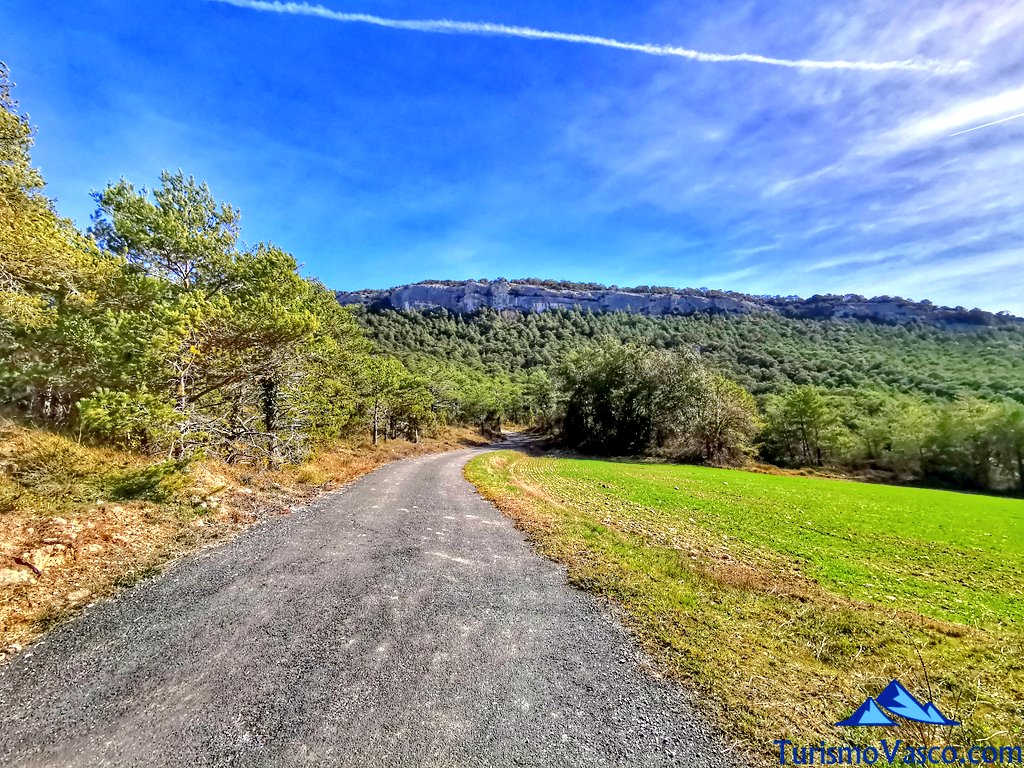 This is a simple and enjoyable route that allows us to enjoy the natural landscape that surrounds this town. Once we reach the information panel that accompanies the caves of Pinedo, you can see how there is a circular route that allows us to know the caves from various perspectives. Short but intense.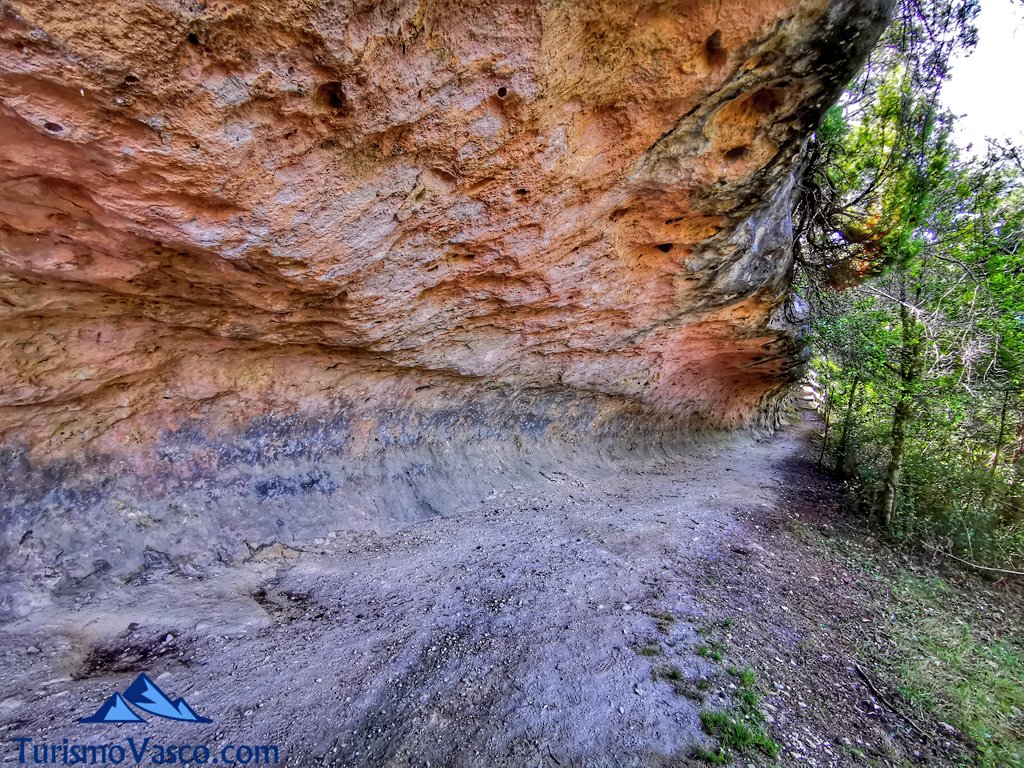
Cuevas de Corro.
The caves of Corro, also known as the caves of the Moors, are located away from the town of Corro, next to the A-2622 road. A space that has allowed the creation of a small picnic area and parking for people who decide to visit these caves.  The caves of Corro are located on a hill, protected by a lush forest that does not allow us to dazzle this wonderful place from afar. But do not worry, the way to follow is very simple. From the parking lot, we must follow the dirt track and stones that we find before us until we reach a sign that tells us to turn left. It is time to climb stairs.
  The path, perfectly signposted, leads directly to the caves and necropolis of Corro. There is no way to get lost. The caves of Corro, VII century, represent the largest of all the caves that we present today. And perhaps, the most striking. And it is that the entrances to the rocks that we find in the area known as Solapeña, call the attention of all the people who visit them.
Tobillas Caves.
The Tobillas Caves are, in our opinion, the simplest of all the caves found in Valdegovía. However, they are no less important. Excavated on the limestone rock, these caves seem to be related to the origins of the town of Tobillas itself.  On the other hand, we must say that, as in the cases of Pinedo and Corro, the environment of these caves has been reconditioned to create new access and parking. In addition to being able to leave our vehicle in the center of this urban center, the route has been adapted so that we can reach our destination in the most comfortable way possible.
  In this direction we must take the road that takes us into the mountain, take the first detour to the left, cross a small stream that we will find on the right and climb the stairs that lead directly to the entrance of the cave. Easy.
San Martín del Valparaíso.
The Barranco de San Martín de Valparaíso is home to more than 30 tombs. Undoubtedly one of the largest necropolis in the area. An open space of great natural value that has been used for years as a space for the practice of climbing. In 2005, as a measure to preserve this historical and archaeological enclave, the Provincial Council of Araba decided to prohibit climbing in this area. This measure was the prelude to the Basque Government opening a file to catalog the Valdegovia caves as a Cultural Asset.  You should know that the hermitages of San Martín de Valparaíso are about 20 minutes walk, about 2 km from the place where we recommend you to leave your vehicle (the tourist office of Villanueva de Valdegovía). Once at the tourist office, we must enter the town center going up the street that we find on the side and continue straight ahead. We must confess that the site of San Martín del Valparaíso is the worst signposted. That is why we have made a homemade map (sorry for the botched job) so that you do not get lost. We hope it will be of help.
  Once in the hermitages of San Martín del Valparaíso, the scenery is simply breathtaking. Nature in its purest form. Moreover, many people have told us that nature takes away the prominence of the tombs that we find in this place. What do you think?
Valorization of the Valdegovía caves.
The information panels, signs and accesses that we find around the caves of Valdegovía respond to a program promoted by the Department of Culture of the Basque Government to enhance the value of this incredible place that we show you today. Thanks to this program it is possible to access without difficulty to each of these caves. Unfortunately, there are architectural barriers in all the caves mentioned above, so they are not suitable for people with reduced mobility. 
Eremites.
The hermits were people who sought to live the faith in a simpler, more solitary and penitent way than the one practiced by the church. A way of life that rejected any ecclesiastical hierarchy and the ostentation that the high positions of the church carried out. Thus, these monks, also known as hermits, sought secluded spaces where they could live simply under the shelter of a cave. With the passage of time, the towns developed along with the caves, some of them expanded until they became hermitages or homes, others were used as necropolises, while the great majority were abandoned. 
Valdegovía Gaubea.
Valdegovía, Gaubea in Basque and Valdegovía Gaubea officially, is a rural municipality of Alava located on the border with Burgos. Currently, Valdegovía Gaubea has more than 1,100 inhabitants scattered among the more than 30 villages that are scattered on the slopes of the valley. An area of great natural value, which has a rich historical and artistic heritage. The churches, ancestral homes or palace towers that we find along the way are allied with the Natural Park of Valderejo to offer the traveler a movie-like getaway. Do you dare to visit Valdegovía Gaubea? 
Where to eat near Valdegovía.
There are several ways to eat during the visit to these hermit caves. The first is to eat at the tables of the picnic area of Corro, where we decided to get our strength through a small hamaiketako (lunch at 11 o’clock in Basque) that we had brought from home. The second is to eat in one of the restaurants in the area. Although there is not a wide range of establishments to choose from, we can recommend a quality restaurant. And if you are wondering which is one of the best restaurants in the area, the answer is simple: Taberna La Era. We are sure you will not be disappointed. This place is located about 15 minutes drive from Villanueva de Valdegovía, capital of the valley. A displacement more than assumable. On egin!
What to see near Valdegovía Gaubea.
If you have decided to visit the caves of Valdegovía, we encourage you to visit other places in Araba and Euskadi. Places of great charm, among which we would like to highlight spaces such as the Salto del Nervión or the Torre de los Varona. We are sure you will love them.


Videos of the Valdegovía caves.
Once again, we wanted to accompany the words and photographs of this article with a video. In this case, we have merged in a single audiovisual the visit of the above mentioned caves. We encourage you to subscribe to our YouTube channel and venture to discover new places and experiences through our videos. We are sure that more than one will catch your attention.
The caves of Valdegovía represent a great attraction of this rural area of Araba. A route that we recommend you to visit while you enjoy the incredible nature that surrounds you. We must indicate that there are many experts who point to these caves as one of the first testimonies of Christianity in Araba. A very curious fact. As you know, your opinions are very important to us, so we encourage you to use the comment system that you will find below these lines to send them to us, we will try to respond as soon as possible. Ondo pasa!


0 Comments