




Table of Contents
Discover the Botanical Garden of Santa Catalina, an impressive natural and historical treasure just 12 km from Vitoria-Gasteiz.
The Botanical Garden of Santa Catalina is closed for works. The Botanical Garden of Santa Catalina, also known as the Botanical Garden of Trespuentes or the Botanical Garden of Iruña de Oca, is one of the most special places in the province of Araba. A place of great interest, which fits perfectly into any plan that we make in the vicinity of the capital of Alava, Vitoria-Gasteiz. This small treasure is hidden in the shelter of the mountains, in the Sierra de Badaia, in the town of Trespuentes, a corner of unique composition, where we find a beautiful fusion of nature, architecture and history. Surrounding the ruins of the old monastery of Santa Catalina, a complex that for years housed the order of Augustinian monks, we find the more than 32,500 m² that make up the Botanical Garden of Santa Catalina. A place that keeps more than 8 centuries of history in its interior and more than 1,200 species in its exterior, a unique space that has become by its own merits one of the most demanded scenarios of our territory.

All the people who visit it for the first time agree and agree on the same points, it is a place that surprises by the incredible fusion of nature, views of the Llanada Alavesa and the history of the ruins of the monastery of Santa Catalina. A place that exudes peace, harmony and beauty in each and every one of its corners. So much so that many people choose it as a place to celebrate some of the most special moments of their lives. Of course, you must first go through the cashier. The use of the spaces of the Botanical Garden of Santa Catalina for private events amounts to more than 300 €, as everything, the final price depends on the services we hire.

Information on the Santa Catalina Botanical Garden.
- Attractions: Nature and history. Botanical garden and old monastery.
- Responsible: City Council of Iruña de Oca.
- Size: 32,500 m² (32,500 sq.m.)
- Services: Restrooms during the tour, lighting, information brochures, guided tours and exhibition hall.
- Guided tours language: Basque and Spanish.
- Hours: Winter schedule (March 24 to May 1): Monday to Friday from 10:00 to 14:00 and Saturdays, Sundays and holidays from 11:00 to 15:00. Summer schedule (May 1 to September 30): Monday to Friday from 10:00 to 14:00 and Saturdays, Sundays and holidays from 10:00 to 20:00. Rest of the year closed.
- Phone: 688 897 048
- Location: Santa Catalina Botanical Garden, Trespuentes, Araba, Euskadi.
A feeling of mystery, fantasy and intrigue runs through our body before entering the interior of the Botanical Garden of Santa Catalina. An enclave that, after having been abandoned for years, was recovered by the City Council of Iruña de Oca in 1999 to show it to all those who visit us. From that moment on, work began on this project, improving each and every one of the aspects necessary to create a safe, enriching and different experience, objectives that became a reality in 2003, the year in which the Santa Catalina Botanical Garden opened its doors to the public. Since then, visits have increased exponentially (the statistics prove it), the old ruins have risen from the ashes with more life and vitality than this place has ever inhabited.

Frequently Asked Questions about the Santa Catalina Botanical Garden (F.A.Q.)
- How long does it take to see the Santa Catalina Botanical Garden? The estimated duration given at the reception of the Botanical Garden is about 1h 30m, but it depends on each person, we spent about 2 hours. There is no time limit.
- How difficult is the visit? Familiar. Steep slope at some points. Total height difference of the route: 70 meters.
- Are dogs allowed? Yes, as long as they are tied up and the normal rules for these cases are respected.
- Do I need to make a reservation? It depends. If the visit you want to make is free, no. If not, if you prefer the guided tour, yes. Otherwise, if you prefer the guided tour, yes.
- How much does the free visit cost? The individual visit has a cost of 3 €, children up to 10 years free. Groups of 10 or more people 2 €. Student card 1,5€.
- Is it suitable for people with reduced mobility? No. Practically the entire route has architectural barriers.
- Is it possible to ride a bike? It is possible to reach the entrance by bike, but not by bicycle. Next to the reception of the Botanical Garden, at the entrance, there are bike racks where you can leave your bicycles without worrying.
- Is it possible to eat inside the premises? Yes, in fact there are some tables in the upper part of the enclosure where you can eat very comfortably.
- Is it possible to make photographic reports? Yes, people often have their photos taken for weddings, communions and other types of events. These types of actions do not have an additional cost. Paying the entrance fee is enough.
- Is it possible to go with a pram? The tour is not prepared for access with a stroller, there are many architectural obstacles that make access difficult. Normally, people usually leave the stroller at the entrance of the ruins, make the visit and then return to get it.
- Can plants be harvested? No, it is strictly forbidden.
- Is it possible to get off the roads? No, let’s respect and take care of the environment.
- Is it possible to make fire? No.
- Were the wooden statues made by monks? No. Although the rumor that the monks carved the sculptures is widespread on the web, this is not correct. The sculptures were installed in the Santa Catalina Botanical Garden in the year of its opening, 2003.
- When is the best time to visit the garden? Each time of the year has its own attractions, it all depends on the tastes of each person. In general terms, we can say that the best time to see the flowers is in May/June, if you want to see the butterflies the best time is in July and if you want to see the autumn colors it is recommended to visit from October onwards.
- When does the butterfly farm open? Although there are many mentions on the internet about the butterfly garden at the Santa Catalina Botanical Garden, those in charge tell us that they are working on making a butterfly oasis to reinforce their habitat, but that it is not a butterfly garden as such.
- Can the bell of the old church be rung? Yes, just as it happens in the chapel of San Juan de Gaztelugatxe, ringing the bell of the Botanical Garden of Santa Catalina has become a tradition.
- Is there any public transportation that connects the garden with Vitoria-Gasteiz? Yes, the line 13 of Álava-Bus leaves us in the vicinity of the church of Trespuentes, from there we would have to walk up to the entrance of the garden.

Maybe in this FAQ, acronym of “Frequently Asked Questions”, there is a question that you have in mind, if so, we invite and encourage you to leave a comment in this article, we will try to answer as soon as possible. On the other hand, in the following lines we will expand all the information necessary to visit the Botanical Garden that occupies us today, we hope you like it and solve all the doubts that you may have been left after reading this section.

Santa Catalina Botanical Garden, the treasure of Araba.
In this Botanical Garden, the most impressive we have visited so far, everything is thought in detail, each and every one of the paths lead us to a special place where we find something to photograph, something that catches our attention. Impressive. Examples of this are the ruins, the wood carvings, the viewpoint, the cisterns and many other elements that we find as we advance along the way.

History: The current Santa Catalina Botanical Garden has its origin in the residence of one of the most important and powerful families of the area, the Iruña de Oca family, the Iruña. It was their descendants who, in the 13th century, built the original tower house, the first building that occupied the plot that today houses the Santa Catalina Botanical Garden. A century and a half later, the Iruña family decided to move to Vitoria-Gasteiz, for which they built the current Otxanda Tower (the building where the Natural Science Museum is located today), handing over their former residence to the order of the Hieronymites. From this group, years later, it passed into the hands of the Augustinian monks, who, after building the Monastery of Santa Catalina next to the old tower of the Iruña family, gave life to this enclave. In 1835, with the Disentailment of Mendizabal (a historical fact by which the church and the rest of the religious orders were expropriated of the goods accumulated over the years), the monastery was vacated, deteriorating with the passage of time until it reached a state of ruin. During the first Carlist War (1833 and 1840), after the fall of this “fortress”, the Carlists set fire to it with the sole purpose of preventing it from falling into enemy hands. Since then, this space has gone unnoticed, fallen into oblivion, until 1999, when the town council of Iruña de Oca decided to carry out a tourist project to make it known to all the people who visit us. Since 2003, the year of its opening, the Botanical Garden of Santa Catalina tells the story of the Iruña, the Augustinians and the rest of the people who inhabited this place. At the same time, it pleases our eyes with the more than 1,200 species that we find around it. Interesting, isn’t it?
Where to park: Jardín de Santa Catalina has several parking areas, several parking garages. Between them, they offer a total space for approximately 170 vehicles. We recommend leaving your car in the last of the parking lots, although if you want to walk a little further and visit the area surrounding the garden, you can also leave it in any of the previous ones, it all depends on your plans. If you finally decide to leave the car in the last parking lot, you should know that you can access it by the path that we find on the left side, a small walk on foot that faithfully represents the type of slope with which we find ourselves in the interior.
1.- Parking “Cantera”: This parking area is located next to the quarry that we find in Trespuentes and has a total capacity of approximately 100 cars. This parking is located about 500 meters from the next parking.
2.- Located about 600 meters from the last one and with capacity for only 10 vehicles, we find the intermediate parking lot of the Botanical Garden of Santa Catalina. This space is easily recognizable by the large metal gate that we find next to it.
Located just 75 meters from the entrance of the Santa Catalina Botanical Garden, this parking is the ideal place to park the car if we are short of time or just want to visit the site that concerns us today. Capacity: 60 cars approximately.
The stretch between the last 2 parking lots is not wide enough for two vehicles at the same time, but don’t worry, there are small nooks and crannies where you can pull over and make way, a common procedure on rural roads. By the way, if you are one of those who travel with the house lying down, in a van, motorhome or any other vehicle adapted for travel, we recommend you to look at the options proposed by the campsite of El Roble Verde in Nuvilla.

How to get there: If we access from Vitoria-Gasteiz, the best way to get to the Botanical Garden of Santa Catalina is by Álava-bus, on the bus that runs on line 13, the line responsible for communicating the capital of Alava with Trespuentes. The bus leaves us next to the church, we recommend to consult the schedules and stops in its respective web page. If you are in one of the towns that make up the municipality, we recommend using the Okabus, the internal bus of Iruña de Oca. In case of arriving to this environment by private vehicle, we recommend using the AP-68 as a reference, since the garden is located less than 6 km from this important road artery.

Location: The Botanical Garden of Santa Catalina is located in the municipality of Iruña de Oca, in one of the 5 villages that compose it (Villodas/Billoda, Montevite/Mandaita, Trespuentes/Tresponde, Ollávarre/Olabarri), more specifically about 1,500 meters south of Trespuentes. Its location, on 13th-14th century ruins, in the heart of the Sierra de Badaia, facing the Llanada Alavesa, makes it of special interest to anyone who visits it. On the other hand, being on a hillside, it has a difference in height of about 70 meters approximately (maximum altitude 675m / minimum 605m), making that in some of its sections we find some slopes. The area in which this tourist attraction is located belongs to Cuadrilla de Añana, a region located to the southwest of Araba that groups 10 municipalities and that has many other points of interest.

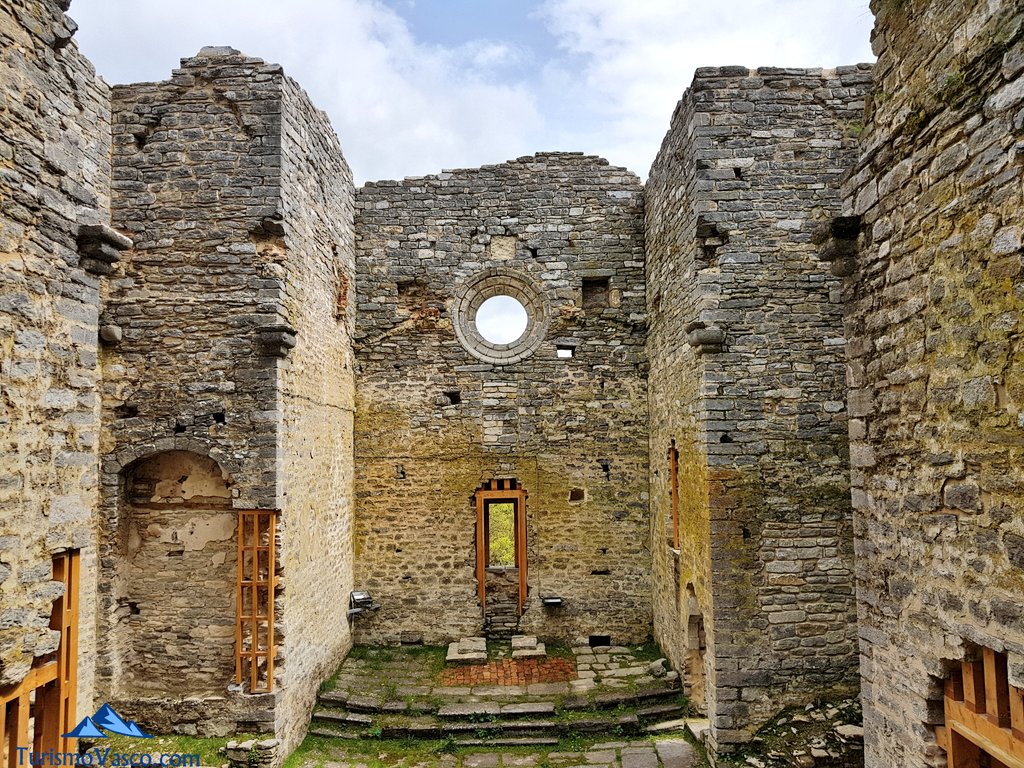
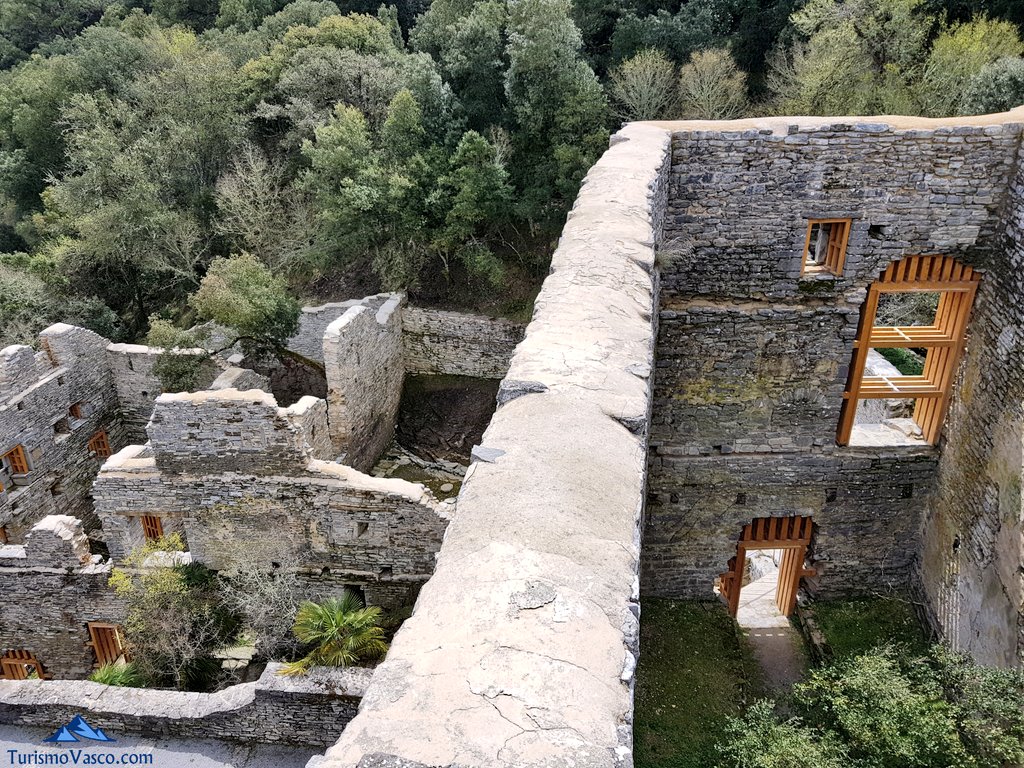
Monastery and church: Although we refer to the ruins of the Botanical Garden of Santa Catalina, as the old monastery of the Augustinians, we must indicate that this building was built on the former residence of the Iruña, so we can say that the current ruins combine an old tower house, a church, and a monastery, a set of ruins full of history that make this natural space in one of the most special places in Araba. A stone masonry wall protects the more than 32,500 m² that make up this botanical garden, a space in which we find two clearly differentiated spaces, the interior and the exterior of the ruins. Inside, you can perfectly appreciate the different rooms of what was once the house of the Augustinians, among them, we highlight the church or the passageway, while on the outside highlights the cisterns or terraces for growing grapes among many others. In addition, inside the walls of the monastery, we find a new element, a large metal structure, which takes us up to one of the highest points of the environment through a spiral staircase, creating a great viewpoint from which dominates the Sierra de Badaia and the Llanada Alavesa.

Route to follow: The ordinary visit, the most performed, the free visit, allows us to walk at our leisure a route that leads us to know the flora of the 5 continents. Officially, the structure of the Botanical Garden of Santa Catalina has 3 different areas: the shady area, the sunny area and the valley floor area. We wanted to simplify it so that visitors can understand it in a practical and simple way. To do this, we have divided the garden into 3 sections, the front part of the ruins (shady area), the ruins (valley bottom) and the terraces (sunny area). Simple, isn’t it?

- Umbria: Atlantic climate species (beech, chestnut or oak among others).
- Valley bottom: Typical wetland species (lilies, water lilies…).
- Solana: Cactaceae species, Canary Island plants and species of warm habitats.
We leave you the informative brochure of the Botanical Garden of Santa Catalina so that you can download it and get an idea of the tour before leaving home.

Rooms: The exhibition hall and the projection room are located next to the entrance of the enclosure, just after entering on the left hand side, next to the restrooms. While in the projection room you can see a short video about the Botanical Garden of Santa Catalina, in the exhibition room you can see the remains found during its rehabilitation. Two interesting spaces that perfectly complement the visit inside the Botanical Garden.

Cisterns: Water plays a very important role in practically most of the Botanical Garden of Santa Catalina, and in addition to the 3 cisterns that we find behind the monastery, there are also small water systems that run through the interior of the ruins. The color of the water, the moss that surrounds it and the colorful fish that we find in the cisterns call our attention, impressive. By the way, the cisterns are not fenced, be careful with children.

Viewpoint: Although the Botanical Garden of Santa Catalina has dozens of natural viewpoints from which to enjoy the incredible views offered by the Sierra de Badaia, this space has a metal structure viewpoint that leads us to one of the highest points of the environment. From here, you can see part of the valley of Badaia, the Llanada Alavesa and the city of Vitoria-Gasteiz.
 A place that may cause some concern to people with vertigo, but once at the top, it is worth it. Recommendation for people with vertigo: do not look down. It is difficult, but necessary.

Games for children: The visit to the Botanical Garden of Santa Catalina can be perfectly categorized as a family plan, an experience suitable for all ages, a plan that appeals to young and old alike. In this regard, those responsible for the Botanical Garden of Santa Catalina have created several initiatives for the little ones of the house to have a great time, the most prominent is a kind of game of clues through which they go through the entire garden.

Wood carvings: Although several internet publications indicate that the wood carvings were made by the Augustinian monks, this information is incorrect. According to the Santa Catalina Botanical Garden itself, the sculptures were created specifically for the opening of this space to the public in 2003. At present, we find a great variety of them scattered throughout the garden, statues that energize and entertain the visit of the smallest of the house. Playing at finding each and every one of the wooden sculptures scattered throughout the Botanical Garden of Santa Catalina can become an adventure, a nice family pastime. How many have you found?
Eagle.

Donkey.

Goat.

Goat (2).
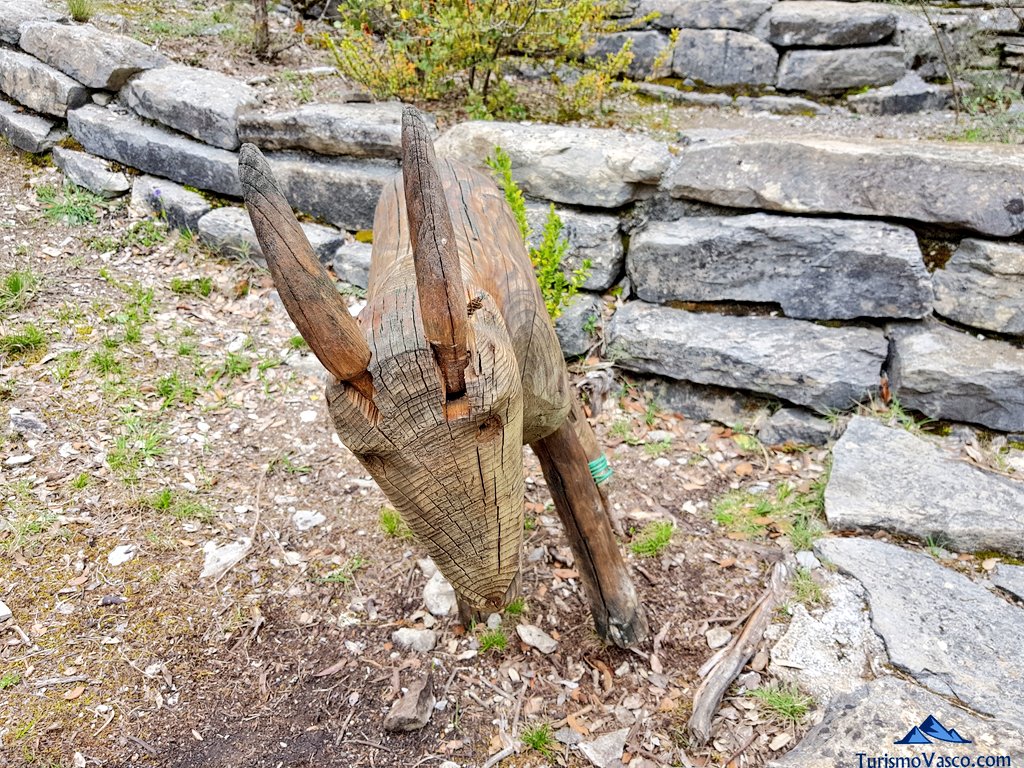
Shepherd.

Jabali.

Lobo.
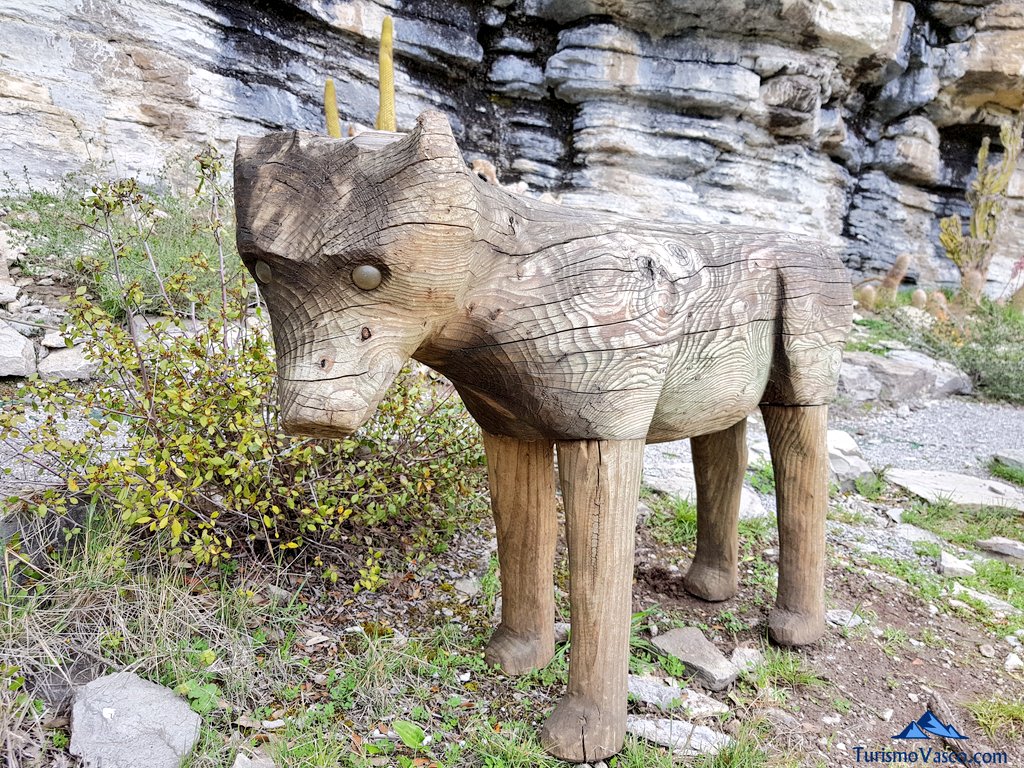
Bear.
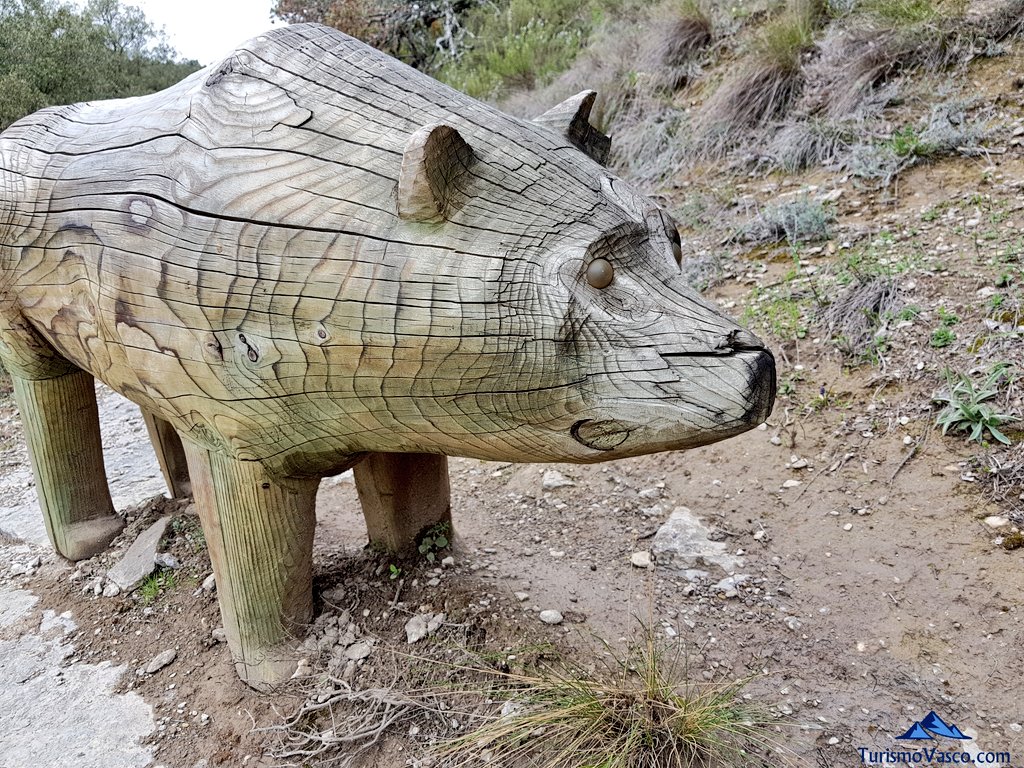
Sheep.

Dog.

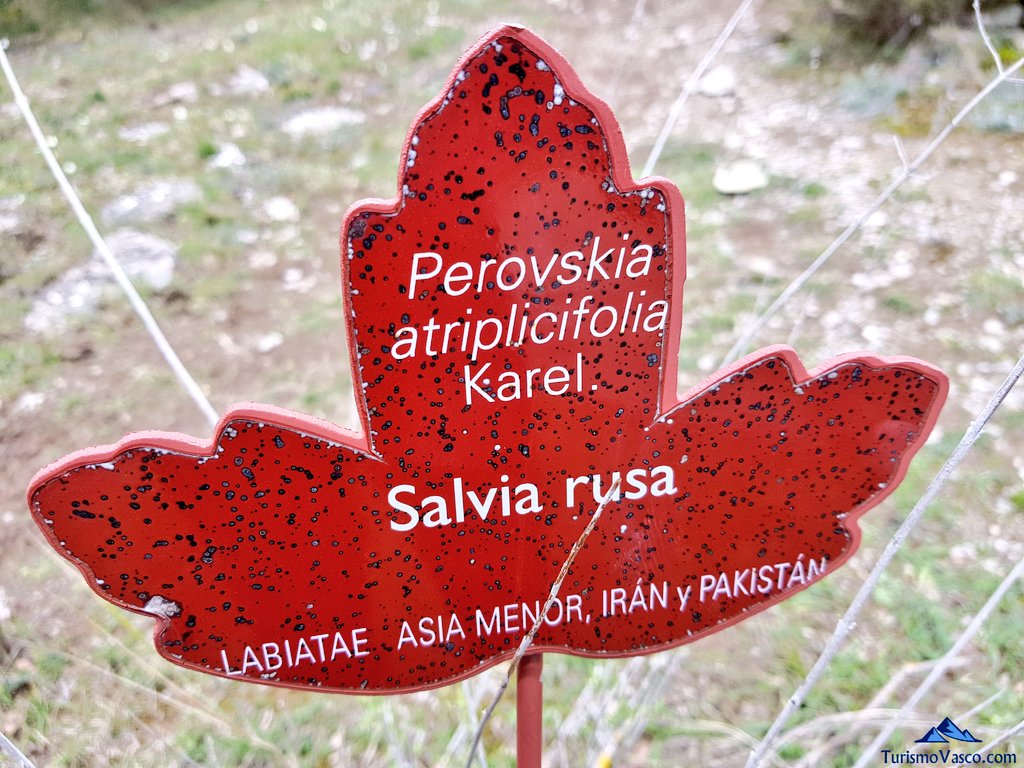
Varieties from all over the world: The Botanical Garden of Santa Catalina currently houses varieties from all over the world, from the 5 continents. During the tour we can enjoy both native and international species. Trees and flowers are part of the more than 1,200 species that are distributed in the 3 areas of the park, Umbria, valley bottom and the sunny side.
Mariposario: A small, spherical, enclosed space located in the upper part of the Botanical Garden of Santa Catalina serves as a butterfly garden. Although, to tell the truth, those responsible for Santa Catalina tell us that it is not a butterfly garden as such, but an effort to create an oasis of butterflies to help strengthen the habitat of these. We must keep in mind that this space remains closed most of the year because butterflies have a closed cycle that evolves from egg to adult through the larva and chrysalis. The best time to see butterflies is the month of July.

Star Park: The star park is, together with the Butterfly Garden, one of those spaces that attract the attention of anyone who decides to enter the Botanical Garden of Santa Catalina. In the upper limits of the garden, behind the ruins of the convent, we find the so-called “star park”, a space accredited by the Starlight Foundation in which nocturnal events are held throughout the year.

Where to eat: The location of the Botanical Garden of Santa Catalina, 12 km from Vitoria-Gasteiz, gives us the option to eat in one of the many restaurants that the capital of Alava has. Among all of them, we highlight the restaurants Waska and El siete, they will not disappoint you.

Maintenance: The Botanical Garden of Santa Catalina has a double merit, on the one hand it has managed to consolidate itself among the most visited attractions in Araba and on the other hand, it is a great tool for social and labor insertion. Sidalava, the company in charge of its management, employs people at risk of exclusion and social prisoners in the maintenance work of this Basque space. This action is framed within the reinsertion program of la Caixa whose aim is social and labor reinsertion.

TurismoVasco Tiketa: Our humble accreditation has gone this time to the Botanical Garden of Santa Catalina, a small gesture, which tries to recognize the added value of this Basque space.

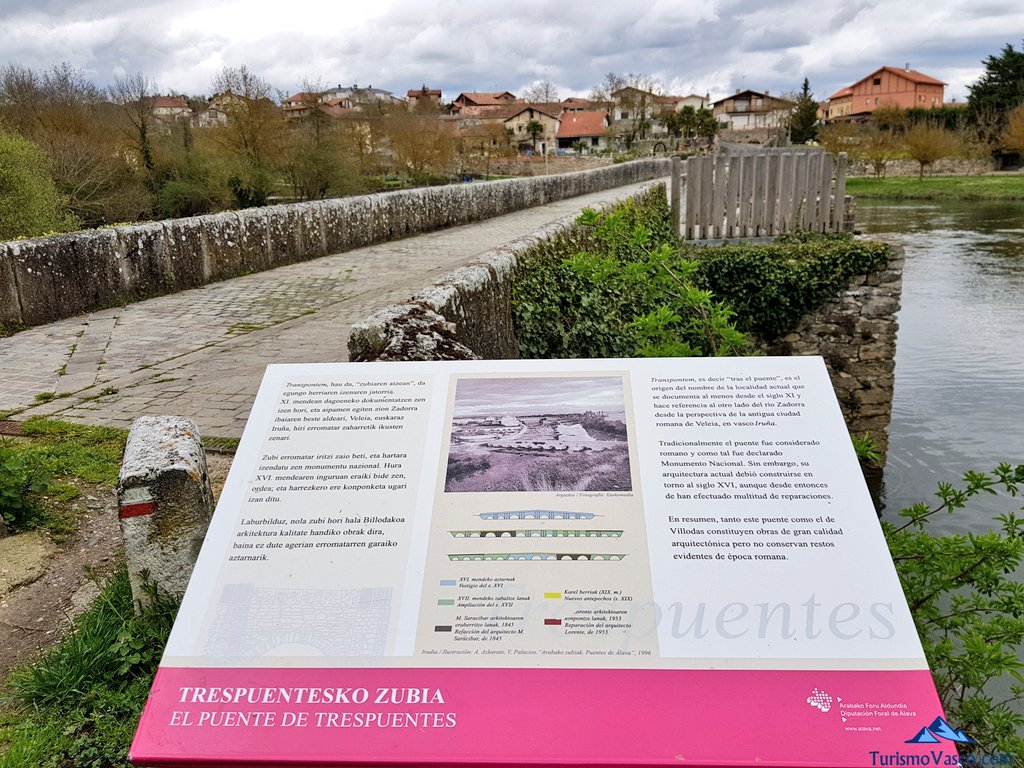
What to see in Trespuentes: This village, small and quiet, gives a lot of game. In such a small space, we find 3 points of great interest: the Botanical Garden of Santa Catalina, the Roman Bridge over the Zadorra River and the Iruña-Veleia site, the latter located in the neighboring village of Villodas.

Did you know that the original name of Trespuentes is “Transpontem”? This word literally indicated the village that was “behind the bridge”, a name that evolved into the current Trespuentes. Note, it has nothing to do with the number three.
What to see in Vitoria-Gasteiz: The old cathedral, the new cathedral, the green ring, the Bibat Museum, Artium, the medieval almond, the route of the murals, the Florida Park or the square of the fueros are among many other notorious tourist attractions that the capital of Alava has to offer.

What to see in Araba: Araba has many areas of great interest, among them, we highlight the Salto del Nervión or the Salt Valley. Special emphasis should be placed on the latter, as it offers a joint visit with the Botanical Garden of Santa Catalina. A winning combination.

Videos: Although we try to capture with our cameras as many spaces as possible, it is clear that a video shows much more than any photograph, that is why we have decided to share with you a couple of videos (unedited) that we recorded during our stay.
Santa Catalina Botanical Garden.
Giant ant-eater.
The Botanical Garden of Santa Catalina is a place that inspires and impresses everyone who visits it, a mandatory place to visit during any trip to Euskadi. We look forward to your comments.


0 Comments