



Table of Contents
Cetaceans and seabirds come together in the sea trip “Cetaceans at 10 o’clock”, an experience of Ekoetxea, AMBAR Elkartea and Hegaluze in which dolphins and whales take center stage.
Dolphins, whales, seabirds and an endless number of species ply the waters of the Bay of Biscay daily in front of our beaches and cliffs, a presence that, although for the vast majority goes unnoticed, is real. This is what we witnessed after our experience aboard Hegaluze Berria, a boat that performs the boat route “Cetaceans at 10 PRO”, the activity we selected to enjoy the marine species that surround the Basque Country. This boat trip, organized by Ekoetxea (former Biodiversity Center of Euskadi), AMBAR Elkartea and Hegaluze, gives us the opportunity to contemplate these true marine giants a few meters from our boat, a joy, amazing! 
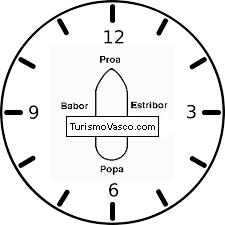
Technical dictionary on the different parts of the boat.

- Bow: Front part.
- Stern: Rear part.
- Port: Left side.
- Starboard: Right side.

Cetaceans at 10 is available in 3 different modalities: Initiation, Cetaceans at 10 o’clock and PRO. Although all 3 have the same objective, they have different durations and prices, characteristics that we detail below:
- Initiation: This type of activity begins at 10:30 with a talk given by one of the members of the AMBAR Association to later depart in private vehicles to Cape Matxitako. It is there, where from a strategic location on the coast you can observe the great variety of fauna that our sea and our land harbors.


- Cetaceans at 10 o’clock: The star activity, the best known. The experience begins in the port of Bermeo, on the jetty next to the port parking lot. Once embarked, the Hegaluze Berria (boat specialized in maritime routes) sets course towards the great submarine canyon that we find in the deep sea, off the Basque coast. An experience of 4 hours and 30 minutes in which all people over 7 years old can participate after payment of 40 € (for adults) or 28 € (children between 7 and 12 years old). In this boat trip it is common to meet a couple of species.


- PRO: The most intense experience. This route is similar to “Cetaceans at 10” except that it is 6 hours of navigation (from 9:00 to 15:00) in which we go up to 20 miles offshore and it is limited to people over 16 years old after payment of 48€ per person.


Each and every one of the modalities that we name are carried out under the rules of conduct that are included in the Royal Decree 1727/2007, a decree that specifies all the actions to be avoided in order not to disturb our beloved cetaceans. Those responsible for this experience intend to bring everyone closer to the beauty and elegance of these mammals that we find just 1 hour sailing from our coast, an informative activity, in which we discover the great variety of cetaceans that live in our waters. 
In addition to the aforementioned outings, there is an outing that, due to its duration (8 hours), offers us more chances to see whales in the Basque Country. An experience that, managed by the Basque company VerBallenas.com, makes us live with real passion every sighting we make. Its manager, Gorka Ocio, a nature lover and whale watching expert, convinced us to go on one of his trips. The result was impressive. In case you want to know more about this whale watching trip, we recommend you to read our article: Whale watching in Euskadi, an unforgettable adventure. 
Information on boat trips to see cetaceans in the Basque Country.
- Organized by: Ekoetxea.
- Name of the experience: Cetaceans at 10.
- Season: From April 1 to the end of October.
- Minimum age: 7 or 12 years old depending on the type of route.
- Price: Between 40€ and 50€.
- Duration: Between 4 hours and 30 minutes and 6 hours.
- Attractions: Long-range boat trip off the Basque coast. Possibility to see dolphins, whales, birds and other species just a few meters away from us. Spectacular views of the Basque coast from the sea.
- Port of origin and destination: Bermeo.
After experiencing the small boat routes offered by Hegaluze, we wanted to take a step forward and go into an open sea crossing to enjoy the company of dolphins, whales and seabirds aboard the boat Hegaluze Barria, an incredible experience in which we have learned a lot and in which we have had a great time, an adventure that we recommend you all to enjoy, are you up for it?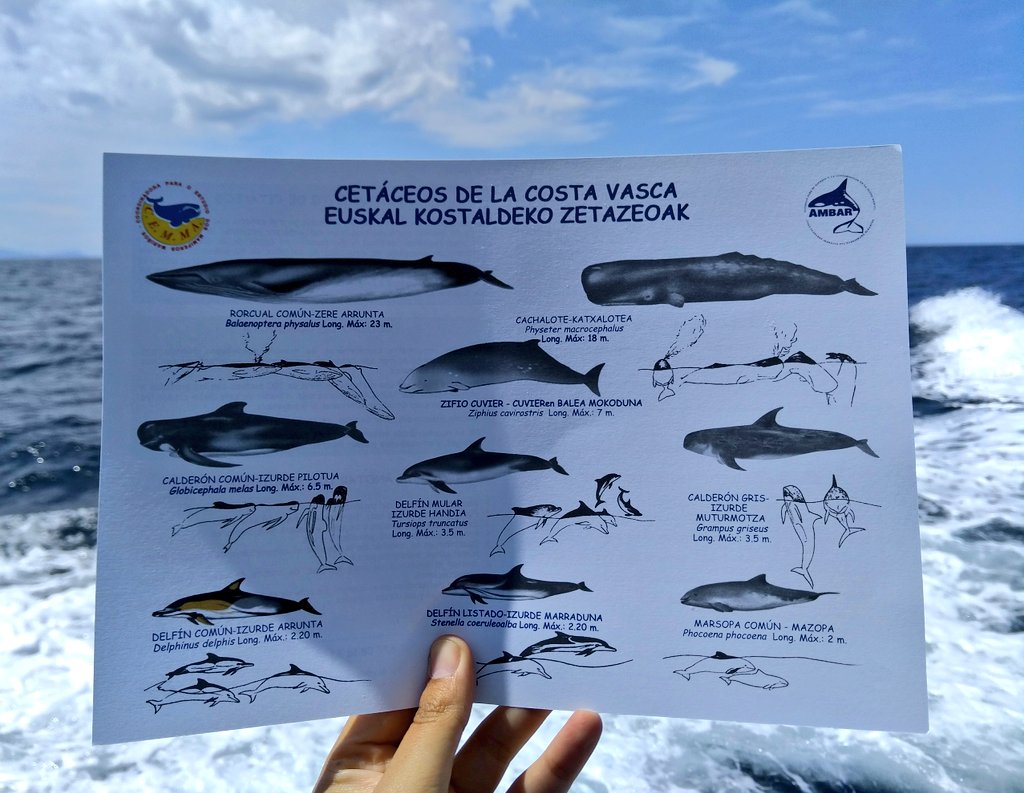
Whale watching on the Basque coast.
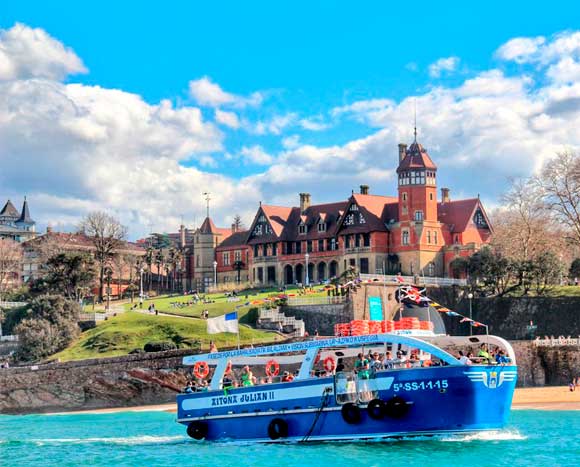
We began our adventure in the port of Bermeo, next to the sculpture of the wave, the usual embarkation place for Hegaluze boat tours. Next to the dock, the person in charge of Ekoetxea was waiting for our arrival. After confirming our reservation, he gave us the opportunity to board with the rest of the group on the Hegaluze Barria, a boat with capacity for 66 passengers that has a bathroom, sighting platform and public address system among other accommodations, a boat in which we felt at home.  While Juan, skipper of Hegaluze, cast off with his team, Pablo, head of AMBAR, began to introduce the group to the exciting world of cetaceans off the Basque coast. A pleasant and didactic talk in which they explained the possible species we could find, the route we were going to take, the system to indicate a sighting and the “why” of it all, arguments that made us think about how lucky we are to be able to appreciate some of these species so close to our coast.
What system is used to indicate where whales, dolphins and other species are sighted?
Taking as reference the bow and stern of the boat, we are guided by the sense of clockwise to indicate the situation where the cetaceans are. Thus, in case of finding a dolphin or whale just in front of the boat, they would indicate that they are at 12 o’clock and in case they are just behind, they would indicate that they are at 6 o’clock. In this way we will be able to locate ourselves easily without losing a lot of time in positioning our sight at that point.
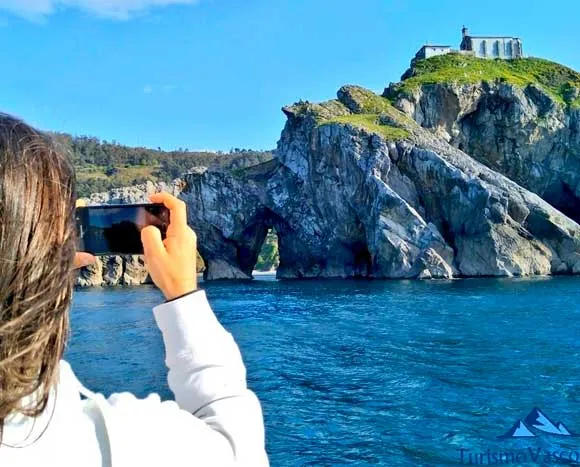
As we left the protection of the port of Bermeo, in a matter of minutes, the sirimiri that accompanied us became a downpour of heavy drops, the worried faces increased among the group, but both Juan and Pablo confirmed the weather forecast that we had predicted throughout the day, sun and good day. Meanwhile, it was time to take shelter from the rain in the covered area of the boat, between bow and stern.  After leaving the Matxitxako cape and San Juan de Gaztelugatxe to port, we set course for the open sea, a route in which we soon spotted a large number of fishing boats. An hour had passed since we left the port of Bermeo when the AMBAR members raised the alarm, we had a group of dolphins at 11 o’clock. There were about 20 bottlenose dolphins(Tursiops truncatus), but unfortunately they did not want to socialize with us and stayed away from the boat. Shortly after, Pablo told us that they were eating, which was more than enough reason to leave them alone and continue on our way. The day had changed completely, the sun reigned over our heads, the raincoat gave way to sunscreen and visors, what a change!
Recommendations for whale watching.
- Warm clothing. Although on land the temperature is pleasant, sailing the thermal sensation is very different.
- The experience does not include hamaiketako (11 o’clock lunch in Basque), so we recommend bringing some food and drink.
- On hot summer days, sun protection is practically mandatory.
- Powerful camera or video camera.
- People who get seasick should avoid liquids before embarking and take a pill for seasickness. During navigation it is recommended not to look inside the boat, it is advisable to fix your eyes on the horizon.
- The use of cameras, cell phones, binoculars for long periods of time can cause dizziness.
- Places for this experience are limited so we advise you to book in advance.
- In case of adverse weather conditions Ekoetxea will notify the cancellation of the experience through the telephone number provided.
- We recommend the bow area as the best place to watch cetaceans.
During several moments of the navigation we came across a group of birds such as gulls (yellow-legged gull Larus michahellis according to AMBAR Elkartea) or gannets(Morus bassanus). Two species that, although they are not as spectacular as those we find underwater, always brighten up the view with their flights a few meters from the sea.  A long period had passed in which we had not sighted anything on the horizon when once again the AMBAR colleagues raised the alarm, blows of what they said were 3 Cuvier’s beaked whales(Ziphius cavirostris) at 10 o’clock, unfortunately, they submerged a few minutes after the sighting. We waited for them to resurface for about 21 minutes but did not have the honor of seeing them, we resumed our march.
  No more than 30 minutes had passed when we met another group of dolphins, this time they really wanted to socialize, and how! they sailed the waters of the Cantabrian Sea glued to our hull for more than 15 minutes, a delight for the senses. While we were taking pictures and videos, AMBAR explained the situation: we were in front of a mixed group, common dolphins(Delphinus delphis) and striped dolphins(Stenella coeruleoalba), the former more playful and the latter more acrobatic.
  Undoubtedly this group of dolphins was one of the most significant sightings of the day, but not the only one, and when we were returning to land, a family of 5 or 6 long-finned pilot whales(Globicephala melas) crossed our route literally, they passed under the boat, what a bunch of critters! We were positioned on one of the ends of the Capbreton trench, the farthest point of our route and one of the best maritime areas to see cetaceans, a place where we enjoyed the visit of up to 3 species in less than 30 minutes, what a treat!
Historic whale sightings.
During the 2016 campaign, AMBAR and Ekoetxea collected a small inventory of the trips made and the cetaceans sighted. Here is a small summary of the dolphins, pilot whales and other species sighted during this period.
- Departures: 16.
- Outings with sightings: 13.
- Types of cetaceans sighted: 5.
- Common dolphins (Delphinus delphis): 8 times.
- Pilot whales (Globicephala melas): 3 times.
- Cuvier’s beaked whales (Ziphius cavirostris): 4 times.
- Striped Dolphins (Stenella coeruleoalba): 2 times.
- Unidentified cetaceans: 3 times.

During the time that this second group of dolphins accompanied us, Juan turned off the engine of the Hegaluze Barria so that the AMBAR society could start the hydrophone, a kind of aquatic microphone that allows us to listen to the sounds that cetaceans emit underwater. On this occasion, we were not very lucky, and although we could hear the occasional timid click (sound used for echolocation) and whistling (used for communication between the group), they were not very clear. As you can see, we were very lucky, a very intense morning in which we sighted up to 6 species: common dolphins(Delphinus delphis), striped dolphins(Stenella coeruleoalba), Cuvier’s beaked whales(Ziphius cavirostris), long-finned pilot whales (Globicephala melas), yellow-legged gulls(Larus michahellis) and gannets (Morus bassanus). Of course, we did not get to see the giants of our coast like the blue whale (Balaenoptera musculus), killer whales (Orcinus orca) or humpback whales (Megaptera novaeangliae), specimens that were already seen in previous years and that we are sure will make us many more visits in the future.  As if that were not enough, when we were near Cape Matxitxako, when we had practically stopped looking for any sign of cetaceans, one of the bottlenose dolphins that we had sighted miles back reappeared at our side to say goodbye, that was the end of our experience to see dolphins and whales on the Basque coast, incredible.
Our travel companions for whale watching.
In these boat trips to see dolphins, whales and other species we always have the presence of experts in different fields, so during our tour we were accompanied by members of Ekoetxea, AMBAR and Hegaluze.
Ekoetxea UrdaibaiThe Department of Environment, Territorial Planning and Housing of the Basque Government, through its Public Society of Environmental Management, Ihobe, is in charge of managing this environmental museum located in the heart of Urdaibai, a UNESCO Biosphere Reserve. Some of you may know Ekoetxea under its former name: Biodiversity Center of Euskadi. In case you are interested in learning more about this museum, we recommend the reading of our article Biodiversity Center of Euskadi – Torre Madariaga. 
AMBAR ElkarteaAMBAR Elkartea is a Society for the Study and Conservation of the Marine Fauna of the Basque Country. An organism that fights day by day to spread the importance of all the living beings that surround us with experiences of different kinds. We would like to take this opportunity to thank AMBAR for lending us some of the magnificent photographs that you have seen in this article. 
HegaluzeHegaluze is one of the few companies specialized in offering sea routes around Urdaibai and the only one to offer trips to the sea to see cetaceans off the coast of Bizkaia. You can read more about Hegaluze in the article we have dedicated to them: Hegaluze, boat routes in Bizkaia. 
After a long voyage on the open sea, the body always asks for strength and to get back on the road, two premises for which we recommend reading the following lines on where to eat in Bermeo and what to see in Bermeo.
Where to eat in Bermeo.
Although Bermeo has quality restaurants based around the fishing port, our recommendation today takes us to Mount Sollube, one of the emblems of the town. Good, nice, traditional, with good views and good value for money, this is the restaurant that we recommend today, the Cannon restaurant. 
What to see in Bermeo.
Bermeo is one of those charming villages that dot our coast, a small fishing village where in addition to enjoying the Basque gastronomy it is possible to contemplate unique places of our coast. We recommend reading our article Bermeo, what to see, what to do and where to eat. 
The whale watching in the Basque coast is possible thanks to the organization of Ekoetxea and the collaboration of AMBARElkartea and Hegaluze, 3 organizations very aware of the importance of the Biodiversity of our planet, who fight to make us see the importance that all species have in the ecosystem. 3 entities to whom we thank for this incredible experience in Basque waters, one of the best we have lived to date.


0 Comments