




Table of Contents
Meet Orreaga / Roncesvalles and all that surrounds your guided tour, discover one of the most historic villages of the Navarrese Pyrenees.
Roncesvalles, Orreaga in Basque, is a small village located in the shelter of the Alto de Ibañeta, in the north of Navarra, in the Pyrenees.Consecrated as one of the most common and important natural passages of the Western Pyrenees, every day, dozens of pilgrims from different countries gather in this village, all with a common goal, to make the Camino de Santiago. Orreaga / Roncesvalles is a historical space, an enclave known worldwide for the milestones that took place between its geographical limits in the past. These events have made Orreaga / Roncesvalles one of the most important places in Navarre. Of course, among all of them, the so-called “Battle of Roncesvalles”, the first defeat of Charlemagne, is undoubtedly the best known historical episode for all visitors. Who has not heard of the battle of Roncesvalles? This incredible battle took place in Orreaga / Roncesvalles in the year 778, one of the most mediatic defeats of the Frankish army and where Roldan, nephew of Charlemagne, died.
Did you know that the first defeat of Charlemagne’s mighty army was caused by the Vascons at Orreaga / Roncesvalles? #BatalladeRoncesvalles.
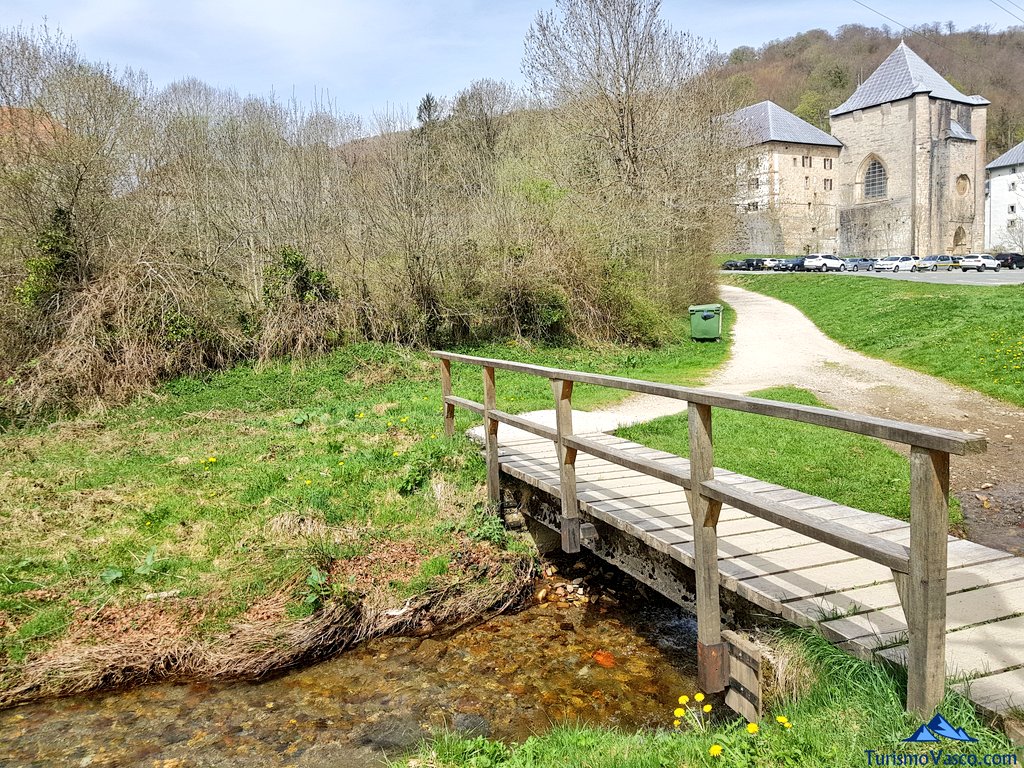
The Collegiate Church of Santa Maria de Orreaga / Roncesvalles, a building representative of medieval architecture, has been named a monumental site. And no wonder, the former pilgrims’ hospital and home of the military order of the same name, is today one of the most visited tourist attractions in the area. It is here, in this important urban center of the Camino de Santiago, where we find the tomb of King Sancho VII the Strong and the chains of Navarre among many other historical and cultural elements.

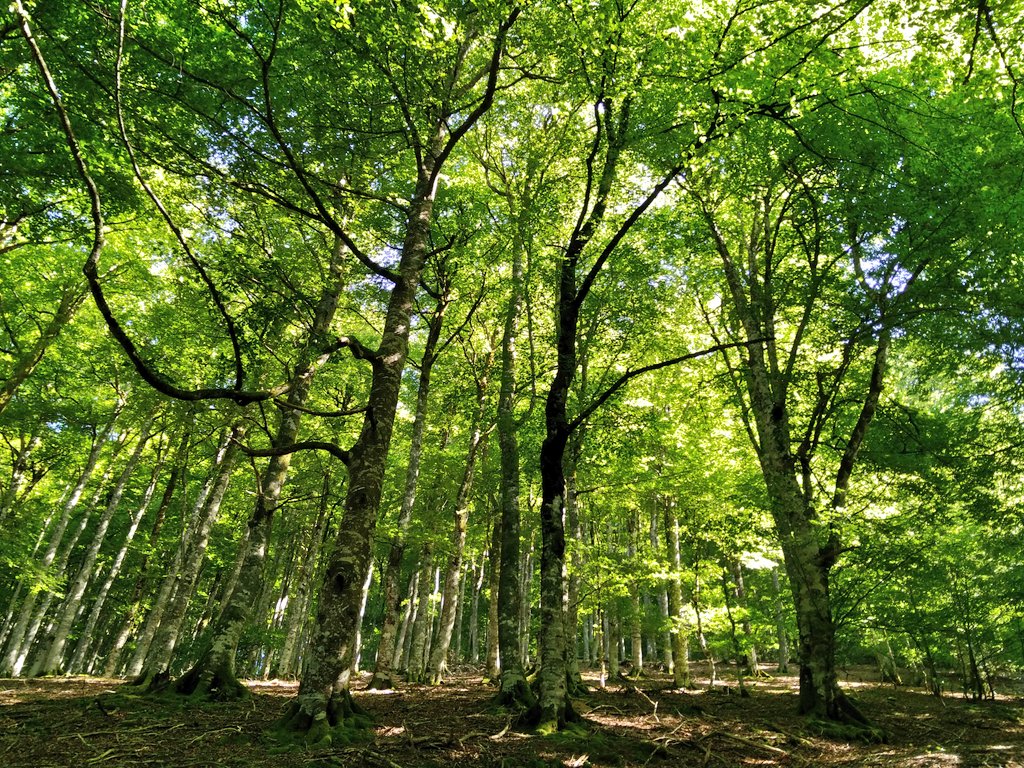
Surrounded by natural spaces of great importance, protected by beeches, oaks and other centenary trees (see Irati Forest), this corner of the Navarrese Pyrenees is an essential place to visit during any trip to Navarre.
Information about the guided visit to Orreaga / Roncesvalles.
- Attractions: Great historical relevance.
- Price: 5€.
- Duration: approximately 45 minutes.
- Guided tour phone number: 948 790 480 – 670 289 997
- Tourist office phone number: 948 760 301
- Location: Orreaga / Roncesvalles, Navarre Pyrenees, Navarre.
The thousand and one shades of green that adorn Orreaga / Roncesvalles and the neighboring valleys, the valleys of the Navarrese Pyrenees, merge with the legends that have been written over the years about this town creating a legendary space. The beauty of the buildings and the natural corners that we find on our way, brighten the view and facilitates the rest of the pilgrims.

Frequently asked questions about Orreaga / Roncesvalles.
- What are the prices of the guided tour to Orreaga / Roncesvalles? 5€ standard single ticket, children under 6 years free, children between 6 and 12 years 2,5€, reduced ticket (seniors, students and large families) 4€.
- Do I need to book in advance? No. But it is recommended, especially for groups.
- What can be seen without paying in Orreaga / Roncesvalles? The church. The rest of the spaces can only be visited upon payment.
- Is it possible to buy souvenirs of Orreaga / Roncesvalles? Yes, next to the main entrance there is a souvenir store where you can buy souvenirs of your stay.
- Is it possible to visit individually? Yes. It is possible to visit the cloister and the chapter house with an audio guide.
Visiting Orreaga / Roncesvalles, is synonymous with making the guided tour offered by Auria Orreaga, the management company responsible for showing the charms of this enclave to anyone who visits it. A visit of approximately 45 minutes, which takes us to know the monumental complex of the Royal Collegiate Church of Santa Maria de Orreaga/Roncesvalles. Among the spaces to highlight, we find the cloister, the Chapter House, the museum, the church of Santiago and the Silo of Charlemagne.

Roncesvalles – Orreaga, guided tour.
In the Navarrese Pyrenees, a territory where winters are hard and long, the Collegiate Church of Santa Maria de Orreaga / Roncesvalles has been throughout its history a refuge for pilgrims. A place of peace, which was protected from beasts and bandits by the military order of Roncesvalles, by the canons of the collegiate church. Today, although its presence is not as necessary as it was then, it is still a historical point of our geography, a resting place for pilgrims who travel the road.

Battle of Orreaga / Roncesvalles: Although it is known worldwide as a “battle”, this historical episode is closer to a skirmish or an ambush than to any other military movement. Or at least this is how it is defined by the Annales regni Francorum, also known as Frankish Royal Annals or Annals of the Frankish Kingdom, the writings that describe the history of the Carolingian monarchs from 741 to 829. Thus, based on these writings, we can deduce that the Basques, outnumbered and ambushed, attacked the Frankish army, which, after sacking Iruña/Pamplona, was returning through Roncesvalles on its way to Saxony. Taking advantage of the geography of the Navarrese Pyrenees, hidden among trees, the Basques caused significant casualties among the high command of Charlemagne’s army, including that of Roland, his own nephew. This skirmish resulted in Charlemagne’s first military defeat, a historic defeat. Thanks to the Annales regni Francorum, we can say that the Song of Roland, one of the best known songs of the time, is false, since in addition to elevating the facts to epic circumstances, it completely modified reality to attribute this victory to the Saracen troops.

Guided tour: The guided tour begins at the main entrance of the Collegiate Church of Santa Maria de Orreaga / Roncesvalles, in front of the souvenir store, near the museum. However, we recommend going 20 or 30 minutes before to visit the cloister, because, although the entrance gives us access to this place, during the guided tour there is no reference to this place. It is here, where after paying the entrance fee, there is a brief introduction about the enclave in which we find ourselves and in which the tour is presented: museum, church of Santiago and Silo of Charlemagne. The guided tour begins.

- Cloister: Although this space is not visited during the guided tour, it is the same entrance that provides access to this space. From here, from the new 17th century cloister (the original one collapsed in 1600 due to a snowfall), we can access the Chapter House, where we find the tomb of King Sancho VII the Strong and the chains of Navarre, among other elements.

- Museum: The main building houses in its right wing, in an adjoining building, the library and the Museum of Orreaga / Roncesvalles. In the museum, a very protected space that can only be accessed under the supervision of a guide, it is not allowed to record videos or take pictures, a pity. Although the museum houses a varied collection, during the guided tour only part of its treasures are mentioned, an example of this is the Chess of Charlemagne, a gilded silver reliquary, which, curiously, houses relics of different saints, an unusual practice at that time.

- Church of Santiago: The church of Santiago, located next to the Silo of Charlemagne, is part of the monumental complex of Orreaga / Roncesvalles. A small chapel, in which you can perfectly appreciate the reforms carried out during its rehabilitation.

- Charlemagne’s Silo: Charlemagne’s Silo, the last building we access during the guided tour, represents the oldest building (XII century) of the entire Monumental Complex of Orreaga / Roncesvalles. It is in this place, where it is said that the remains of Roland, nephew of Charlemagne, are found, a fact on which historians cannot agree. The Silo of Charlemagne, presided over by a crypt, is today the cemetery of the municipality. In it, only the inhabitants of this Pyrenean village and the last canons that keep alive the religious order of Roncesvalles have the honor of being buried.

The price of the guided visit to Orreaga / Roncesvalles is slightly higher than other places we have visited, but it is really interesting, especially for those people who are passionate about the history of each of the places they visit.

Collegiate Church of Santa María de Orreaga/Roncesvalles: This collegiate church represents one of the most important buildings of the Navarrese Pyrenees, a three-story building, which was erected between the twelfth and thirteenth centuries. The main facade houses the library, the museum and the Priory House, while the rest of the rooms, protected behind the entrance tunnel, are hidden to the naked eye. In our case, one of the spaces that most caught our attention was the room where the tomb of King Sancho VII the Strong and the chains that are part of the coat of arms of Navarre. It was amazing.

Camino de Santiago: Orreaga / Roncesvalles, has been, is and will be, one of the key points in the pilgrimage to Santiago de Compostela. In fact, in most cases, this Navarre village represents the starting point, the beginning of the route of the Camino de Santiago. For many other people, however, Orreaga / Roncesvalles is the arrival point of the first stage(Saint Jean Pied de Port / Donibane Garazi – Roncesvalles) and the departure point of the second (Roncesvalles – Zubiri). In any case, Orreaga / Roncesvalles is undoubtedly one of the most important pointsof the French Way of St. James in the Navarre Pyrenees.

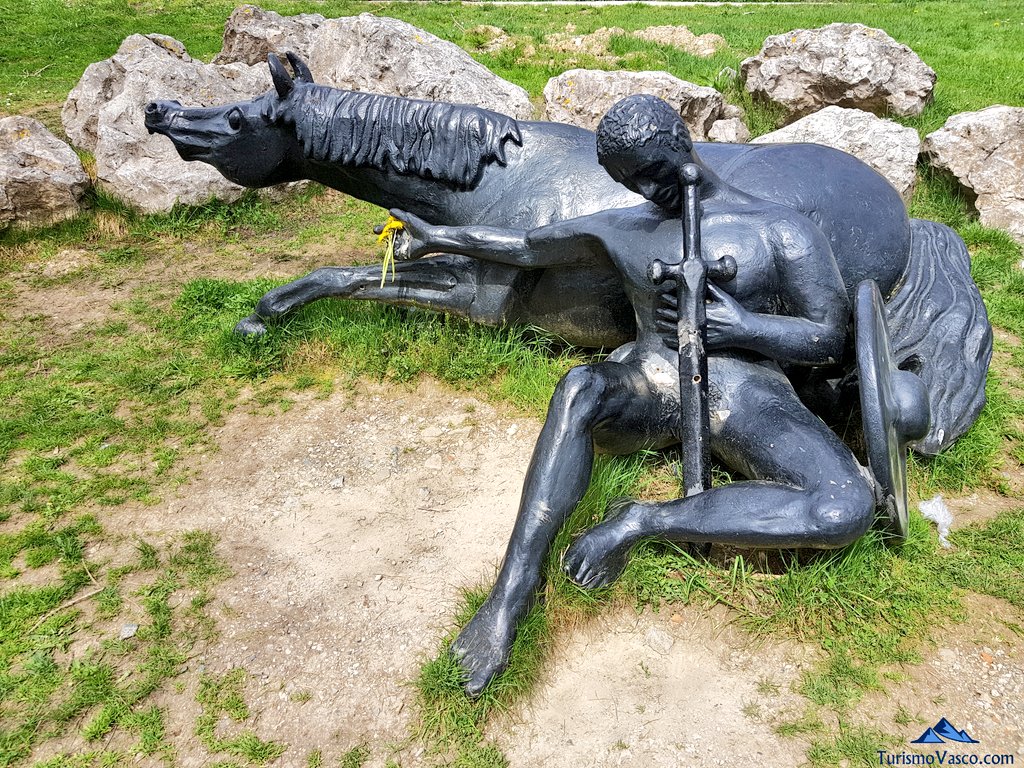
Sculptures: In the garden in front of the collegiate church there are 2 sculptures of great notoriety and importance, the one of the battle of Orreaga / Roncesvalles and the so-called “Stela del camino”, made by the Navarrese sculptor Aizkorbe. The latter has managed to attract the attention of all the people who come to this enclave, becoming one of the most photographed places of the place. To these two sculptures we must add a third one, the monument to the death of Roldan, the last work of art to join the Collegiate Church of Orreaga / Roncesvalles. In this sculpture, the work of Italian sculptor Mario Bassi de Vergiate, you can see Roland leaning on his horse, dying on the ground.

Routes: Orreaga / Roncesvalles, like the rest of the spaces that make up the Navarre Pyrenees, represents a small paradise for people who love routes in the middle of nature. Its location, at the western end of the Pyrenees, next to the Alto de Ibañeta and the Arce Valley, offers us a thousand and one routes to get lost among. All of them have three typical characteristics of this area: a beautiful green scenery due to the harsh weather that plagues the Navarre Pyrenees, routes of great history and the fact of walking on some of the oldest mountainous areas of the entire peninsula. Among all of them, the one that caught our attention the most was the nature. And no wonder, the oak and beech forests, accompanied by the rest of vegetation, make the road becomes a very grateful and photogenic route. We must mention that, in winter the green becomes white, creating another small paradise for snow lovers.

How to get there: There are several roads that lead us to Orreaga / Roncesvalles, but as always, it all depends on where we are. The areas from where most people access this village in the Navarrese Pyrenees are the Irati Forest, the Arce Valley and the capital of Navarre, Iruña – Pamplona.
- Arce Valley: This Pyrenean valley is located about 15 minutes from Orreaga / Roncesvalles, just take direction Auritz / Burguete and follow the road. You can’t get lost.
- Irati Forest: From Orbaitzeta, one of the most used accesses to the Irati Forest, we must take the NA-2030 road, go through the Aezkoa Valley and join the NA-140.
- Iruña – Pamplona: We must take the PA-30 road towards France until we find the crossroads towards Zubiri to join the N-135. Once on this road there is no loss, straight ahead.

Witchcraft: The forest of Basajaunberro, one of the forests that we find in the surroundings of the collegiate church of Orreaga / Roncesvalles, hosted in the past covens and all kinds of acts of witchcraft. These facts, together with the rest of the mythological beliefs of the Basque culture that we find in the area, give rise to a magical, unique space.
Did you know that the Basajaunberro forest owes its name to the Basque mythological figure of Basajaun? Curious, isn’t it?
You should know that the witches had a great presence in the Navarrese Pyrenees, witness of this are the numerous routes that we find among its villages.

Where to sleep: Although there are different hostels and hotels in Orreaga / Roncesvalles itself, next to the Collegiate Church, on this occasion, our choice was the Casa Rural Monaut, a Pyrenean mansion located in the Arce Valley, about 15 minutes drive from this emblematic place. We must indicate that it does not take much time to know Roncesvalles – Orreaga, in fact, the guided tour offered by those responsible for its management has an approximate duration of 45 minutes, so we recommend finding a place to sleep according to what we want to see and learn after visiting this place.

Where to eat: Both in Orreaga / Roncesvalles itself and in its surroundings, we found restaurants with a good value for money, in our case, we had the opportunity to enjoy the daily menus of the restaurants Haizea and Txikitpolit, in Auzperri /Espinaland Auritz/Burgueterespectively.

Villages of the Navarrese PyreneesIn the Navarrese Pyrenees we find a multitude of charming villages. Orreaga / Roncesvalles, Orbaizeta, Otsagabia and many other towns in the Navarrese Pyrenees are worth seeing and enjoying.

Videos: As in most of the destinations we visited lately, in Orreaga / Roncesvalles we also captured several videos that we have uploaded to our YouTube channel. As you know, all our videos are unedited, hopefully you will appreciate the charm of this small urban center in a more realistic way. Enjoy them.
- Orreaga – Roncesvalles.
- Cloister of Orreaga – Roncesvalles.
- Charlemagne’s Silo, Orreaga – Roncesvalles
- Mares in Auritz Burguete.
Navarre: Once you get to know all the corners of this land rich in nature, culture and history, we recommend that you think about the possibility of visiting some of its most impressive enclaves. Here is a sample:


Orreaga / Roncesvalles, land of witches, pilgrims, legends and history, shows us through this guided tour its incredible cultural and historical richness. What do you think about Orreaga / Roncesvalles? We are waiting for your comments!


0 Comments