

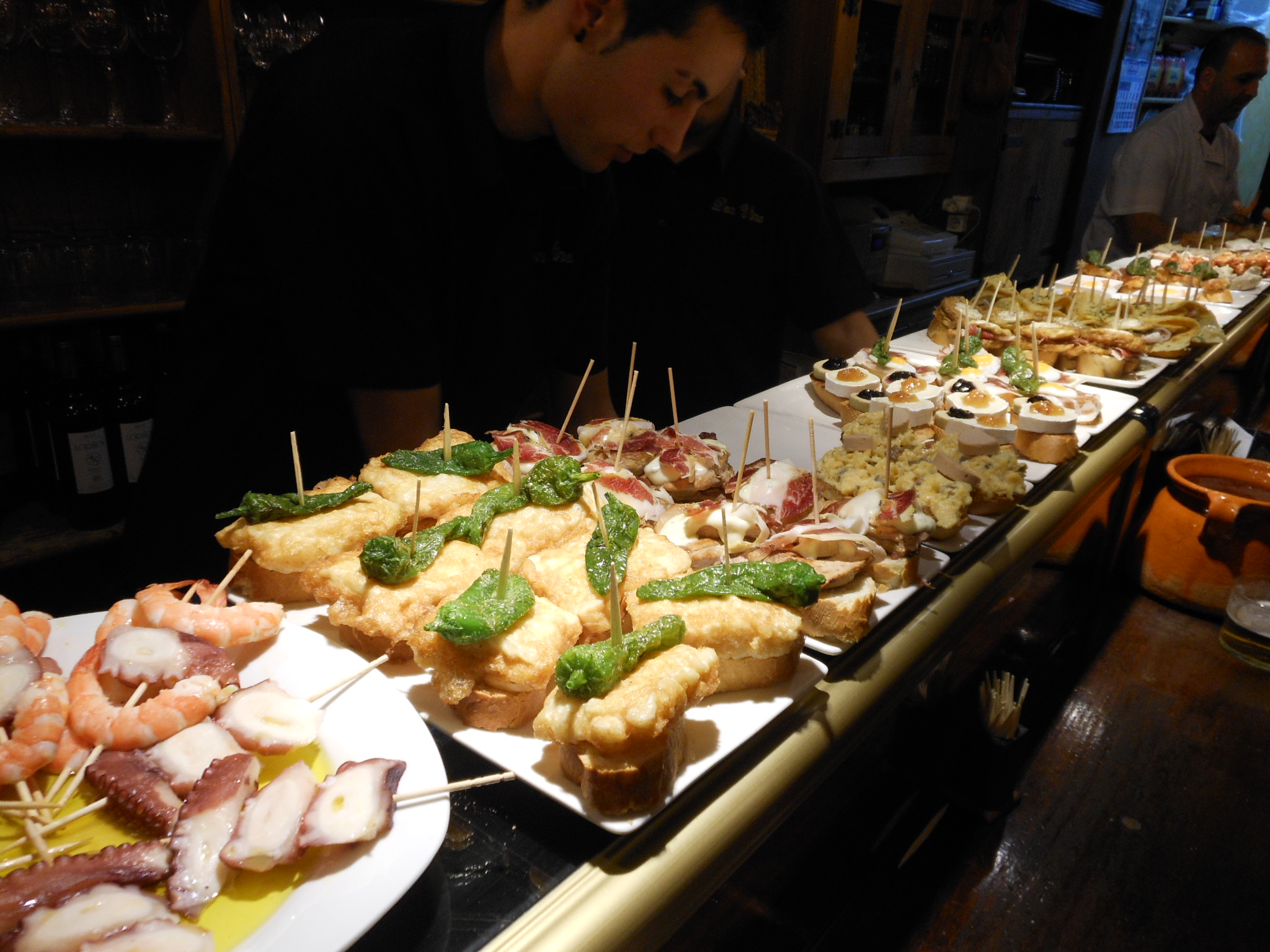



The traditional pintxos of the Basque Country are small appetizers of innumerable flavors, smells and colors that will not leave anyone indifferent.
The story goes that the pintxo was invented in San Sebastian in the 1930s, specifically in a place called La Espiga. They began to offer great tasting appetizers skewered on a stick with a slice of bread as a base and this is where the name comes from. Little by little the idea of the pintxo spread and nowadays, most bars and restaurants offer a wide variety of pintxos.
Nowadays, the pintxo has become an art form and the many Basque chefs are always looking for new shapes and textures to come up with alternative, original and surprising pintxos. In addition, since no large quantities of food are required for its preparation, professional chefs have more freedom to use high quality products and seek the boring work of the gods…perfection. Over the years the pintxo has evolved and now it does not have to be presented with a bread base or a toothpick, but the name has been kept as it is a reference for Basque cuisine.
The pintxo is usually placed on the bar counter and the customer is free to take the pintxo of his choice and eat it standing up while talking to his friends without asking permission from the waiter. If you prefer to eat the pintxo warm, then you ask the waiter to heat it up before eating it. The way to pay for the pintxo is usually by telling the waiter how many pintxos you have eaten, but some bars maintain the tradition of the chopsticks. This tradition consists in that each pintxo has a certain toothpick (colors are commonly used to differentiate) and once the customer finishes eating, he/she shows the toothpicks to the waiter so that the worker knows what he/she should charge the customer.
Another classic of the pintxo is the comparison made with the tapa. This topic has produced more than one discussion between people who defend that they are two different things and between those who say that they are the same. While the tapa is the portion of food that accompanies the drink that the consumer pays for (only the drink is paid for, NOT the food), the pintxo is a smaller portion, much more elaborate and is not the accompaniment to the drink (the pintxo must be paid for). The concepts are similar but with their small differences.
The most traditional pintxos that one can find in the Basque Country are the following:
- Gilda: The pintxo par excellence is the Gilda. It is a skewer of olives, gherkin (optional), chili pepper, anchovy and drizzled with a good olive oil. Very easy to prepare, simple and with a unique flavor, this pintxo can be found in any self-respecting bar.

Gilda
- Tortilla pintxo: A piece of tortilla with a bread base and fastened with a toothpick, this pintxo is the most common of the common ones. You can find an infinite number of varieties of this pintxo, such as potato omelette with mushrooms, with cheese, with vegetables, zucchini omelette, cod omelette, omelette with chorizo…

Potato Pintxo
- Prawn and egg pintxo: A skewer is used to pierce two prawns and an olive is placed in the middle. Then apply a small layer of mayonnaise and finally, grate the hard-boiled egg adhering to the mayonnaise.

Prawn and egg pintxo
- Stuffed mushroom: Put a ribbon, grill the mushroom (without stem). On the other side, sauté onion, diced ham and green bell pepper (other products can be used). Use a piece of bread as a base, place the mushroom on top and fill it with the ham, onion and green bell pepper. Optionally, you can sprinkle a little pepper on top.

Mushroom and ham pintxos
- Bonito with peppers: On a bread base, place the canned white tuna, then the piquillo peppers and finally the fried garlic. To give it more flavor, the skewer is sprinkled with a little olive oil.

Tuna and bell pepper pintxo
Here is a video about more elaborate pintxos:
As usual in www.turismovasco.com no registration is required to comment on this article.


0 Comments