




Table of Contents
Enjoy the rutting season in the Basque Country, a natural spectacle worth seeing and hearing.
The rut is one of the many spectacles with which nature surprises us, a gift that we have the opportunity to enjoy year after year in the Basque Country. At this time of the year, the deer move us and make us fall in love with their fights, bellows and exhibitions. Nature in its purest state. We must point out that the deer is the largest of the deer that exist in Euskal Herria, being present (according to official data) in practically all the territory. The most popular places to see the rut are the Gorbeia Natural Park, the Karrantza Valley, the Pagoeta Natural Park, the Navarrese Pyrenees, Salburua and the Gorliz foral farm, the latter two being fenced environments where the deer are not found in freedom. In our case, we went directly to one of the most emblematic natural areas of our land, Gorbeia. This Natural Park is located between the provinces of Araba and Bizkaia, two slopes where the deer is clearly present. Every year, at the beginning of September, an activity is organized to get to know this peculiar characteristic of the deer, a very enriching experience in which nature is the main protagonist and of which we have been witnesses. Do you dare to know the bellowing rut in Euskadi with us?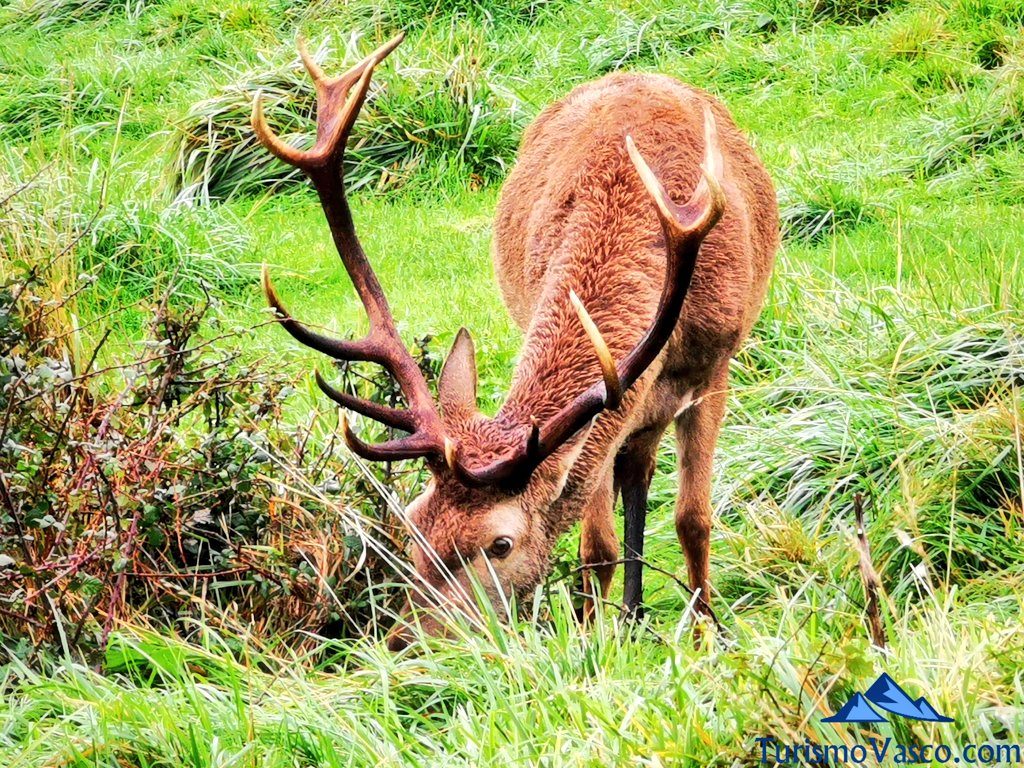
Information about the rutting season in the Basque Country.
- Online reservations: Here.
- Price: 40€ adults, 25€ children under 12 years old.
- Season: September 10 to October 5.
- Attractions: bellowing, fights, nature and the appearance of large specimens in the middle of nature.
- Location: Gorbeia Natural Park, Alava side, Zuia.
Unfortunately, nature is losing more and more strength every day in the face of human beings and their destructive nature. A fact that leads us to look for the phenomenon of the rutting in the Natural Parks of our land, spaces where it is still possible to enjoy this wonder of nature. The proposal we are talking about today is one of the few we have found to enjoy the rutting season in the Basque Country in a natural way, spotting specimens in the wild. Although the Biodiversity Center of the Basque Country (now called Ekoetxea) usually organizes outings to Salburua, as it is a fenced area where the animals are in captivity, it cannot be classified as the same type of experience. According to experts, the rut is one of the most striking spectacles with which nature attracts us, a perfect moment to appreciate the greatness of the animal kingdom. 
The rutting season in Euskadi, the majesty of the deer.
Although we choose to enjoy the deer in their natural habitat, in the wild, there are also places like the Karpin, the farm of Gorliz or Salburua, places where you can see the rutting in the specimens they have in captivity. Whether in the wild or in captivity, the demonstrations of power between males go through a curious mating ritual. A rite in which they try to scare off possible competitors by showing their attributes and engaging (only if necessary and as a last resort) in a loud (but not harmful) battle of antlers. 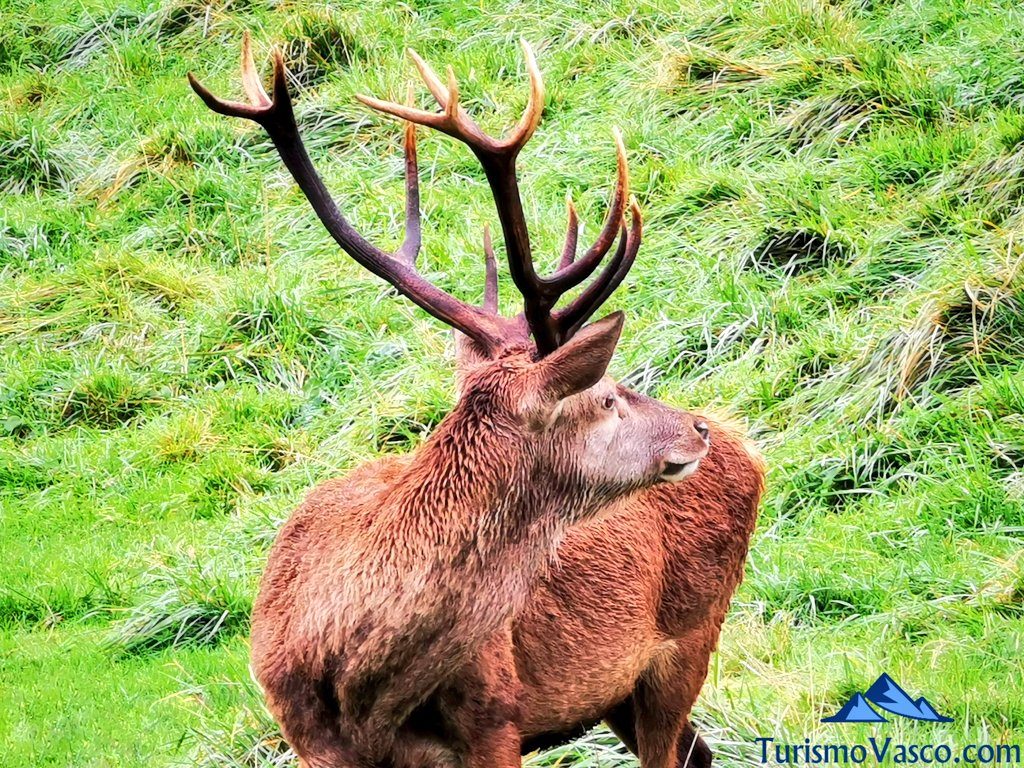
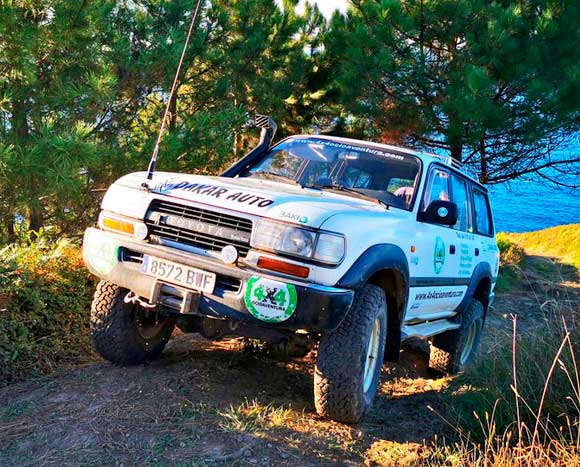
Disseminate: The girls of Parketxe de Araba came up with the proposal to publicize the rut in 2010. It was then, when the first outing took place, at that time, much of the route was done in 4×4 and continued on foot to reach the natural viewpoints where the deer were sighted. Although it had a big break in the following 3 years, the Gorbeia Natural Park has resumed the guided tours to make known this wonder of nature to anyone who wants it. An experience in which the Provincial Council of Alava actively collaborates and in which the 4×4 have ceased to have any presence to make the entire tour on foot. The number of visits is scarce, about 4 per year. This is where private companies come into play. And it is the latter that offer guided tours to learn about the rutting season in the Basque Country 7 days a week. During this experience, participants will have the chance to learn about the reproductive behavior of the deer in the company of specialized guides. 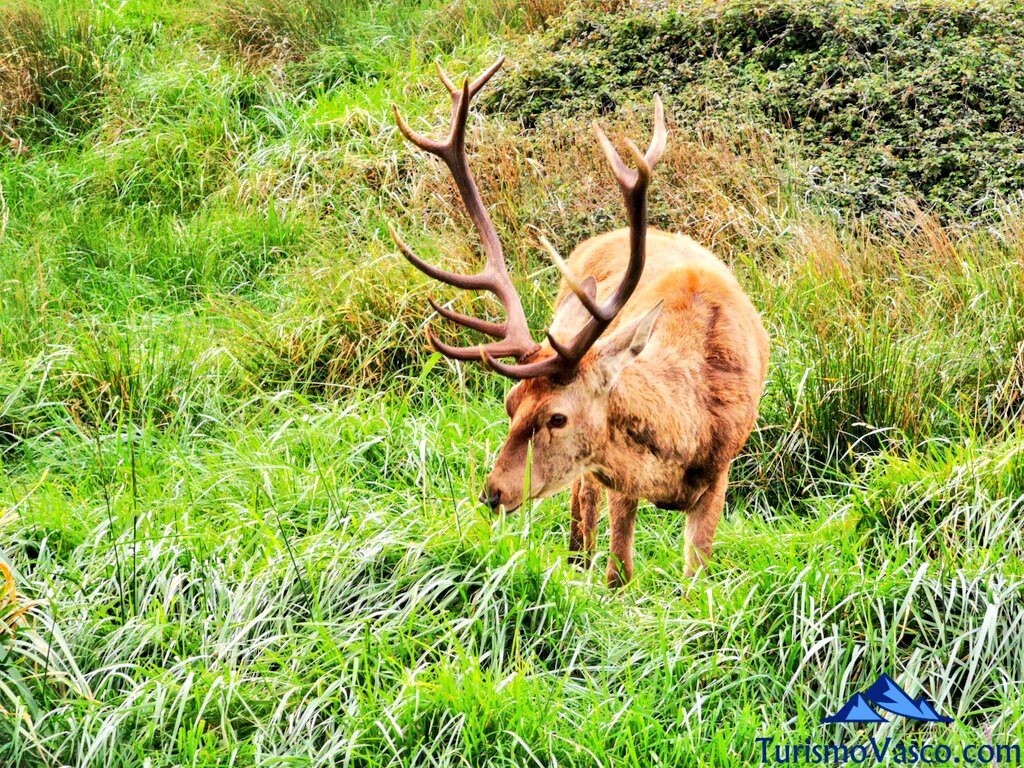
Feeling: The bellowing must be felt. In the absence of touching and tasting, sight and hearing are good. Although many do not know it, the rut is an exercise in hearing rather than visual acuity. It is common to confuse the mooing of cows with the bellowing of deer, a sound that, believe it or not, has some resemblance. So you know, clean your ears. It is time to recognize the bellowing to determine the position of the animal that generates it. Normally, the loudest bellows are emitted by large deer that are around a female, so remember, if you see a male, keep looking, the female will not be far away. 
Family plan: Thanks to the good planning of the activity, the effort required to reach the natural viewpoint of the bellowing is minimal and easily accessible, qualities that make this experience suitable for the youngest of the house. It should be mentioned that, although it is not a very hard route, children who are not used to walking will find it very hard, after all it is an ascending route at all times, it is uphill. 
Where to see the rutting season in the Basque Country? The deer is a species that in the past lost great strength in our territory. Today, thanks to the reintroduction that was practiced with specimens brought from Toledo and Cazorla (Jaén), it has managed to have a nice population in areas such as the Natural Park of Gorbeia. Although Gorbeia is one of the areas with the highest concentration of deer, it is not the only one. The Karrantza Valley, the Pagoeta Natural Park, Salburua, the foral farm of Gorliz or the Navarrese Pyrenees are, among others, the most representative places of the deer in our territory. 
Deer: Common deer. Cervus elaphus. Oreinak in Basque. The lord of the forest. We could go on like this all day long, but we prefer to summarize the history of deer in the Basque Country. Thanks to the excavations that have been carried out in different settlements, it has been clearly argued that thedeer was the main prey of the primitive men who occupied the Basque Country. Unfortunately, the deer gradually disappeared from our forests due to extreme cold and uncontrolled hunting, with the last specimens remaining concentrated in the dense forests of Gorbeia. In 1921 experts cited the deer as an extinct species in Euskadi, although this was never 100% confirmed, many people still claim that it did not become completely extinct in the Gorbeia Natural Park. In 1957, ICONA (Institute for the Conservation of Nature) repopulated the Alavese slope of the Gorbeia massif, an exercise that was repeated in 1981. Thanks to the good health of the population, the deer expanded to the northern slope of Gorbeia, to the territory of Bizkaia, making it present today throughout the Natural Park. The deer is the largest species that occupies our forests, with a great sexual dimorphism: the females, small and lighter, contrast with the males, larger, twice their weight (around 200 kg) and with antlers. 
Did you know that deer antlers and the number of tips are NOT an indication of their age? Antlers fall off (in March during desmongue) and grow back as a stimulus for reproduction. Good antlers are a sign of good health, good nutrition or good genetics. In short, antlers are indicative of strength. We emphasize the differentiation between antlers and horns. Deer do not have horns, they have antlers. The difference is simple: antlers fall off, horns do not.
Many of you will tell us that the statement that the horns do not indicate the age of the specimen is not entirely correct. And you are right. When we make this indication, we are thinking only of adult deer. If we were to take into account all the stages of the deer, we would be lying, since it is only after the age of 3 years that the antlers depend on the feeding and the genetic quality of the animal. Before that, during the first two years, the antlers do indicate the age (when they are one year old, they usually have only one tip on each side and when they are two years old, they usually have two tips).

The rut: The “rut” in deer, the “bark” in roe deer and the “roar” in fallow deer. All these concepts refer to the same phenomenon, the rut, the reproduction. Although in generic terms we are talking about the same thing, we have to take into account that there are very noticeable differences between species. For example, it is curious how hinds rarely give birth to more than one calf, or how roe deer have control over their gestation and can even suspend it for a certain period of time if they are facing a harsh winter.  The female is the one who marks the beginning of the breeding season, they are the ones who evaluate if the perfect environmental conditions are met to face the gestation with guarantees and if the offspring can be raised successfully. Since gestation lasts about 8 months (about 235 – 240 days), most births usually occur during the month of May, in spring, along with an abundance of food.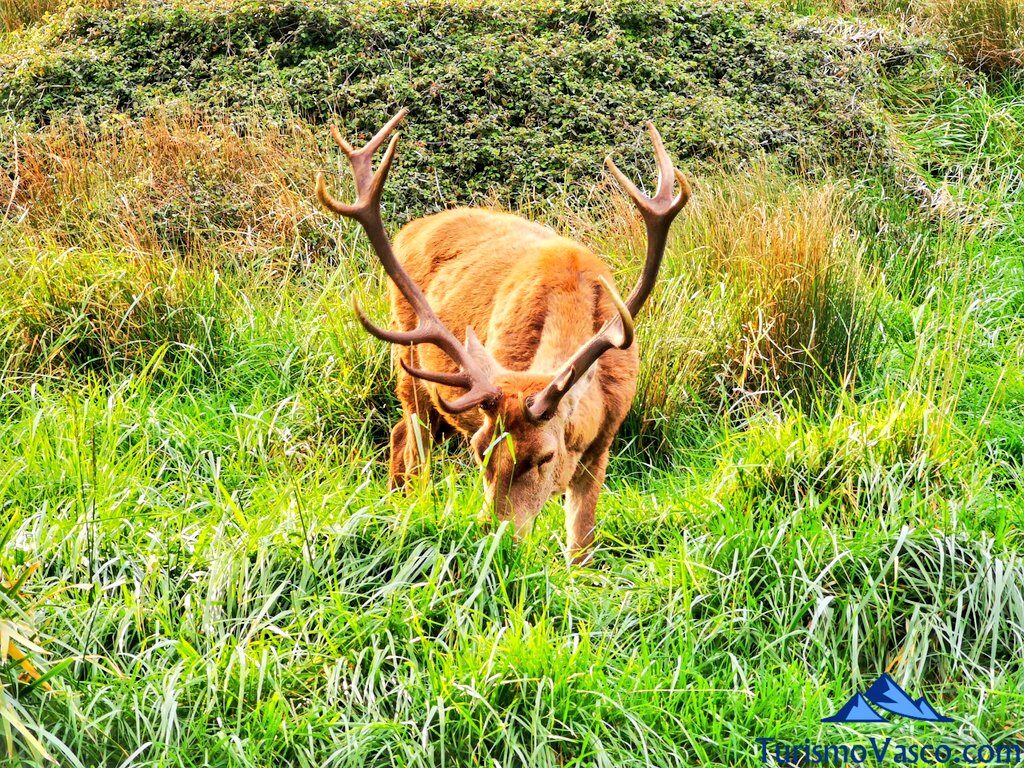
Time and schedule: As we have mentioned, although there are many people who claim that the rut begins with the first rains in September, the truth is that it does not respond to strict dates. Annual variations in temperature and rainfall advance or delay the rutting season of the deer, a phenomenon that usually takes place between the month of September and the first fortnight of October. The greatest rutting activity takes place at night. Although it does not begin and end strictly with the disappearance and appearance of the sun, which is why it is recommended to go at dawn and dusk to enjoy this phenomenon, times when the rut is also visible. 
Our experience: This experience of the rutting starts from the new parking lot that has been enabled in the Natural Park of Gorbeia, in Araba, once past the town of Zarate, in Zuia. It is here, where we will find Pablo responsible for this activity. Once the group was introduced and all the necessary material for the experience was organized, we stood in front of the panel that we found in the parking lot. In it, he showed us the area cataloged as rutting, a restricted area during this time, which we would observe shortly after from a natural viewpoint enabled spontaneously along the track that leads to the cross of Gorbeia.  Before climbing, Pablo warned us repeatedly about the importance of wearing warm clothes, as the temperature change is very noticeable at sunset and even more so after the effort made during the climb. A warning that we appreciated, and very much, once night fell. The equipment provided by Pablo consists of binoculars and telescope, enough material to see the spectacle. By the way, the best part of the experience is the view from the telescopes, very sharp and magnified. Anyway, if you have binoculars, we recommend you to take them with you.
  The selected route is part of one of the easiest accesses to the cross of Gorbeia, a journey of about 1 hour climb, which was relatively comfortable for the whole group. In the moments in which the “peloton” began to break up, the group stopped or slowed down to wait for the stragglers and resume the course all together. A measure that kept the group together at all times.
  This experience has as its destination two natural viewpoints (strategic spaces next to the access track to the cross), from which you have a perfect view over the clearings where the deer usually make an appearance. Unfortunately, it was not a great day (nature is unpredictable) and after spending some time at the first viewpoint and seeing a male, a female and her calf, we had to move further up, to the second viewpoint, to try to observe some more deer. And indeed, this second area was more fruitful. Even so, we did not see any dispute between males, and the specimens we saw were quite far away, a pity.
  Although the experience had us totally hooked, the cold and the lack of light forced us to pack up all the gadgets and head back to the starting point, to Zarate. By the way, mental note for the next appointment with the berrea and a recommendation for all of you who are reading these lines: at night, the headlamp is essential to go down comfortably.
In total, the experience has a duration of about 4 hours and a distance of approximately 10 km. A time that passed at the speed of light thanks to the great organization and the theme of the activity. Eskerrik asko Pablo!
Did you know:
- The Berrea is the rutting season of the deer.
- The rut is also known as the Brama.
- The name bellowing or bellowing is due to the sounds made by the males during the rutting season.
- The deer has its own mating ritual.
- Deer antlers are NOT an indication of age.
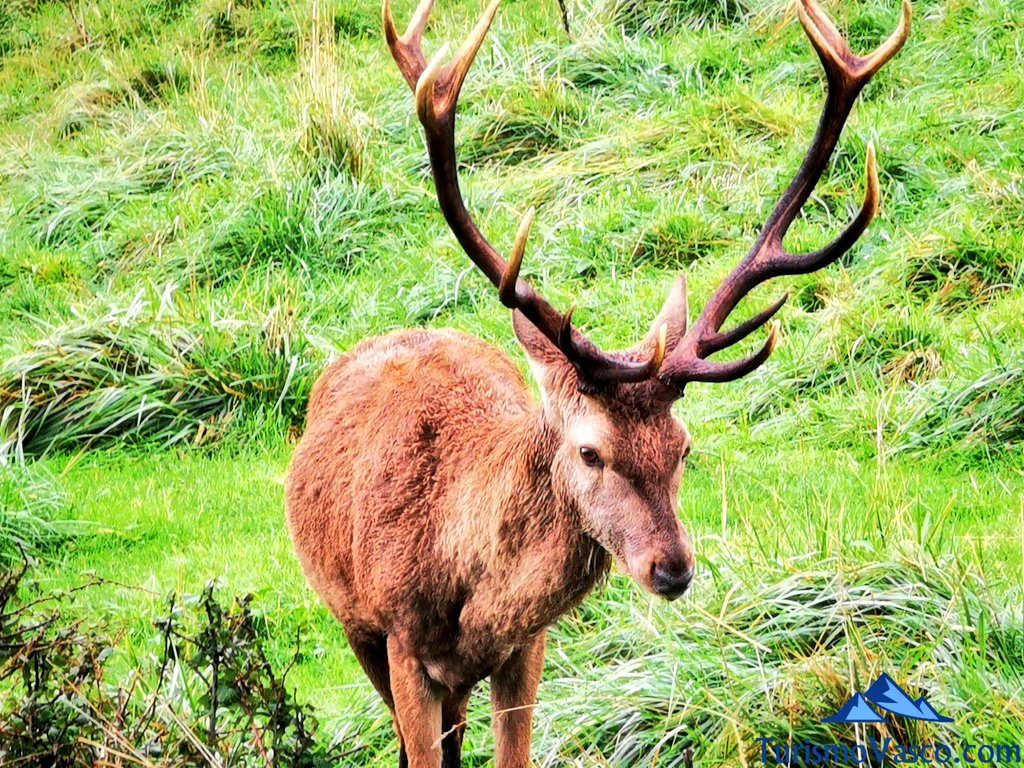
Photography: We had come with photographic equipment with which we thought we could capture a decent shot. Nothing could have been further from the truth. We knew we were going to have problems, but we didn’t think we were going to have that much trouble. The equipment consisted of a Nikon D90 SLR camera and a 55-300 mm lens. We hadn’t brought a tripod, it was a very sunny day, lots of light, we didn’t think we would need it. Mistake after mistake. After our experience, it is clear that even a 500mm would fall short. If you are lucky and some specimen decides to pass by you, maybe with a compact camera you can take home a good trophy, otherwise, forget about the camera. In our case, we had to settle for taking pictures directly from the telescope itself, with the cell phone, there was no other choice. 
We had been left with the desire to photograph the deer in full rut, so we decided to go to the farm that the deputation of Bizkaia has in Gorliz (center for animal recovery and genetic improvement of native breeds) to photograph the pair of deer that have in the lower part of the lighthouse. All, or most of the photos in this article are of this couple that we mentioned. If Gorliz is far away, remember that you can do the same exercise in Salburua, in Araba.
Alone vs. accompanied: Many of you may wonder what the differences are between doing this experience alone or accompanied. In our opinion the work of a professional guide is essential, they are the source of all the knowledge in this area, they are the specialists. We have tried both experiences, alone and accompanied, and the difference is abysmal.  In addition, we must remember that this activity is done in hours of little or no light, moments in which it is very easy to get lost in the forest, cold and disoriented. A guide helps a lot. We attest.
Hunting: Although it is one of the sections we like the least, we want to make known all the facets of the deer in Euskadi. Unfortunately or fortunately, hunting is one of them. We say unfortunately or fortunately, because, although from ignorance, we believed that it was an unimportant facet, one of the rangers of the Gorbeia Natural Park explained to us that it was necessary to control the population and help in the genetic improvement of the species. Annually, the council, after counting the number of existing specimens and their condition, defines the trophy quota to be beaten. 
How is the density of deer estimated? The census of these populations is often done by a very common indicator, the droppings.
However, we still believe that stalking hunting is not the way it should be done, it should be selective hunting, eliminating only wounded animals or those that are not suitable for genetic improvement. At present, unfortunately, stalking allows the elimination of trophies of high genetic quality, thus diminishing the future of the species. We must bear in mind that nowadays, except for human beings, the deer does not have a predator that acts as a natural selection, the wolf has hardly any presence in the Basque Country, a fact that hunters make up for. 
The rutting season is the most favorable time to enjoy the presence of the deer in our mountains, but also the most delicate. From here we ask you to enjoy the rut from the respect, from a distance. Remember that the males are usually somewhat altered and can be dangerous in unexpected situations. We encourage you to feel this impressive experience. In case you have any questions, we recommend you to use the comments system below these lines to let us know. We will try to respond as soon as possible. Ondo pass!


0 Comments