






Meet the Escoriaza Esquivel Palace, one of the palaces that are still standing in the medieval quarter of Vitoria-Gasteiz.
This palace, together with the surrounding buildings, cantons and walls, forms the artistic corridor of the historic center of Vitoria-Gasteiz. A building, which in 2010 became part of the heritage of the city after an agreement with the Foundation of the Ecclesiastical Patronage of Aguirre, owner of the building until then. Currently, this emblematic and historic building of Vitoria-Gasteiz is owned by the city council of the city, a building that thanks to the works it underwent during the years 2010 and 2011 stands out from the rest of the buildings that we find in the area.
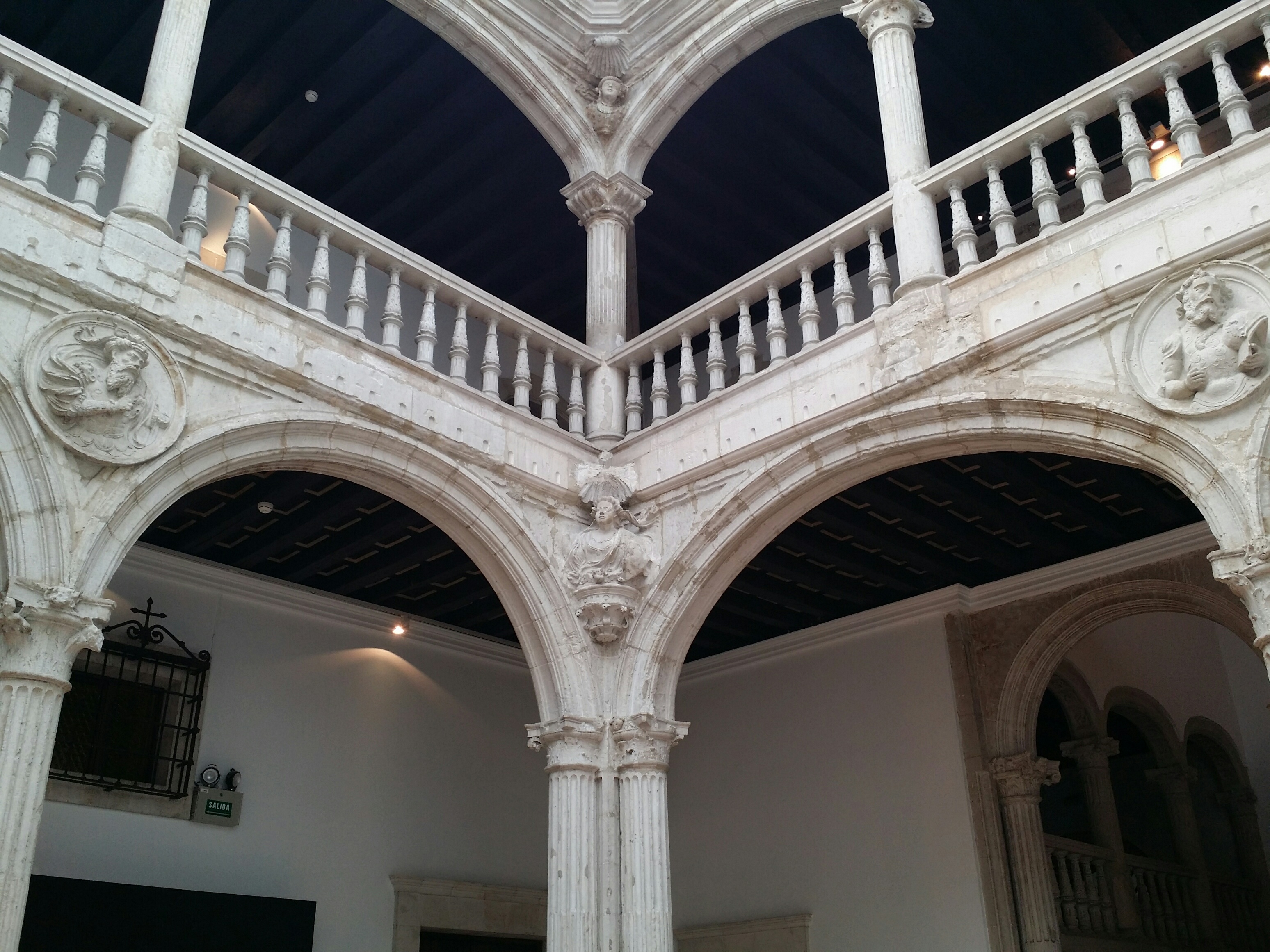
Escoriaza Esquivel Palace patio medallions
Type of building: 16th century palace.
Artistic style: Renaissance.
Contact: 945 24 76 76 01
Guided tours and opening hours: Every half hour, last visits at 1:00 pm and 6:30 pm.

Escoriaza Esquivel Palace Guided Tours
History: This 16th century palace was ordered to be built by the married couple Fernán López de Escoriaza and his wife Victoria de Anda y Esquivel in the middle of the 16th century. Fernán López de Escoriaza was a municipal physician in the early 16th century, but his dizzying career led him to become the personal physician of Catherine of Aragon and her husband, King Henry VIII of England. The couple lived most of their lives outside the city due to their professional work and although they followed the construction very closely, they were not lucky enough to see the completion of what was undoubtedly the most important work of their lives, the Escoriaza Esquivel Palace.

Wall next to the Escoriaza Esquivel Palace
Building: The building was built with masonry stone, a noble construction in which its central axis is its large square courtyard. This courtyard that we contemplate today is far from the appearance of the original, since the roof has been closed and the side that shares location with the wall has been modified for its better preservation.

Escoriaza Esquivel Palace façade
The courtyard of the Escoriaza Esquivel palace is not only the central axis because of its location, it is also the axis of its history. Adorning each of the columns of this double arched courtyard we find the medallions, sculptures that fill the palace with stories of love and heartbreak making many of the historians who have studied the palace came to know it as “The palace of love” or “the courtyard of love”.
The facade of this building is another of the points that call the attention, full of busts among which stand out those of Fernán López de Escoriaza and his wife Victoria de Anda y Esquivel and above them a figure that we can catalog as his god.

Top Escoriaza Esquivel Palace
Location: This palace is located in the heart of the medieval quarter, on top of the hill of Gasteiz, near the cathedral of Santa Maria and adjoining the city walls. A location that at that time was considered unique and prestigious, a location where at that time all the nobles of the city had their homes built. The proximity to the wall that defended the city and the possibility of weakening it by the construction of this palace brought them problems when it came to obtaining the building permit, although the position and power of Fernán López de Escoriaza was such that they ended up granting it.
If you like the history and architecture that encompasses this palace you can visit the other palaces that make up the Route of the Renaissance Palaces of Vitoria-Gasteiz, composed of the palaces of Montehermoso, Villasuso, Escoriaza Esquivel and Bendaña, all of them with a great historical value. Currently the Escoriaza Esquivel palace is listed as one of the best examples of Renaissance civil architecture for its architectural and ornamental richness, a good excuse to visit it, don’t you think?


0 Comments